
Even then, just say. "Sure I got a P Bass". Then borrow some P Bass of a friend or buy one.I don't think a P bass is worth getting for something that has less than one in a million chances of happening for most of us.

Enjoy the benefits of a premium membership!
Upgrade Account
-
TalkBass has been independent since 1998. Add your voice.
Create a free account to reply to discussions, view embedded media, and browse with fewer display ads.
Join free Log in
Want zero display ads or expanded classifieds tools? Compare plans.
You are using an out of date browser. It may not display this or other websites correctly.
You should upgrade or use an alternative browser.
You should upgrade or use an alternative browser.
Every true bassist needs a P-bass
- Thread starter Greenman72
- Start date
More options
Who Replied?yeah, but that correction is still wrong today.Not only do I think some of you are being a bit overly harsh, but did y'all fail to notice the OP "issued a correction"?

Fully agree .. I have three by the way but one is enough at least for being given a number at the Official Precision Bass ClubMy bass teacher told me that "Every true bassist needs a P Bass."
Agree or disagree?


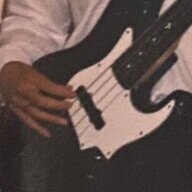
Fighting words!!
I can see the superficial logic of the statement. P Bass is the foundational bass, special sound, and the giant of the bass pantheon.
Me, I started on Jazz Bass, have stuck to it, and indeed have never played any other type of bass. Know thyself and stay true!
I can see the superficial logic of the statement. P Bass is the foundational bass, special sound, and the giant of the bass pantheon.
Me, I started on Jazz Bass, have stuck to it, and indeed have never played any other type of bass. Know thyself and stay true!


I used to be anti-FSO (fender shaped object). I used think the preference of fenders, particularly the P bass was down to lazy sound and studio engineers. I mean, they'll accommodate all manner of guitar and amp combinations but prefer to simply plug the P bass straight into the console.
I thought if guitars were called 'trebles' then bass guitars might be treated differently. As such, I played what I wanted to play. But then when I got my Attitude bass and learning more about eq and frequency slotting, I realised what all the fuss is about and started investigating.
It would appear that Leo got it right, straight away. The bass guitar and bass drum are the two most important parts of the mix and can be the most challenging to mix. The P bass tone tickles just the right frequencies to sit in a typical band mix and gel easily with a typical mic'd bass drum. Sure other options are available and it's perfectly possible to mix any other bass tone, but it's a great sound that does "just work".
Whilst I still don't own a bonafide Fender P, I have options in that ball park and I sit in my band's mix much better.
I thought if guitars were called 'trebles' then bass guitars might be treated differently. As such, I played what I wanted to play. But then when I got my Attitude bass and learning more about eq and frequency slotting, I realised what all the fuss is about and started investigating.
It would appear that Leo got it right, straight away. The bass guitar and bass drum are the two most important parts of the mix and can be the most challenging to mix. The P bass tone tickles just the right frequencies to sit in a typical band mix and gel easily with a typical mic'd bass drum. Sure other options are available and it's perfectly possible to mix any other bass tone, but it's a great sound that does "just work".
Whilst I still don't own a bonafide Fender P, I have options in that ball park and I sit in my band's mix much better.

It's good to have, but unless you are a session player that lives on recording gigs, play whatever you want.

As I've written previously, I played a late 60s Pbass for 10 years before coming to the realization that I needed more sonic flexibility and an instrument that fit me better. I started with a Ric 4001, then I got a couple of Ibanez basses, then a couple of G&L L Series basses, then a couple of German made Warwick basses, then a couple of MusicMan and finally a Yamaha 5 string. What I learned is that when I switched from Fender, my sound and my playing improved tremendously. Get out play some stuff, but listen carefully for what you like sonically and what feels right ergonomically
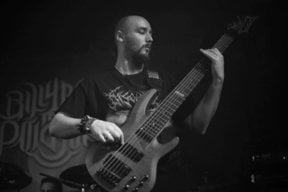
Wrong. I have literally no use for a P, never have, and more than likely never will.
Get a new teacher.
Get a new teacher.
True,
in fact, it's really all a bassist needs. you can get more basses, but if all you have is a P you'll cover all the bases...basses? 99% of the time, when I'm in the studio I use a P bass. And it always works. So, for me, more basses is not always the answer. Although, for some, a different type of bass may be more suited to the player's skills and music being played.
in fact, it's really all a bassist needs. you can get more basses, but if all you have is a P you'll cover all the bases...basses? 99% of the time, when I'm in the studio I use a P bass. And it always works. So, for me, more basses is not always the answer. Although, for some, a different type of bass may be more suited to the player's skills and music being played.
Last edited:

Every true bassist needs a P-bass
 i'd say a "true bassist" needs to show respect for other's choices... i voted "no, that's nonsense."
e.g., https://www.talkbass.com/threads/i-have-2-p.1640247/
i'd say a "true bassist" needs to show respect for other's choices... i voted "no, that's nonsense."yes, you're right, they're like "bass gods" --- but "PP" is misleading...it's "2P." as in, "2P or not 2P," is that ever a question?If one P pickup is an award for being a great bassist, the PP guys are like bass gods then
e.g., https://www.talkbass.com/threads/i-have-2-p.1640247/
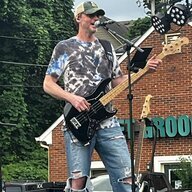
Something for everyone who replied to this. Maybe put it on the wall next to your computer.

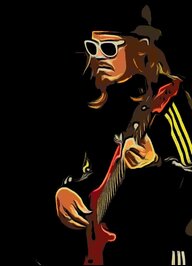
I usually play either my active 6 (single humbucker) or my passive 6 (which has a J configuration).
However, I do own a P bass because every bassist needs to own a P ;-)
What I like about playing it from time to time is the simplicity it imposes on me.
It does not have 24 frets. It has, from my viewpoint as a player of 6s, only 4 strings.
Since I'm keeping things OG with my P, it has flats installed, which makes the use of the tone knob somewhat limited - can't really cut what is not there.
So I have a bass with the bare minimum of strings and frets, with a single pickup and basically no tonal options to be dialed in through the controls. That means, tone really is in the fingers here.
When I take it out, there's usually three stages. First stage requires concentration because mind and fingers are used to the 6. 3rd fret on the fat string is G, not D! In the second stage, my mind eases into the 4 string concept, but feels like it is missing out. When I'm jamming with others, I realize that I have to play horizontally instead of vertically and shift positions a lot more, and even then I have to play in tighter boundaries than I'm used to. Step three is when I accept those limitations and just roll with it, keeping my playing to the money part of the fretboard - because there is not much else.
However, I do own a P bass because every bassist needs to own a P ;-)
What I like about playing it from time to time is the simplicity it imposes on me.
It does not have 24 frets. It has, from my viewpoint as a player of 6s, only 4 strings.
Since I'm keeping things OG with my P, it has flats installed, which makes the use of the tone knob somewhat limited - can't really cut what is not there.
So I have a bass with the bare minimum of strings and frets, with a single pickup and basically no tonal options to be dialed in through the controls. That means, tone really is in the fingers here.
When I take it out, there's usually three stages. First stage requires concentration because mind and fingers are used to the 6. 3rd fret on the fat string is G, not D! In the second stage, my mind eases into the 4 string concept, but feels like it is missing out. When I'm jamming with others, I realize that I have to play horizontally instead of vertically and shift positions a lot more, and even then I have to play in tighter boundaries than I'm used to. Step three is when I accept those limitations and just roll with it, keeping my playing to the money part of the fretboard - because there is not much else.

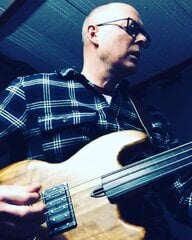
"Well you need a new teacher"
"nobody needs a p bass"
"what a dull and lifeless instrument, my 6 string coffee table with bartolinis bolted to it sounds WAY BETTER"
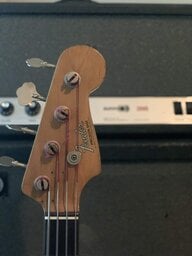
You know how many times Ive been hired by bands or artists just because their bass player says crap like this? A local band had me record an album with them and even though they had a bass player, he was super dead set on recording with his 6 string ibanez, active tons of treble sizzle pop etc. I brought my P with flats and some basic pedals (because I knew it was pretty much guaranteed to work in a mix). As soon as they say my headstock said "fender precision" they said "ah, ok easy day". Didnt even hear me play yet, lol.
They explained how they wanted their bassist to just use a squier P for some tracks but I guess he wasnt having it. More money for me, lol.
You dont NEED a p bass, but if you actively resist owning one, well, bands will hire someone with a P over you.
Truth hurts, get a cheapo squier P just so you have one.
"nobody needs a p bass"
"what a dull and lifeless instrument, my 6 string coffee table with bartolinis bolted to it sounds WAY BETTER"
You know how many times Ive been hired by bands or artists just because their bass player says crap like this? A local band had me record an album with them and even though they had a bass player, he was super dead set on recording with his 6 string ibanez, active tons of treble sizzle pop etc. I brought my P with flats and some basic pedals (because I knew it was pretty much guaranteed to work in a mix). As soon as they say my headstock said "fender precision" they said "ah, ok easy day". Didnt even hear me play yet, lol.
They explained how they wanted their bassist to just use a squier P for some tracks but I guess he wasnt having it. More money for me, lol.
You dont NEED a p bass, but if you actively resist owning one, well, bands will hire someone with a P over you.
Truth hurts, get a cheapo squier P just so you have one.
Agree 100% with all this and I would add that when the neck is big (baseball bat size), that makes me play slower and put more emphasis on some notes and when the neck is thinner, I just play faster but not as fast as on my jazz bass though.I usually play either my active 6 (single humbucker) or my passive 6 (which has a J configuration).
However, I do own a P bass because every bassist needs to own a P ;-)
What I like about playing it from time to time is the simplicity it imposes on me.
It does not have 24 frets. It has, from my viewpoint as a player of 6s, only 4 strings.
Since I'm keeping things OG with my P, it has flats installed, which makes the use of the tone knob somewhat limited - can't really cut what is not there.
So I have a bass with the bare minimum of strings and frets, with a single pickup and basically no tonal options to be dialed in through the controls. That means, tone really is in the fingers here.
When I take it out, there's usually three stages. First stage requires concentration because mind and fingers are used to the 6. 3rd fret on the fat string is G, not D! In the second stage, my mind eases into the 4 string concept, but feels like it is missing out. When I'm jamming with others, I realize that I have to play horizontally instead of vertically and shift positions a lot more, and even then I have to play in tighter boundaries than I'm used to. Step three is when I accept those limitations and just roll with it, keeping my playing to the money part of the fretboard - because there is not much else.


