Then there is the vintage Phoenix Gold Cyclone!
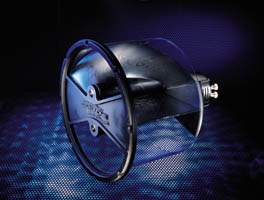
Goes down to 11 Hz in the right box...
Cyclone
Co-designed by Tom Danley?
Goes down to 11 Hz in the right box...
Cyclone
Co-designed by Tom Danley?

TalkBass has been independent since 1998. Add your voice.
Create a free account to reply to discussions, view embedded media, and browse with fewer display ads.
Join free Log in
Want zero display ads or expanded classifieds tools? Compare plans.
Yes? The SRX series is a good example of a club rig, where the subs will do fine in greater rigs, too. Has a "flat" (-3dB) frequency of 35Hz.
Easy peasy to put a little boost around 35 Hz, and you get a "true flat" 35Hz. See it all the time. With modern "super woofers", computer controlled speaker processors with Voice Coil feedback, two tier limiter etc, setting the HPF higher than ie mid 30-s is a choise by the FOH or systems engineer (baby sitter), not needed to run the rig safely. Maybe you do it differently in US, but look at the European acts and PA brands, this is common practice.
Invalid Link Removed
[Invalid or Expired Link Removed]
DVA S2585N
Products - DAS Audio
SW221 | Tecnare Sound Systems
NEXO RS18 sub bass loudspeaker
Yes I agree, probably fine to dial in flat response to 35hz as long as you don't push the drivers into over excursion. However, it's probably not a good idea to add +10dB of correction at 30hz.
Based on the curves, I sometimes suspect some corrective EQ is necessary to met the listed frequency response. For example the NEXO RS18 sub you referenced list -3dB at 30hz. Take a look at the frequency response plot:
View attachment 4351807
This looks like at least -6dB at 30hz to me. My guess is this is the raw driver response in the box, and the processor corrects it to -3dB at 30hz. So to correct the response to flat at 30hz, you actually need at least +6dB. Keep in mind power doubles with each 3dB of boost, so if you are really hitting the sub hard with power in the frequency range need to ensure you have enough boxes to get the job done.
Sorry for the blurry images; that's actually how it looks in the official datasheet.
By the way @Wasnex , I saw that some of these manufacturers actually present FREE FIELD data! That would mean that in a half pi or quarter pi environment, you will get the additional boundry effect from the room. Free lunch, anyone?
Also interesting would be a research project conducted by an architectural engineering school in, I believe, southern California. Musical application would be impossible, but still conceptually interesting, they built a complete parking garage (full size) on a movable table powered by very, very large hydraulics. There is video of the whole thing shaking, eventually to the point of structural failure.The natural roll-of of our ears gets steeper down there, so you would need to push a huge amount of air to make it perceptible with matching huge amounts of power. For the movie "Earthquake" Cerwin-Vega, arguably the masters of the low end used stacks of special 18" subwoofers faced into the corners of the theaters to make the walls into giant horns, each with its own 1000-2000 Watt amp to get the required amount of LF.
On the other hand, you might think about the mechanical "bass shakers" that are designed to shake the floor for movie fans. Maybe you could place say, 4 of these on your stage to vibrate the floor while you are playing, and that might transfer to the audience. You would still need an amp that goes subsonic with some efficiency, and the crossover to do it.
For example -
[Invalid or Expired Link Removed]
I'm pretty sure the authorities would frown on using C4 or Semtex in a hall full of people . . .Reminds me of when I was in music school at my composition recital, I had these pieces with live solo performers playing on stage with electronic backing tracks. The backing tracks had these explosion/earthquake effects that I had made with synthesizers, and I kept adding lines out to the subs, placing subs around the theatre, all in a frantic effort to make the "explosions" sound bigger, as big as what I had in my head. Eventually my teacher talked me down saying, "nothing short of a real explosion that actually collapses this building is going to satisfy you, so focus on making these pieces work in a format using technology that you can reproduce in other venues, or on recordings." I think it is the same with subs, the kick drum really owns the bottom of the frequency spectrum, and provides the "feel" of subs in a standard mix, you don't have to be in that space as a bassist, and other people's equipment isn't going to tolerate or adequately reproduce your experimentation.

Amazing! I would travel far and buy a moderately expensive ticket to see these rigs in operation.
MOST interesting! I am going to try to find someone who has one to see it in action.Then there is the vintage Phoenix Gold Cyclone!
View attachment 4351797
Goes down to 11 Hz in the right box...
Cyclone
Co-designed by Tom Danley?
Or we could just bring one to you!Amazing! I would travel far and buy a moderately expensive ticket to see these rigs in operation.





