

Enjoy the benefits of a premium membership!
Upgrade Account
-
TalkBass has been independent since 1998. Add your voice.
Create a free account to reply to discussions, view embedded media, and browse with fewer display ads.
Join free Log in
Want zero display ads or expanded classifieds tools? Compare plans.
You are using an out of date browser. It may not display this or other websites correctly.
You should upgrade or use an alternative browser.
You should upgrade or use an alternative browser.
- Status
- Not open for further replies.
More options
Who Replied?
I think we should call the club the extended number of strings club.... that seems to be the main concern here. I think any bass with more than 4 strings or more than 24 frets is an extended range bass.

JAUQO III-X
Inactive
I think any bass with more than 4 strings or more than 24 frets is an extended range bass.
Not to get into a potential debate but a bass does not have to have more than 4 strings to be an ERB.
Not to get into a potential debate but a bass does not have to have more than 4 strings to be an ERB.
I agree, and I'm not looking to get into a debate.... just making an observation.
JAUQO III-X
Inactive

Boy did I jump in late
Playing a Conklin Gt-7 was fretted now fretless
as well as 5 String basses, going 9 in the near future
My 9 in 09
Playing a Conklin Gt-7 was fretted now fretless
as well as 5 String basses, going 9 in the near future
My 9 in 09

I think we should call the club the extended number of strings club.... that seems to be the main concern here. I think any bass with more than 4 strings or more than 24 frets is an extended range bass.
No sense making an issue out of something that is no issue

From Guideline #2 in the 1st post:
"There is always debate about what an extended range bass actually is .... 5 string? 6 string? 9 string? It seems to be generally accepted that any bass 6 strings and up is an ERB (since 5 string basses have become so numerous), but in reality any thing that "extends" the bass range beyond EADG could be considered extended range. IMO 6+ strings easily fits most any definition, as do sub-contra range (low F#, C#) or less commonly 5ths tuning or ultra long scale (ex: 39" Knucklebass). But in the spirit of unity, let's make Guideline #2 "String count doesn't matter".

Well it made sense to me ...... after so many posts about the number of strings that determine if your playing an ERB or not??. I didn't write those posts.... noone seems to think anyone else was making an issue until i made my post.No sense making an issue out of something that is no issue
From Guideline #2 in the 1st post:
"There is always debate about what an extended range bass actually is .... 5 string? 6 string? 9 string? It seems to be generally accepted that any bass 6 strings and up is an ERB (since 5 string basses have become so numerous), but in reality any thing that "extends" the bass range beyond EADG could be considered extended range. IMO 6+ strings easily fits most any definition, as do sub-contra range (low F#, C#) or less commonly 5ths tuning or ultra long scale (ex: 39" Knucklebass). But in the spirit of unity, let's make Guideline #2 "String count doesn't matter".
I tell ya what........ i'll go ahead and retire my "club number" and leave this one to you fellas...
 number 24 up for grabs!
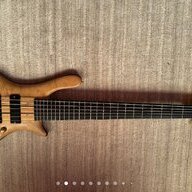

 I new to ERB, though I have played 5 string for years. I just got a Conklin 7 and a Wishbass 7. I would like to sell the Wish and get an 8 string in fretless made by Mailoux in Austalia. Here they are, the Wishbass the one on the left is still for sale, will take $700. for it
samt #065 ....I new to ERB, though I have played 5 string for years. I just got a Conklin 7 and a Wishbass 7. I would like to sell the Wish and get an 8 string in fretless made by Mailoux in Austalia.
Post up some pics when you can ...

john turner
You don't want to do that. Trust me.
i've liked the eden amps that i've played well enough, but i've never had to switch between channels to handle the spectrum of my basses.
then again, i have a db680.
then again, i have a db680.
Now even as much as I hate being the stereotypical noob, I have a question that I really want to be answered. I've seen the topic around, and I'm sure I could find an answer easily, but I lurk constantly, so cut me some slack .
My question: When making the switch from a four to an extended range bass, what steps should I take?
Specifics in my dilemma: I have been playing fours and fives for the past four years or so now, and I want to move to an erb. I have listened to many many influential and not so well known extended range bassists, and I've seemed to fall in love with what can be done with it. I'm not one to be huge on patience, and learning to use it to at least a fifth of it's power will be a task I'm sure, but I want to try. Making money swiftly isn't something that I'm sure I'll be able to do for a bass, so what to do? Do I wait and move up, one or two strings at a time, or do I can I plunge straight into melty, twelve stringy goodness? I do realize the time it'll take me to get used to the instrument, and that I'm going to have to stop changing my mind in the next bass department, but I get gas just like everyone else. Look at my list, it's all mainly 4-6 string manufacturers. Back to the point, I'm going to have a loooot of work if I jump right into it, and I get that, but do you think that if I keep my other basses for work that work very well, and figure this out in my spare time I'll be okay? Feedback people, feedback.
Strict, harsh criticism if necessary
John, your opinion would also be highly valued. Oh, the amount of times I've drooled over your Conklins... But not just him, anyone. I need help. Thank you people.
.My question: When making the switch from a four to an extended range bass, what steps should I take?
Specifics in my dilemma: I have been playing fours and fives for the past four years or so now, and I want to move to an erb. I have listened to many many influential and not so well known extended range bassists, and I've seemed to fall in love with what can be done with it. I'm not one to be huge on patience, and learning to use it to at least a fifth of it's power will be a task I'm sure, but I want to try. Making money swiftly isn't something that I'm sure I'll be able to do for a bass, so what to do? Do I wait and move up, one or two strings at a time, or do I can I plunge straight into melty, twelve stringy goodness? I do realize the time it'll take me to get used to the instrument, and that I'm going to have to stop changing my mind in the next bass department, but I get gas just like everyone else. Look at my list, it's all mainly 4-6 string manufacturers. Back to the point, I'm going to have a loooot of work if I jump right into it, and I get that, but do you think that if I keep my other basses for work that work very well, and figure this out in my spare time I'll be okay? Feedback people, feedback.
Strict, harsh criticism if necessary
John, your opinion would also be highly valued. Oh, the amount of times I've drooled over your Conklins... But not just him, anyone. I need help. Thank you people.
john turner
You don't want to do that. Trust me.
hey
i went from fretted and lined fretless 4 to unlined fretless 7. it was a jarring transition, to say the least.
the best method for transitioning is just to do it. for me, i put the 4's down and didn't touch them again. treated my first 7 like it was a whole new instrument, which it was. i still have my 4's - a nice 77 jazz bass, a 70's rick, a mid 80's pedulla fretless - but i haven't played any of them in a long time - 15 years, or thereabouts.
start slow, stay consistent every day, and be patient. depending on what you get, (how many strings) budget 6 months of your time at least on diligent practice before you expect to be sufficiently proficient with it as you are now with your 4's.
as for what string layout to get, that's something that you're only going to be able to determine based on what you plan on doing with the instrument. if you have a vision for 12 strings, then go for it, but be warned, a 12 is going to be expensive, and you will not get your investment returned should you decide it's not for you.
i got really lucky. i originally only wanted a 6, but saw the 7 string conklin give away in bass player in the summer of 93 and decided i'd give it a go, sight unseen. ulimately, i hit pay dirt - i'm not a 9-stringer, or a 6 stringer. my ideal number of strings is somewhere between 7 and 8, heh, and usually 7. so i found what i was born to play right off the bat.
my advice is to get one of those antoniotsai 7's off ebay. they can be had for cheap (1/2 the price even of the conklin korean made groove tools basses), and they're relatively nice instruments for the money. when you get it, understand that the pickups are probably going to be gimpy, and some of the workmanship might have issues, but try to use it to get a feel for whether you think this is for you or not.
should you decide that it is, the best advice i can give to you is get a guitar chord book. learn chord shapes, and understand the roles the higher notes play in the chord. use this to learn your neck, to learn about the tonal differences across the board.
one of the things i did along with this was learn guitar parts (Generally solos) to songs i already knew the bass lines to. this helped me put the higher strings in reference to what i already knew.
understand that you're going to have low strings that are approx 4x as thick as your highest strings. the tone on your thinner strings is going to be different than the tone on the thicker ones, even when you're playing in the same general range.
understand this about the instrument, and you can use it when composing - lower notes on thinner strings sound a lot different than those same notes on thicker strings, higher up the neck. this is an important advantage that erb's have over the standard 4/5 that many folks don't realize - a broader tonal diversity, especially around the "usual bass range". i can play an open e on my low f# at 10th fret, and it's so fat and round, it's like instant dub.
i went from fretted and lined fretless 4 to unlined fretless 7. it was a jarring transition, to say the least.
the best method for transitioning is just to do it. for me, i put the 4's down and didn't touch them again. treated my first 7 like it was a whole new instrument, which it was. i still have my 4's - a nice 77 jazz bass, a 70's rick, a mid 80's pedulla fretless - but i haven't played any of them in a long time - 15 years, or thereabouts.
start slow, stay consistent every day, and be patient. depending on what you get, (how many strings) budget 6 months of your time at least on diligent practice before you expect to be sufficiently proficient with it as you are now with your 4's.
as for what string layout to get, that's something that you're only going to be able to determine based on what you plan on doing with the instrument. if you have a vision for 12 strings, then go for it, but be warned, a 12 is going to be expensive, and you will not get your investment returned should you decide it's not for you.
i got really lucky. i originally only wanted a 6, but saw the 7 string conklin give away in bass player in the summer of 93 and decided i'd give it a go, sight unseen. ulimately, i hit pay dirt - i'm not a 9-stringer, or a 6 stringer. my ideal number of strings is somewhere between 7 and 8, heh, and usually 7. so i found what i was born to play right off the bat.
my advice is to get one of those antoniotsai 7's off ebay. they can be had for cheap (1/2 the price even of the conklin korean made groove tools basses), and they're relatively nice instruments for the money. when you get it, understand that the pickups are probably going to be gimpy, and some of the workmanship might have issues, but try to use it to get a feel for whether you think this is for you or not.
should you decide that it is, the best advice i can give to you is get a guitar chord book. learn chord shapes, and understand the roles the higher notes play in the chord. use this to learn your neck, to learn about the tonal differences across the board.
one of the things i did along with this was learn guitar parts (Generally solos) to songs i already knew the bass lines to. this helped me put the higher strings in reference to what i already knew.
understand that you're going to have low strings that are approx 4x as thick as your highest strings. the tone on your thinner strings is going to be different than the tone on the thicker ones, even when you're playing in the same general range.
understand this about the instrument, and you can use it when composing - lower notes on thinner strings sound a lot different than those same notes on thicker strings, higher up the neck. this is an important advantage that erb's have over the standard 4/5 that many folks don't realize - a broader tonal diversity, especially around the "usual bass range". i can play an open e on my low f# at 10th fret, and it's so fat and round, it's like instant dub.
Speaking in very general terms, I've found that most players who move to an ERB and stick with it usually have a vision of what they want to do with it before they buy the bass(es). For example, maybe they are looking for more range when soloing, or perhaps thay want to do some chord work, maybe they want to get into tapping, etc, etc. OTOH, some players get ERB's and quickly realize that they dislike the increase in neck size, or the heavier body, or any of a number of other issues.
So I guess my question to you would be, what do you want to try to do with it? If a certain ERB-ist has a style you really like, what is that style? Other things to think about are string spacing, scale, budget, amplification .....
Regarding jumping from a 4 to a 6,7,8 whatever ERB, I've never been a big fan of the one-string-more-at-a-time theory, but that sort of goes back to my initial question .... what are you trying to accomplish with the bass? Once you get that together in your head you'll be able to get a lot more reasonable advice here. Lots of players go from a 4 to a 7+ immediately (I believe that Mr. Turner did just that). I played 4's for a very long time, had a 5 for about 5 years then very quickly went to 6+ strings.
If you're just looking to get a feel for whether it's the right thing to do, you might want to look at the rondomusic.com Brice basses for 6's or a used Conklin GT7 ... these basses will be in the under $1K range and are good "starter" ERB's (the GT7 is actually a tremendous value for the money) ...
So I guess my question to you would be, what do you want to try to do with it? If a certain ERB-ist has a style you really like, what is that style? Other things to think about are string spacing, scale, budget, amplification .....
Regarding jumping from a 4 to a 6,7,8 whatever ERB, I've never been a big fan of the one-string-more-at-a-time theory, but that sort of goes back to my initial question .... what are you trying to accomplish with the bass? Once you get that together in your head you'll be able to get a lot more reasonable advice here. Lots of players go from a 4 to a 7+ immediately (I believe that Mr. Turner did just that). I played 4's for a very long time, had a 5 for about 5 years then very quickly went to 6+ strings.
If you're just looking to get a feel for whether it's the right thing to do, you might want to look at the rondomusic.com Brice basses for 6's or a used Conklin GT7 ... these basses will be in the under $1K range and are good "starter" ERB's (the GT7 is actually a tremendous value for the money) ...
Strictly because quoting everything stated would use up a LOT of room, I'll just give responses.
To John: Thank you, and I've had the privilege to touch a few erbs, and I understand what you mean exactly. It feels and sounds completely new, and will take time to become proficient in using. The straight to twelve thing was sort of a joke, in a way. No, I wouldn't jump straight into 12 strings, but with the advice given here, and with the music I've heard from our elite extended range bassists, I think eventually I may need to get my hands on one. I'll be sure to pick up some books.
To pointbass: Thank you as well, and I've listened to a number of bassists, and more then likely, I would be using it for tapping. I've been using my fours for that a lot as of late, and listening to (drooling over) Jean Baudin, Yves Carbonne, and names of the like. I don't plan to reach their heights or anything, and I defiantly don't want to be a clone, but I highly admire them. Tapping and the occasional finger plucking of course, but mainly tapping.
To both: Thank you, I had looked around at basses, and maybe I shouldn't sound too impatient, I'm more the willing to wait to gather the money, I'd just be overly anxious/occasionally lose sight of my goal. But the basses you've recommended are ones that I've heard to be of excellent quality for their price, especially the Conklin Groove.
To John: Thank you, and I've had the privilege to touch a few erbs, and I understand what you mean exactly. It feels and sounds completely new, and will take time to become proficient in using. The straight to twelve thing was sort of a joke, in a way. No, I wouldn't jump straight into 12 strings, but with the advice given here, and with the music I've heard from our elite extended range bassists, I think eventually I may need to get my hands on one. I'll be sure to pick up some books.
To pointbass: Thank you as well, and I've listened to a number of bassists, and more then likely, I would be using it for tapping. I've been using my fours for that a lot as of late, and listening to (drooling over) Jean Baudin, Yves Carbonne, and names of the like. I don't plan to reach their heights or anything, and I defiantly don't want to be a clone, but I highly admire them. Tapping and the occasional finger plucking of course, but mainly tapping.
To both: Thank you, I had looked around at basses, and maybe I shouldn't sound too impatient, I'm more the willing to wait to gather the money, I'd just be overly anxious/occasionally lose sight of my goal. But the basses you've recommended are ones that I've heard to be of excellent quality for their price, especially the Conklin Groove.
I really don't know how I missed this thread!!
Anyway, my offering a 7 string fretless SEI bass, apologies to those who have seen it before as I have posted it far to many times as I can't resist it:
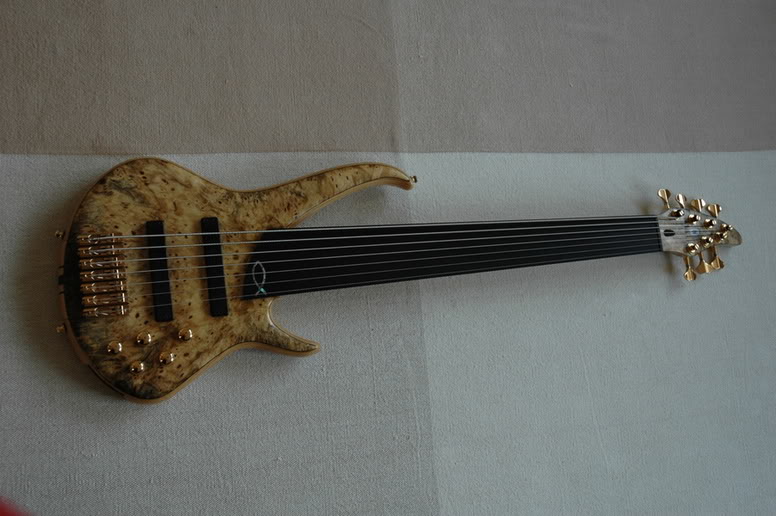
Regards
Matthew
Anyway, my offering a 7 string fretless SEI bass, apologies to those who have seen it before as I have posted it far to many times as I can't resist it:
Regards
Matthew

I have another question, what about this? http://www.chionline.com/Antoniotsai/index.html Have you (John) dealt with this Antoniotsai person?
john turner
You don't want to do that. Trust me.
i have no experience with this guy - all my basses are custom made.
there have been, however, folks that have posted that they were relatively pleased with what they got, considering the price.
do a search, you'll see some tb'ers comments on them.
there have been, however, folks that have posted that they were relatively pleased with what they got, considering the price.
do a search, you'll see some tb'ers comments on them.
- Status
- Not open for further replies.


