
Enjoy the benefits of a premium membership!
Upgrade Account
-
TalkBass has been independent since 1998. Add your voice.
Create a free account to reply to discussions, view embedded media, and browse with fewer display ads.
Join free Log in
Want zero display ads or expanded classifieds tools? Compare plans.
You are using an out of date browser. It may not display this or other websites correctly.
You should upgrade or use an alternative browser.
You should upgrade or use an alternative browser.
Fake Rick?
- Thread starter jongor
- Start date
More options
Who Replied?

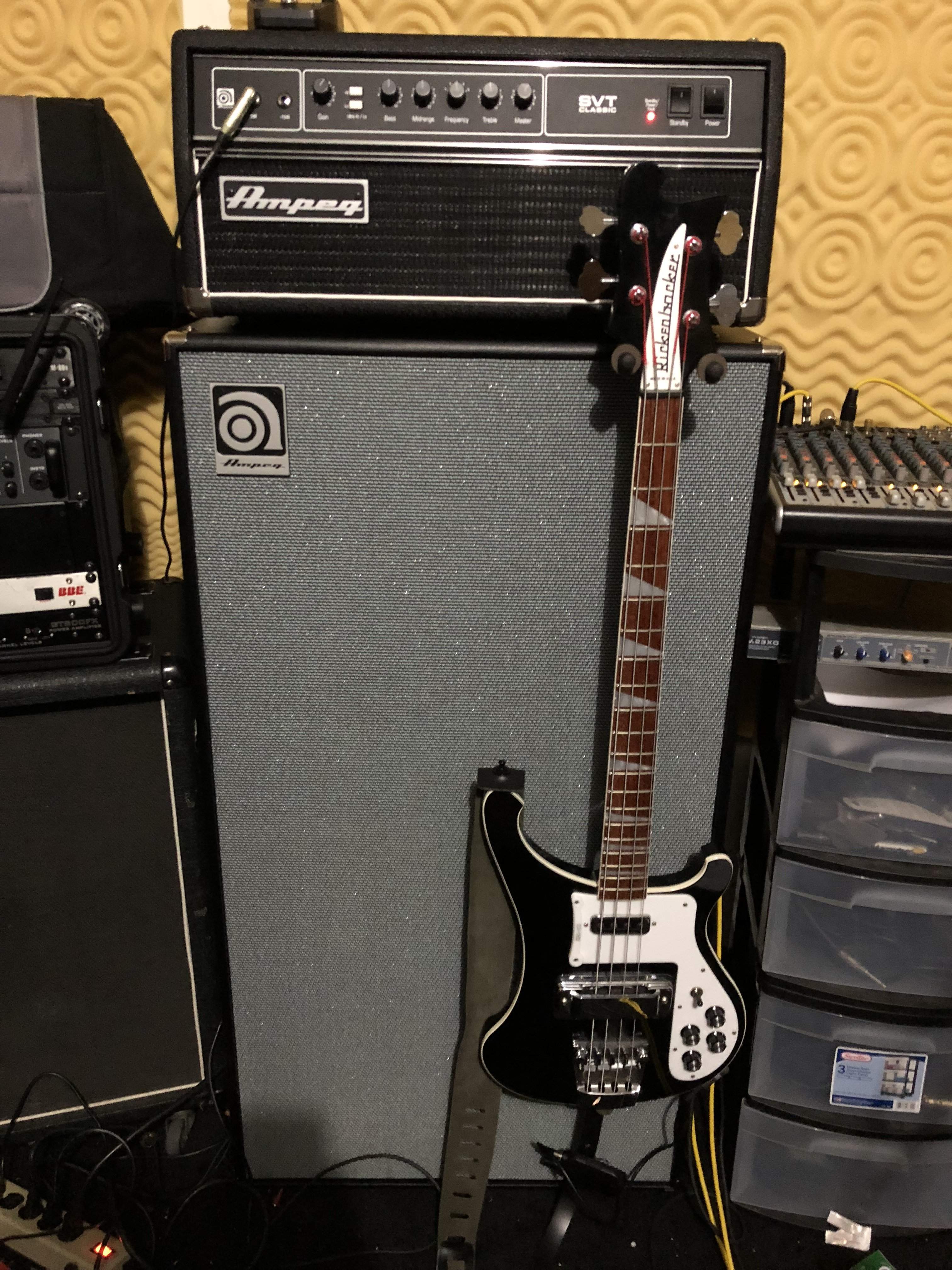
I've seen Rics that look just like that. In fact, I have three of them.
Update: I definitely have two of them. I seem to have misplaced the third and I'm afraid I may never find it now.

You can compare it to this one if you want.
Last edited:

Pretty quick to spot a Chickenbacker once you see the real deal. Ric always favored more reddish fingerboards like Bubinga or Chechen. The newer ones are a little browner, "Indian Rosewood" I think they call it? Notice how newer Rics have full-width inlays. The older ones were partial width, with rounded corners. The Chickenbackers all have pointy corner partial width inlays, sloppily cut and spooged-in with brown epoxy on the one I played. This TB'er did s comparison a while back:


Guys! its a two step process for pasting an image onto the site... no need to save and upload to some janky third party hosting service.
Simply right click the desired image and select "Copy image"
Then right click in your TB message window and select paste image.
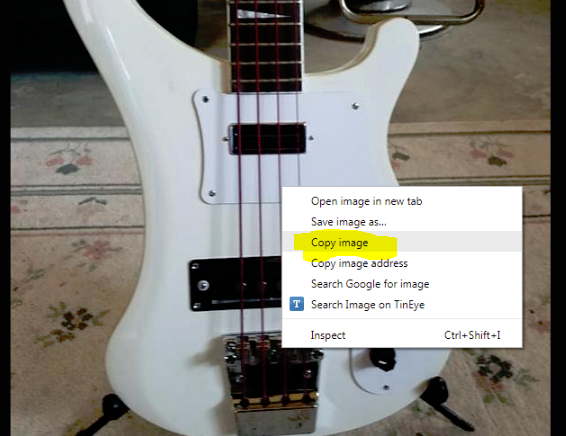
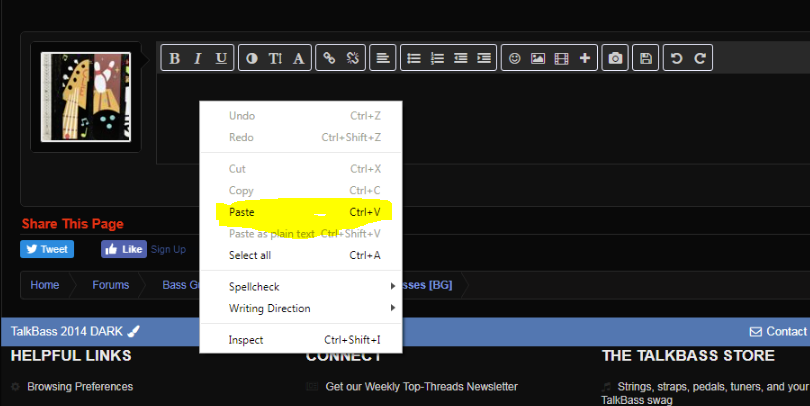
Simply right click the desired image and select "Copy image"
Then right click in your TB message window and select paste image.

"Copy image"

Copy "Rickenbacker"

Paste "Carrot - Glo Chickenbacker"

may the bass be with you
Wise(b)ass
Ric always favored more reddish fingerboards like Bubinga or Chechen. The newer ones are a little browner, "Indian Rosewood" I think they call it?
Ric post on their forum: they now use "Caribbean rosewood. This wood has been used since last September [2011] on the majority of our instruments. At the same time, we have been exhausting our remaining bubinga supplies. The Caribbean rosewood tends to have much more figure in it than bubinga."
and, if you want more info on the switch: "Actually the 2008 amendment to the Lacy Act as well as the events of August 24 [Federal raids on Gibson, I think] in Nashville and Memphis of last year motivated us to make the switch. The bubinga (African Rosewood) that we used comes from Central African countries with not so stable governments or legal systems so we opted to find a sustainable supply of fretboard wood from less dodgy parts of the globe.
Caribbean Rosewood comes primarily from Belize and the Yucatan Peninsula of Mexico. It has been used for centuries to make fine furniture and native instruments. Although some American luthiers have started to offer Caribbean Rosewood on their guitars, it is still relatively unknown. I suspect that we will see guitarmakers start to use it more and more as it is a great tonewood, beautiful to look at, and most importantly, not endangered."
and, for you tonewood heads: "The tone is indistinguishable from bubinga, which does make some sense as neither African rosewood (bubinga) nor Caribbean rosewood (chechen) are true rosewoods in the Dalbergia family. Retaining the tonal properties of bubinga was a very important consideration for us in switching to CR."
Rickenbacker International Corporation - Forum • View topic - new 4003,s will caribbean rosewood be standard now??

Now to more serious things, since the OP didn't cross-post the pics, I'll do it:
View attachment 3306063
View attachment 3306064
View attachment 3306065
View attachment 3306066
Full sized:
[Invalid or Expired Link Removed]
[Invalid or Expired Link Removed]
[Invalid or Expired Link Removed]
[Invalid or Expired Link Removed]

Guys! its a two step process for pasting an image onto the site... no need to save and upload to some janky third party hosting service.
Simply right click the desired image and select "Copy image"
Then right click in your TB message window and select paste image.
That uses Talkbass server HD space and bandwidth. Using free 3rd service parties puts less load on TB.
Very fakeNow to more serious things, since the OP didn't cross-post the pics, I'll do it:
View attachment 3306063
View attachment 3306064
View attachment 3306065
View attachment 3306066
Full sized:
[Invalid or Expired Link Removed]
[Invalid or Expired Link Removed]
[Invalid or Expired Link Removed]
[Invalid or Expired Link Removed]
If that was a concern for TalkBass, they would put some limitations on this feature. There was a time when you could not copy and paste images but now you can.That uses Talkbass server HD space and bandwidth. Using free 3rd service parties puts less load on TB.
Frankly, this site is considered a source for information, I think they'd rather have the images hosted here so that they don't disappear later and render the context useless in the thread they are contained in.
The downside of outside services is they occasionally evaporate, or, like Photobucket, suddenly announce they are now going from free to extremely expensive overnight. A lot of people on TB got hosed on that one. I had to re-populate a couple build threads after that fiasco, lost a lot of other photos too. It felt like extortion because it kinda was.....
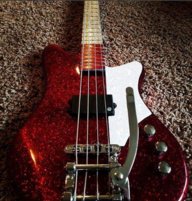

caribbean rosewood/chechen is not listed in the CITES Appendices or on the IUCN Red List of Threatened Species but ishibashi wouldn't ship me a rickenbacker with this wood because of citesRic post on their forum: they now use "Caribbean rosewood. This wood has been used since last September [2011] on the majority of our instruments. At the same time, we have been exhausting our remaining bubinga supplies. The Caribbean rosewood tends to have much more figure in it than bubinga."
and, if you want more info on the switch: "Actually the 2008 amendment to the Lacy Act as well as the events of August 24 [Federal raids on Gibson, I think] in Nashville and Memphis of last year motivated us to make the switch. The bubinga (African Rosewood) that we used comes from Central African countries with not so stable governments or legal systems so we opted to find a sustainable supply of fretboard wood from less dodgy parts of the globe.
Caribbean Rosewood comes primarily from Belize and the Yucatan Peninsula of Mexico. It has been used for centuries to make fine furniture and native instruments. Although some American luthiers have started to offer Caribbean Rosewood on their guitars, it is still relatively unknown. I suspect that we will see guitarmakers start to use it more and more as it is a great tonewood, beautiful to look at, and most importantly, not endangered."
and, for you tonewood heads: "The tone is indistinguishable from bubinga, which does make some sense as neither African rosewood (bubinga) nor Caribbean rosewood (chechen) are true rosewoods in the Dalbergia family. Retaining the tonal properties of bubinga was a very important consideration for us in switching to CR."
Rickenbacker International Corporation - Forum • View topic - new 4003,s will caribbean rosewood be standard now??

Thanks for uploading the pics FerK!
So what is it that makes it obvious this bass is a fake?
it has one extra fret for starters
im annoyed to come here and not see any rickenbackers.
View attachment 3306057
NICE!!
here's another one!!!

Lots of things!So what is it that makes it obvious this bass is a fake?


