
Enjoy the benefits of a premium membership!
Upgrade Account
-
TalkBass has been independent since 1998. Add your voice.
Create a free account to reply to discussions, view embedded media, and browse with fewer display ads.
Join free Log in
Want zero display ads or expanded classifieds tools? Compare plans.
You are using an out of date browser. It may not display this or other websites correctly.
You should upgrade or use an alternative browser.
You should upgrade or use an alternative browser.
FEA fan club!
- Thread starter bongomania
- Start date
More options
Who Replied?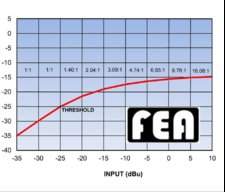
That you're making a new distortion!
If this was public knowledge before I somehow missed it.
Oh I understand now. A long time ago I think I may have briefly mentioned that there was going to be a replacement distortion when someone asked why the DBD was being discontinued.
-Frank


...our DBD had so many options for dialing in your sound that it was fairly difficult to quickly adjust...
I agree that the DBD can be a difficult beast to tame. I surely needed a few attempts (and the manual at hand) before I was satisfied with my sound but man it sounds so goooood.

There's a need in the market place for a really responsive dynamic overdrive pedal. One which responds to playing levels as opposed to being a blended signal. In a simular way that an envelope filter gets triggered by the player digging in...the dirt could go from completely clean to really dirty as the player digs in.


So I was finally able to spend some good evaluation time with my new Opti-Fet - It's been on my board since I got in late-August but I haven't been running it at gigs as I don't like running new gear that I am not 100% familiar with.
A few comments -
First, it is simply amazing how quiet it is. There were moments that I literally had to look at the light to make sure it was on.
Second, I would love to know what the range is for the threshold knob. It feels much lower (ie wider range) than either the Diamond (well you don't have a threshold knob there but...) or the MarkBas. I use my compressors as tone enhancement and usually want the comp to kicking in reasonably early and using a pretty low ratio. But with the FEA, I had to back right off the threshold or it was just too much.
The monitoring seems appropriately sensitive compared to the Diamond - which if you use its light, you would think it was never on.
Point being - I love it. I need to learn how to use it a bit better and by the end of our session, I had it dialed in much better. I also need to learn how to better use the attack and release dials. I generally have left them at noon on most of my comps, but I think I want the FEA to be a little less aggressive. Any tips there?
A few comments -
First, it is simply amazing how quiet it is. There were moments that I literally had to look at the light to make sure it was on.
Second, I would love to know what the range is for the threshold knob. It feels much lower (ie wider range) than either the Diamond (well you don't have a threshold knob there but...) or the MarkBas. I use my compressors as tone enhancement and usually want the comp to kicking in reasonably early and using a pretty low ratio. But with the FEA, I had to back right off the threshold or it was just too much.
The monitoring seems appropriately sensitive compared to the Diamond - which if you use its light, you would think it was never on.
Point being - I love it. I need to learn how to use it a bit better and by the end of our session, I had it dialed in much better. I also need to learn how to better use the attack and release dials. I generally have left them at noon on most of my comps, but I think I want the FEA to be a little less aggressive. Any tips there?
So I was finally able to spend some good evaluation time with my new Opti-Fet - It's been on my board since I got in late-August but I haven't been running it at gigs as I don't like running new gear that I am not 100% familiar with.
A few comments -
First, it is simply amazing how quiet it is. There were moments that I literally had to look at the light to make sure it was on.
Second, I would love to know what the range is for the threshold knob. It feels much lower (ie wider range) than either the Diamond (well you don't have a threshold knob there but...) or the MarkBas. I use my compressors as tone enhancement and usually want the comp to kicking in reasonably early and using a pretty low ratio. But with the FEA, I had to back right off the threshold or it was just too much.
The monitoring seems appropriately sensitive compared to the Diamond - which if you use its light, you would think it was never on.
Point being - I love it. I need to learn how to use it a bit better and by the end of our session, I had it dialed in much better. I also need to learn how to better use the attack and release dials. I generally have left them at noon on most of my comps, but I think I want the FEA to be a little less aggressive. Any tips there?
Thanks Mosfed!
The range for the threshold is quite large. Its range goes from infinity (off) to -47dBu, with approx -33dBu at the 12 o'clock position of the knob.
The ratio control is as follows and is the same for the DE-CL:
MIN (7:00) = 1.5:1
9:30 = 4:1
12:00 = 6:1
2:30 = 11:1
Max (5:00) = 20:1
IMO, ratios of 4:1 and higher are fairly heavy-handed on signal dynamics. I usually never set the ratio control past the 9:30 position. I believe the Diamond has a fixed ratio of 3:1... That would be at approximately the 8:30 position of the ratio control on the Opti-FET and DE-CL if you are trying to get a similar response.
I designed the LED comp indicator circuit to only respond to threshold and attack. I found that when the LED indicators also showed the release response I had a more difficult time zeroing in on my target settings. So there is always some degree of relaxing compression occurring just after the LED turns off. The only way for me to show both the snappy attack/threshold response and the relaxing release response would be to use a bi-color LED and add extra circuitry. I decided to keep this a simple circuit and just go with the snappy attack and threshold LED indicator.
-Frank
Thanks Mosfed!
The range for the threshold is quite large. Its range goes from infinity (off) to -47dBu, with approx -33dBu at the 12 o'clock position of the knob.
The ratio control is as follows and is the same for the DE-CL:
MIN (7:00) = 1.5:1
9:30 = 4:1
12:00 = 6:1
2:30 = 11:1
Max (5:00) = 20:1
IMO, ratios of 4:1 and higher are fairly heavy-handed on signal dynamics. I usually never set the ratio control past the 9:30 position. I believe the Diamond has a fixed ratio of 3:1... That would be at approximately the 8:30 position of the ratio control on the Opti-FET and DE-CL if you are trying to get a similar response.
I designed the LED comp indicator circuit to only respond to threshold and attack. I found that when the LED indicators also showed the release response I had a more difficult time zeroing in on my target settings. So there is always some degree of relaxing compression occurring just after the LED turns off. The only way for me to show both the snappy attack/threshold response and the relaxing release response would be to use a bi-color LED and add extra circuitry. I decided to keep this a simple circuit and just go with the snappy attack and threshold LED indicator.
-Frank
Thanks so much Frank - that is really helpful and explains why I was getting the response I was getting. I think I should be running the threshold much higher than I was. I had no idea (apologies if your manual says it....
 ) that noon on the threshold was -33db.
Many many thanks
Thanks so much Frank - that is really helpful and explains why I was getting the response I was getting. I think I should be running the threshold much higher than I was. I had no idea (apologies if your manual says it....
Many many thanks
That information regarding knob positions is not in the booklet. I should really carve out some time and revise the booklet information.
That threshold range can be difficult dial in with the small control knobs. That is why I added a threshold trimmer to the DE-CL, because working with both the compressor and limiter thresholds, with that much range, was sometimes frustrating.
-Frank
Thanks Mosfed!
The range for the threshold is quite large. Its range goes from infinity (off) to -47dBu, with approx -33dBu at the 12 o'clock position of the knob.
The ratio control is as follows and is the same for the DE-CL:
MIN (7:00) = 1.5:1
9:30 = 4:1
12:00 = 6:1
2:30 = 11:1
Max (5:00) = 20:1
IMO, ratios of 4:1 and higher are fairly heavy-handed on signal dynamics. I usually never set the ratio control past the 9:30 position. I believe the Diamond has a fixed ratio of 3:1... That would be at approximately the 8:30 position of the ratio control on the Opti-FET and DE-CL if you are trying to get a similar response.
I designed the LED comp indicator circuit to only respond to threshold and attack. I found that when the LED indicators also showed the release response I had a more difficult time zeroing in on my target settings. So there is always some degree of relaxing compression occurring just after the LED turns off. The only way for me to show both the snappy attack/threshold response and the relaxing release response would be to use a bi-color LED and add extra circuitry. I decided to keep this a simple circuit and just go with the snappy attack and threshold LED indicator.
-Frank
Hi frank - I was just looking at that range again and please help me understand something - apologies if it is a stupid question.
So the way I understand threshold is "the point where your compressor kicks in" - so if you set the comp with a threshold of -20db, then when you have a signal that is stronger than -20db, the comp will kick in.
The scale you mention above is from -47db to off with -33 as the center point. So the range on the left hand side is basically 14db and the range on the right hand side is...? If it is the same then the max threshold would be around -19db and that can't be possible. What am I missing? I am sure this is an idiotic question.
Last edited:

Hi frank - I was just looking at that range again and please help me understand something - apologies if it is a stupid question.
So the way I understand threshold is "the point where your compressor kicks in" - so if you set the comp with a threshold of -20db, then when you have a signal that is stronger than -20db, the comp will kick in.
The scale you mention above is from -47db to off with -33 as the center point. So the range on the left hand side is basically 14db and the range on the right hand side is...? If it is the same then the max threshold would be around -19db and that can't be possible. What am I missing? I am sure this is an idiotic question.
This is a great question!
You’re right in that if the compressor threshold is set to -20dBu, that an input signal -20dBu or greater will trigger compression.
But, the ratio control will also modify the threshold setting in these compressors. The -33dBu level is an approximate threshold level at the 12:00 position of the threshold control when the ratio is set to 1.5:1 (minimum). If you were to set for a -33dBu threshold and then change the ratio control, the threshold level will change from your -33dBu setting because of how the feedback circuit interacts with these two controls and the behavior of soft knee at low ratios to hard knee at high ratios.
The scale of the threshold control is non-linear in these pedals. When I first started building compressors for myself, the vendors that I was buying parts from only had linear taper and audio taper pots in the style/size that I was using. To get a more linear scale for the knob rotation (-40 to +40 for example) I needed an anti-log or reversed audio taper pot… so I used a linear taper that was available. I was finding that the non-linear function of the threshold was handy for how I was adjusting the pedals. So I never changed how it functioned, even after I eventually was able order the anti-log and custom taper pots directly from the manufacturer. It’s also why I needed a snappy threshold indicator.
I suggest that the ratio control be set before adjusting the threshold control. That’s how I have been making the adjustments.
-Frank
Excuse me... WE NEED THE DE-CL'S NOW!!
We have been shipping DE-CL's that started on October 6th. We still have several more batches to build and will be working on them for a few more months.
-Frank
This is a great question!
You’re right in that if the compressor threshold is set to -20dBu, that an input signal -20dBu or greater will trigger compression.
But, the ratio control will also modify the threshold setting in these compressors. The -33dBu level is an approximate threshold level at the 12:00 position of the threshold control when the ratio is set to 1.5:1 (minimum). If you were to set for a -33dBu threshold and then change the ratio control, the threshold level will change from your -33dBu setting because of how the feedback circuit interacts with these two controls and the behavior of soft knee at low ratios to hard knee at high ratios.
The scale of the threshold control is non-linear in these pedals. When I first started building compressors for myself, the vendors that I was buying parts from only had linear taper and audio taper pots in the style/size that I was using. To get a more linear scale for the knob rotation (-40 to +40 for example) I needed an anti-log or reversed audio taper pot… so I used a linear taper that was available. I was finding that the non-linear function of the threshold was handy for how I was adjusting the pedals. So I never changed how it functioned, even after I eventually was able order the anti-log and custom taper pots directly from the manufacturer. It’s also why I needed a snappy threshold indicator.
I suggest that the ratio control be set before adjusting the threshold control. That’s how I have been making the adjustments.
-Frank
This is great stuff Frank. So, let's assume I am going for a ratio around 3:1 or 4:1 - something around 9pm on your dial. With that ratio, what would be the -db equivalent of the threshold knob at noon? And if I increase the ratio to around noon (what would be the ratio setting of noon as well?)
Also any tips on using the attack and release knobs would be greatly appreciated as well.
Many thanks

We have been shipping DE-CL's that started on October 6th. We still have several more batches to build and will be working on them for a few more months.
-Frank
i check my spam folder at least once a day to make sure that I did not get notified


This is great stuff Frank. So, let's assume I am going for a ratio around 3:1 or 4:1 - something around 9pm on your dial. With that ratio, what would be the -db equivalent of the threshold knob at noon? And if I increase the ratio to around noon (what would be the ratio setting of noon as well?)
Also any tips on using the attack and release knobs would be greatly appreciated as well.
Many thanks
Now this is a much harder question to accurately answer.

Because of the tolerances of the electronics and especially the optos, there will be variances from pedal to pedal with regards to the threshold and ratio control positions. I have taken the average of several pedal measurements to come up with those approximate ratio and threshold settings I have given in the post above. I did not collect data for every combination of the ratio and threshold controls. (I’m still old school with some of this stuff, so taking hundreds of manual measurements is very time consuming.) So, If you need more accurate numbers we will need to measure your pedal at the settings that you want to observe.
Here are some plots that were averaged from 4 Opti-FET’s that may be of some help.
This plot is with the ratio at minimum, threshold set to -20dBu with a test frequency of 200Hz. You can see that this has a very soft knee, almost a gentle curve throughout the plot.
This plot is with the ratio at maximum, threshold set to -25dBu with a test frequency of 200Hz. You can see here that the knee is hard and is more along the lines of a flat line limiter up to approx -5dBu then it relaxes a bit from -5dBu to +10dBu. Even with the input signal varying by 35dBu (-25 to +10) the output only changed by less than 5dBu.
The attack and release controls operate the same as on most compressors. The setting of these controls will be totally dependent on the instrument, playing style and desired goals. I believe Ovnilabs has some great info and suggestions on how to use these controls… if he doesn’t then maybe there will be others that are using this pedal that can offer you some suggestions. The information that would be needed is playing style, gear used and what your goals are. Can anyone offer Mosfed some help/suggestions?
Thanks!
-Frank
i check my spam folder at least once a day to make sure that I did not get notified
Thanks for hangin' in there! I really hope with the long wait that the pedal really meets your expectations!
-Frank
I can't wait to get my hands on a Photon Fuzz!!!!!!
The Photon Fuzz will be getting a circuit makeover sometime in 2015. It will be changed from direct bypass to a buffered bypass circuit and cycled back into production. All of the FEA high gain pedals will have a buffered bypass from this point forward. The compressors will remain direct bypass.
-Frank

A small detail about threshold: while it is common to describe it as "where the compression kicks in", it's more accurate to say that it's where the compression reaches a certain (kind of arbitrary) degree of strength, say 3/4 strength for example. IOW it's not the case usually that there's "no compression at all" below the threshold. This contributes to the (understandable, natural) confusion people have about what exactly to expect at different knob settings, regardless of brand or the type of circuit.


