I gotta get one of 'dem" joints !Here is my new Custom Shop '59 Precision Relic. It is hands down the best P bass I have owned(which inludes a Fender '62Reissue, Early 2000 MIA, 1976 vintage Fender, and a Lakland Gluab). This bass weighs only 7.5 lbs, and NAILS the vintage P bass tone. It is open, deep, and punchy. Killer bass. I wouldn't hesitate to recommend a Custom Shop to anyone looking for a great feeling, great playing, vintage style instrument. In fact, I have found that many of them are better than an actual vintage Fender. Better wood, more attention to detail.

Enjoy the benefits of a premium membership!
Upgrade Account
-
TalkBass has been independent since 1998. Add your voice.
Create a free account to reply to discussions, view embedded media, and browse with fewer display ads.
Join free Log in
Want zero display ads or expanded classifieds tools? Compare plans.
You are using an out of date browser. It may not display this or other websites correctly.
You should upgrade or use an alternative browser.
You should upgrade or use an alternative browser.
Fender Custom Shop "Club"???
- Thread starter Theo-cantor-
- Start date
-
- Tags
- club
More options
Who Replied?
Here is my new Custom Shop '59 Precision Relic. It is hands down the best P bass I have owned(which inludes a Fender '62Reissue, Early 2000 MIA, 1976 vintage Fender, and a Lakland Gluab). This bass weighs only 7.5 lbs, and NAILS the vintage P bass tone. It is open, deep, and punchy. Killer bass. I wouldn't hesitate to recommend a Custom Shop to anyone looking for a great feeling, great playing, vintage style instrument. In fact, I have found that many of them are better than an actual vintage Fender. Better wood, more attention to detail.
Yeah my CS 59 is very deep and punchy, more so than any of my other P-basses in fact.
well if that's the case why then is the neck on my 03 Marcus Miller V Rock Maple,oh and btw the neck on my soon to arrive CS 64 Jazz Relic Rock Maple and the reason that came about was because I bitched,moan, and cajole the find people at Fender about it because the bass was advertised as period correct,which Quatersawn wasn't used back thenHuh?
Quartersawn is a way of cutting, not a species. It's also only found on the custom shop models from Fender, at least as far as I can tell.

Huh?
Quartersawn is a way of cutting, not a species. It's also only found on the custom shop models from Fender, at least as far as I can tell.
Quarter Sawn Lumber
Quarter sawn lumber is perhaps most famous from Oak. The ray flecks that are revealed when quarter sawn, are a prize for many furniture craftsmen (and craftswomen). Besides Oak there are a handful of other species that display a unique appearance when quarter sawn. These unique features are usually only displayed on a quarter sawn board.
But in a production environment, beauty is cast aside for more yield from a log and more production in less time. This is the main reason why you pay more money for quarter sawn lumber. If it takes longer to saw a log and produce less board footage while creating more waste the company will have to charge more money to make up what they lost production. The secondary reason for higher prices are because craftsmen like us will pay more for this lumber, so that we can take advantage of it's character and better properties.
"There is more than one way to skin a cat." as the saying goes. Well, there is more than one way to quarter saw a log also. I will just quickly explain one technique, because all the details of sawing logs to lumber can fill a book or two.
This is the most common way of quarter sawing that I have seen. The first step of this method is to quarter the log (see figure 2). Then each individual quartered section is placed on the carriage in a position so that the annual rings of growth are as close to 90 degrees perpendicular to the face of the boards as possible.
The grain on the face of a quarter sawn board will be tight, straight, parallel lines running the length of the board. And if the rings are very close to 90 degrees from the face, then the famous ray flecks of Quartered Oak, we be proudly display along the face of the board.
One other technique involves re-adjusting the quartered section after each board is sawn. This way they are taking a board then a small wedge shaped slab, then another board and so on. This way the rings are always 90 degrees to the face. But there is a tremendous amount of waste created.
http://www.allwoodwork.com/article/woodwork/plainorquartersawn.htm
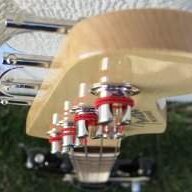
well if that's the case why then is the neck on my 03 Marcus Miller V Rock Maple,
Umm...because it's not a Custom Shop instrument?
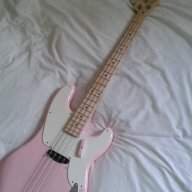
Cool! Possibly dumb question but Fender wasn't offering that colour in 55 were they?
Fender did have a few (very limited number) instruments in custom colours. Here's a pic of some of the basses taken at a trade show in 1954
Fender did have a few (very limited number) instruments in custom colours. Here's a pic of some of the basses taken at a trade show in 1954
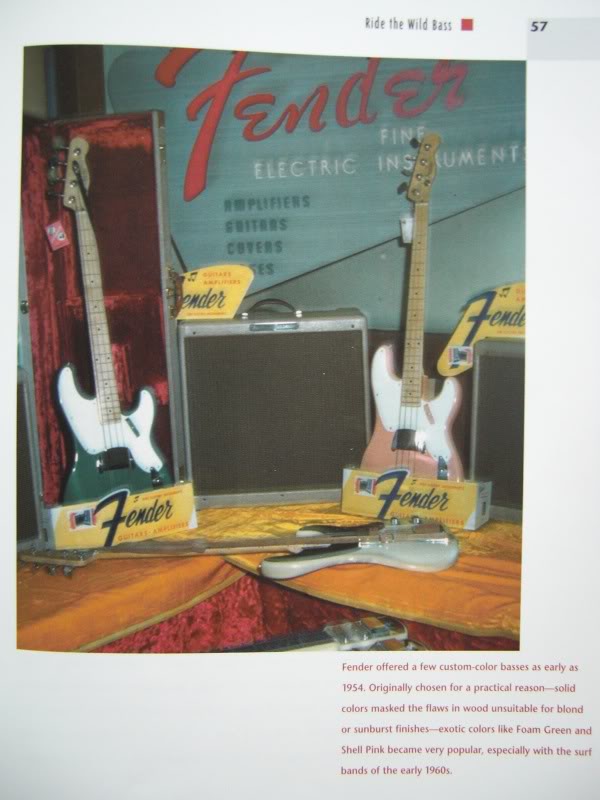
That is AWESOME!


custom colours. Here's a pic of some of the basses taken at a trade show in 1954
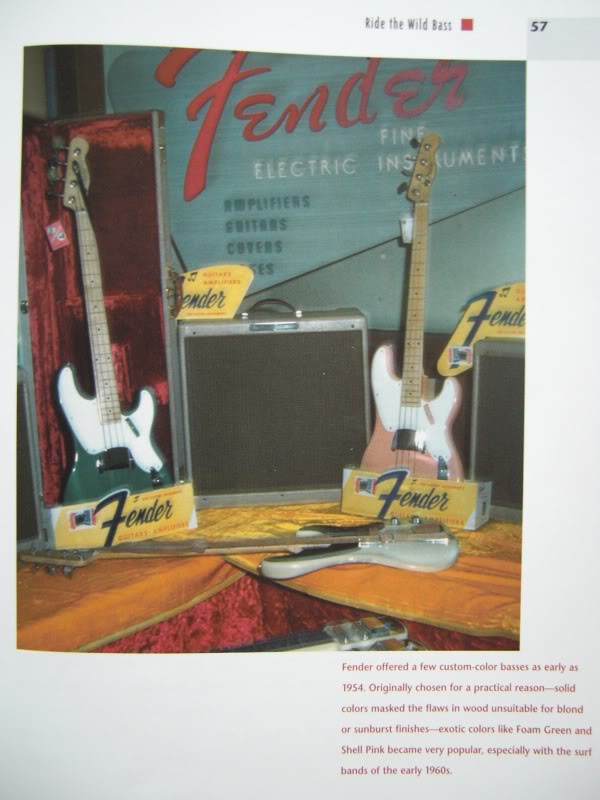
Thanks for that pic Kevin.
I can get kinda close.... my Custom Shop 55 with an original '63 Concert Amp. With the foam mute installed, this setup nails the Bill Black sound he used on Jailhouse Rock.

So I recently acquired this killer playing/sounding CS Jazz bass and I need some info on it...it came with no documentation. Serial #CN70XXXX. Just wondering about the year, some sites say it's 2007 and some say it's 1997. Also, the pickups have one pole piece per string as opposed to the "normal" two pole pieces per string, and the neck is completely bound. Thanks in advance for any info!!
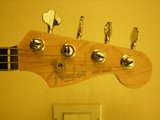
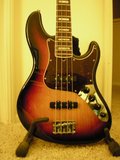
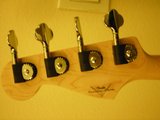
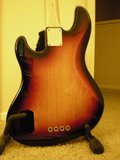
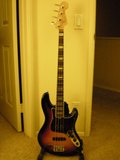
I doubt your bass is a 2007. If you bass has neck binding it will be an older bass. I bought a CS custom classic (what you have) without paperwork brand new that was a managers special and found out the bass was ten years old! my serial# is CN5045** and it's a 1997. Also the single pole pieces were used on the John Suhr Equipped basses and he left Fender R&D in 1998. My CS jazz has custom noiseless pups by the way.So I recently acquired this killer playing/sounding CS Jazz bass and I need some info on it...it came with no documentation. Serial #CN702209. Just wondering about the year, some sites say it's 2007 and some say it's 1997. Also, the pickups have one pole piece per string as opposed to the "normal" two pole pieces per string, and the neck is completely bound. Thanks in advance for any info!!
These pics don't do the sunburst finish or the wood grain justice, darn cell phone pics!!




Excellent! Thanks so much for the info! I am pretty stoked with this find. Btw pyrohr, we have the same birthday.
I got a very quick response from Fender!! Thanks for the e-mail address Pyrohr!! Here's what they sent me:
Date: 4/22/1998
Model Name: American Classic Jazz Bass®
Model Number: 019-7200-(Color #) and 019-7202-(Color #)
Series: Custom Shop "Custom Classics" Series
Body: Special Vintage Style Down-sized Light Ash Body
Neck: Graphite Reinforced Maple, Bound, Block Inlay
Fingerboard: 019-7200...Rosewood Fretboard, 019-7202... Maple Fretboard
No. of Frets: 22
Scale Length: 34 (864 mm)
Width @ Nut: 1.5 (38 mm)
Hardware: Chrome
Machine Heads: American Deluxe
Bridge: Deluxe (Strings-Thru-Body and Top Load)
Pickguard: Tortoise Shell
Pickups: New Special Design Jazz Bass Style
Pickup Switching: Pan Pot
Controls: Volume, Treble Boost/Cut (+-18db), Bass Boost/Cut (+-18db), Mid Boost/Cut (+-12db), Active Electronics
Colors: (800) 3-Color Sunburst,
(821) Natural
(Polyurethane Finish)
Strings: OEM 8250M #073-8250-006 NPS .045, .065, .085, .110TW (Taperwound E)
Unique Features:
Source: U.S. Fender Custom Shop
Accessories: Black Tolex Case, Strap, Cable
U.S. MSRP: $2599.99
Specs: Prices and Specifications Subject to Change Without Notice
INTRODUCED: 1995
DISCONTINUED: 1/1997
I think this one might be a keeper! I've been looking for a 4 string for a while and this one is really nice!!
Date: 4/22/1998
Model Name: American Classic Jazz Bass®
Model Number: 019-7200-(Color #) and 019-7202-(Color #)
Series: Custom Shop "Custom Classics" Series
Body: Special Vintage Style Down-sized Light Ash Body
Neck: Graphite Reinforced Maple, Bound, Block Inlay
Fingerboard: 019-7200...Rosewood Fretboard, 019-7202... Maple Fretboard
No. of Frets: 22
Scale Length: 34 (864 mm)
Width @ Nut: 1.5 (38 mm)
Hardware: Chrome
Machine Heads: American Deluxe
Bridge: Deluxe (Strings-Thru-Body and Top Load)
Pickguard: Tortoise Shell
Pickups: New Special Design Jazz Bass Style
Pickup Switching: Pan Pot
Controls: Volume, Treble Boost/Cut (+-18db), Bass Boost/Cut (+-18db), Mid Boost/Cut (+-12db), Active Electronics
Colors: (800) 3-Color Sunburst,
(821) Natural
(Polyurethane Finish)
Strings: OEM 8250M #073-8250-006 NPS .045, .065, .085, .110TW (Taperwound E)
Unique Features:
Source: U.S. Fender Custom Shop
Accessories: Black Tolex Case, Strap, Cable
U.S. MSRP: $2599.99
Specs: Prices and Specifications Subject to Change Without Notice
INTRODUCED: 1995
DISCONTINUED: 1/1997
I think this one might be a keeper! I've been looking for a 4 string for a while and this one is really nice!!
And we have almost the same custom shop bass! mine is FMT sunburst.Excellent! Thanks so much for the info! I am pretty stoked with this find. Btw pyrohr, we have the same birthday.
I've got the same but NOS - yesterday put back original gold anodized aluminum pickguard (previous owner changed it to tortoise shell one which also looks good on the bass).
Yep! But I am not sure if this link works here:
Invalid Link Removed
You may need to click on the image to see it in actual size. If it does not open I will upload the picture on some other site a bit later.
Invalid Link Removed
You may need to click on the image to see it in actual size. If it does not open I will upload the picture on some other site a bit later.

Much easier on the eye - I will have to try it out...
Yep! But I am not sure if this link works here:
Invalid Link Removed
You may need to click on the image to see it in actual size. If it does not open I will upload the picture on some other site a bit later.
Latest posts
-
 Do the new Rickenbacker 4003s sound like the 4001s from the '70s?
- Latest: ProbablyTooLoud
-

-

-
