
Enjoy the benefits of a premium membership!
Upgrade Account
-
TalkBass has been independent since 1998. Add your voice.
Create a free account to reply to discussions, view embedded media, and browse with fewer display ads.
Join free Log in
Want zero display ads or expanded classifieds tools? Compare plans.
You are using an out of date browser. It may not display this or other websites correctly.
You should upgrade or use an alternative browser.
You should upgrade or use an alternative browser.
Fender Jazz only with 20 frets; why?
- Thread starter Green Lantern
- Start date
More options
Who Replied?



Because Leo thought that should be plenty.
Bill, that belongs in the BP Constitution.
Music can be divided into the time before Leo Fender and the time after Leo Fender. It was a revolution. Elvis realized that immediately. Leo's bass yielded 21 available notes to play in each key. That's a two octave range plus six additional diatonic notes below or above.
And that's a-plenty... If one wants more than that, they can play it on a double bass, guitar or banjo...
Oh, give me deliverance from the tyranny of twenty frets...! Consider the poor Double Bassist... they don't even have no frets...
Bass synthesizers have more octaves than you can shake a stick at. The Stick has more octaves than you can hear... But I imagine that you could build a Bass Guitar for dogs... just need a woofer.
**And don't forget the available harmonics to extend the bass range.**
Virtuoso playing has always required that the range of the instrument be extended. But, unless you are Paganini, your band mates will never ask for more than Leo's range. BP's listen to so many virtuoso's and forget what is really required from the bass. Bless Geddy and Wooten. but...
For me, playing the intro to Good Vibrations is good use of the dusty end. Any higher and I get a nosebleed.
Last edited:

It changes the pickup placement and tone to have more frets. That is why a lot of metal guitarists loathe 24 fret guitars. They get real thin. I use guitar as an example since it is easier to hear what I mean up in that range.
On bass the tension is different and the tone will change. It's not necessarily bad, but changes have to be made for extra frets. You either have the neck closer to the pickup, which can cause clanking on slapping, or you have extra tension on the strings since the neck to bridge distance is longer.
I play jazz fusion and solo up there on a J or a Pbass. While it is easier to do on a 6 string or a 24 fret bass (i have had both), I like the limitations of the more traditional bass, and more importantly the tone. I've always appreciated being able to hold down a groove with a killler P or J tone and not sacrificing that for more frets.
Just my opinion and experience. One day I will maybe get a more modern bass, but I've owned them before and really prefer simplicity.
On bass the tension is different and the tone will change. It's not necessarily bad, but changes have to be made for extra frets. You either have the neck closer to the pickup, which can cause clanking on slapping, or you have extra tension on the strings since the neck to bridge distance is longer.
I play jazz fusion and solo up there on a J or a Pbass. While it is easier to do on a 6 string or a 24 fret bass (i have had both), I like the limitations of the more traditional bass, and more importantly the tone. I've always appreciated being able to hold down a groove with a killler P or J tone and not sacrificing that for more frets.
Just my opinion and experience. One day I will maybe get a more modern bass, but I've owned them before and really prefer simplicity.
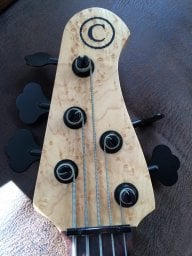
It changes the pickup placement and tone to have more frets. That is why a lot of metal guitarists loathe 24 fret guitars. They get real thin. I use guitar as an example since it is easier to hear what I mean up in that range.
On bass the tension is different and the tone will change. It's not necessarily bad, but changes have to be made for extra frets. You either have the neck closer to the pickup, which can cause clanking on slapping, or you have extra tension on the strings since the neck to bridge distance is longer.
I play jazz fusion and solo up there on a J or a Pbass. While it is easier to do on a 6 string or a 24 fret bass (i have had both), I like the limitations of the more traditional bass, and more importantly the tone. I've always appreciated being able to hold down a groove with a killler P or J tone and not sacrificing that for more frets.
Just my opinion and experience. One day I will maybe get a more modern bass, but I've owned them before and really prefer simplicity.
Why would tension change? The distance from pegs/nut to bridge isn't changing - 34" is 34," even on a Boner...
Why would tension change? The distance from pegs/nut to bridge isn't changing - 34" is 34," even on a Boner...
It can, depending on the bass. Lots of 35 inch scales out there now. One easy example is the Peavey Cirrus.
Peavey Cirrus 4 String Neck-Through Electric Bass Guitar w/OHSC Natural
When you go to 24 frets you either have to have the neck a lot closer to the pickups than normal (which changes the tone) or extend the scale length.

Because by sticking with 20 frets Fender saves money on materials and extra labour costs. As fender fans are slaves to the brand and will buy their overpriced instruments regardless whether they have 20 or 24 frets, why would they bother incurring additional costs.
Hard to read so many groundless accusations and not smile.

Last edited:

All those frets and no markers! Somebody is making a statement.It was 1960 (56 years ago) and 20 frets for the Fender Jazz Bass was enough.
How many frets on a bass is too many? | eBass
"Bass purists state loudly that no electric bass guitar needs more than 20 frets on it – especially since if you play up high on the fretboard, you’re not playing bass notes anymore."
"Bass modernists will take as many frets as you can throw at them. And yes, they will use them. If a high fret cannot be reached when the fret hand is behind the neck, the hand goes over the neck and they will play using tapping. One way or another, that modernist will find a way to use all those high frets, if for no other reason than “just because they’re there.”
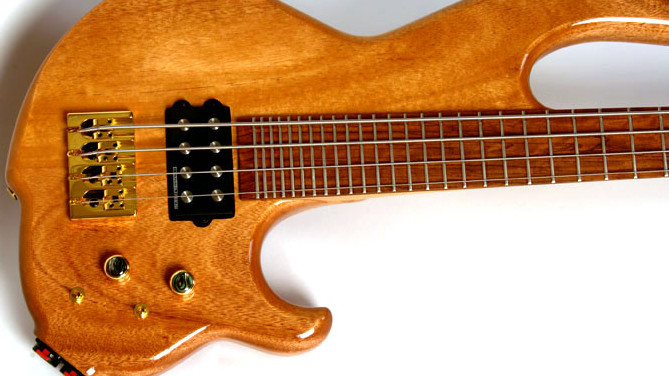
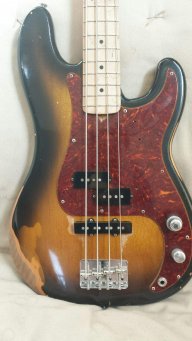
When the fretboard runs into the bridge.Leo added the 21st fret to the StingRay because players wanted to reach that high E. Why not high F, high G, high A, B, C, etc.? Where do you stop?
It can, depending on the bass. Lots of 35 inch scales out there now. One easy example is the Peavey Cirrus.
Peavey Cirrus 4 String Neck-Through Electric Bass Guitar w/OHSC Natural
When you go to 24 frets you either have to have the neck a lot closer to the pickups than normal (which changes the tone) or extend the scale length.
35" from 34" is obviously gonna change tension - but equalizing at 34, there should be no tension change. There certainly may be tonal changes based on hand and pickup placement if you extend the fretboard toward the bridge for more frets. But this thread started with consideration of Fender, and I'm not aware of them extending the Jazz, the Boner, or whatever from 34" to 35."
35" from 34" is obviously gonna change tension - but equalizing at 34, there should be no tension change. There certainly may be tonal changes based on hand and pickup placement if you extend the fretboard toward the bridge for more frets. But this thread started with consideration of Fender, and I'm not aware of them extending the Jazz, the Boner, or whatever from 34" to 35."
Right. Like I said you either have tension or tonal change, or sometimes both.
35" from 34" is obviously gonna change tension - but equalizing at 34, there should be no tension change. There certainly may be tonal changes based on hand and pickup placement if you extend the fretboard toward the bridge for more frets. But this thread started with consideration of Fender, and I'm not aware of them extending the Jazz, the Boner, or whatever from 34" to 35."
Would string gauge or material affect the tension?

Have some hostility and derision towards people who like Fenders, do ya?
Hard to read so much groundless ignorance and not smile.
I'm open to an alternative explanation, however it seems
Hard to read so much groundless ignorance and not smile.
Well not entirely, you have to consider that fender are a huge corporation like Ford or Toyota. It makes sense for them standardise the fretboard to 20 frets, if that's what the customers want and it's cheap. It's too risky for them to change it now, They'd have to change the body to match and that might turn into a 'new coke' fiasco. But I'm open to an alternative explanation.

Jaco and Jamerson (not to mention a lot of other great players) used 20 frets and 4 strings and look what they could do.
Your going way off topic. I did not ask if we need bass guitars with 21 or 24 frets. I never said anything negative about Fender. This comments like we just need to play the low notes and not be guitar players is not sticking to the topic either.
All I asked was why has Fender decided to stick with 20 frets on the Standard Jazz. The Deluxe and Elite have 21. As they did and are making basses with more than 20 I was wondering if their is any engineering or Tone difference that made them go back to 20.
Haven't read all five (!) pages, so maybe this has already been said:
Some builders choose 20 frets because it moves the "slap spot" a little bit closer to the nut. The thought is that it gives a bit more depth and fundamental to notes produced with the thumb strike. (The thump, as Larry Graham tagged it.) That's what I've read about the question.
So there's a tradeoff between that consideration, and the extra note range of 21, 22 (like my Sadowsky Will Lee), and 24. I like having an octave-and-minor-seventh range (easy to think of where I am in the upper register, in terms of intervals from the open string), and I'm happy with the slap tone.
Some builders choose 20 frets because it moves the "slap spot" a little bit closer to the nut. The thought is that it gives a bit more depth and fundamental to notes produced with the thumb strike. (The thump, as Larry Graham tagged it.) That's what I've read about the question.
So there's a tradeoff between that consideration, and the extra note range of 21, 22 (like my Sadowsky Will Lee), and 24. I like having an octave-and-minor-seventh range (easy to think of where I am in the upper register, in terms of intervals from the open string), and I'm happy with the slap tone.
Last edited:
When you go to 24 frets you either have to have the neck a lot closer to the pickups than normal (which changes the tone) or extend the scale length.
You're thinking like Leo. There were so many design and financial constraints. And what gauge and material bass strings were available at that time? Here's a great starting point for anyone interested in string tension and scale, gauge and material and winding construction - thanks to D'Addario:
http://www.daddario.com/upload/tension_chart_13934.pdf
Adding frets don't change the scale, of course, but do errors in intonation add up? How long before the dusty end gets out of line with the money end? And the string gauges required to maintain intonation. I like the sound/tone of the P and J bases for non-virtuoso playing.
Last edited:


