• TalkBass has been independent since 1998. Add your voice.
    Create a free account to reply to discussions, view embedded media, and browse with fewer display ads.
    Join freeLog in
    Want zero display ads or expanded classifieds tools? Compare plans.

Fender Rumble Club

I have added a Rumble 112 cab to my 500c. It is more power than my little band will ever need. In fact I mostly use the 112 extension cab with a Rumble 200 head I bought used !
I use my 112 w/ my 200c. Yeah, it's a little louder, but mostly it's fuller. We just don't have enuff gigs that I need it. So it sits at home.. If I'd known what I learned later, I'd have bought the 200h and 2 112's. :banghead:
 
I was never a fan of 10" bass speakers, until I heard the Rumble 500 combo. I'd always had 15"s and the occasional 12"s. But, when I first started cranking the R500c, I was amazed at the depth and warmth of such a lightweight little box! It made a believer out of me.

Plus, I can add my Bassman 115 neo cab for even more! ;)
.

I have also been a fan of my Rumble 500c and a Rumble 112 extension cab. The 500c is more power than I need. I use the 112 with a Rumble 200 head.
 
I have also been a fan of my Rumble 500c and a Rumble 112 extension cab. The 500c is more power than I need. I use the 112 with a Rumble 200 head.
And the R100 is all I need for around 80+% of the gigs we(used to)have. ~10% each for the R40 and the R200c.

ETA: And ~1/2 of 1% for the R200c/R112.
 
Last edited:
one of my first amps was a Heathkit TA-38 that i built myself from their kit in early '68. i thought that it was great at the time until i bought a '62 blonde showman with the 15" JBL tone-ring cab in mid '69, i was hooked on fender tube amps. i still have a T-38 but it's just thead without it's combo cab.

My first amp also was Heathkit TA-38. The previous owner had separated the head from the cab. It was still heavy as hell.
 
I just used my Rumble 500 v.3 head to record a track to send to a friend. He's doing a house concert and I'll be "there" with him. (I mimed my performance for a cellphone video, and he's going to put everything together and make it look like we're in the same room... sort of.)
Anyway, I used the Rumble's headphone out into the line-in jack of a little Zoom Hn1 digital recorder. "Vintage" engaged, high mids at 2:00, the rest of the EQ flat. Fender Jazz Bass with ancient Chromes and both pickups and tone full on.
It was a folk-rock song with just voice, acoustic guitar and bass, and the Rumble produced a beautifully warm tone. Just fantastic. :thumbsup::thumbsup:
 
I just used my Rumble 500 v.3 head to record a track to send to a friend. He's doing a house concert and I'll be "there" with him. (I mimed my performance for a cellphone video, and he's going to put everything together and make it look like we're in the same room... sort of.)
Anyway, I used the Rumble's headphone out into the line-in jack of a little Zoom Hn1 digital recorder. "Vintage" engaged, high mids at 2:00, the rest of the EQ flat. Fender Jazz Bass with ancient Chromes and both pickups and tone full on.
It was a folk-rock song with just voice, acoustic guitar and bass, and the Rumble produced a beautifully warm tone. Just fantastic. :thumbsup::thumbsup:
Let us know how the recording sync works out. I am interested.
 
Let us know how the recording sync works out. I am interested.
Thanks... the streaming concert will "air" tonight. I'm interested, too, in how the bass will sound in the mix and translate through the medium. I haven't heard it combined with the voice and guitar yet.
This is a guy I played with for many years, and I always had a hard time finding a good sound-- he likes a very full, chunky, fat acoustic guitar sound; this was absolutely great for his solo work, but when we played together, my bass would tend to disappear when he really laid into strumming the thing. After many years of not playing with him, and gaining other experience, I'm coming at it from a new angle: the Jazz Bass with old flats, and plenty of muting (by hand). I did still want a "vintage, organic" tone, which I why I chose the Rumble for the recording, over my GK gear.
 
After reading a bunch of this thread I decided on the Rumble stage 800. Now, what to do with the 100? And I may get that matching 2 x 10 next for gigs... 15918991677734260913836460065281.jpg


Edit:. I am really happy with the size and weight of the 800, not much bigger or heavier than the 100. I do not miss my old 4 x10 and road cabinet at all...
 
After reading a bunch of this thread I decided on the Rumble stage 800. Now, what to do with the 100? And I may get that matching 2 x 10 next for gigs...View attachment 3863123


Edit:. I am really happy with the size and weight of the 800, not much bigger or heavier than the 100. I do not miss my old 4 x10 and road cabinet at all...


Way to go, jed! @jedwards, you are now member #1224 in the Fender Rumble Club. Welcome and congratulations. Make yourself at home here, on the Rumble Club Wiki page, linked in my signature, and on the Rumble LT25, Studio 40 & Stage 800 sub-thread for modeling Rumbles!

Tell us of your Rumble journey, jedi! Any other Rumbles besides the 100 and the Stage 800? Nosy, ... uh, ... Enquiring minds wanna know. So that we can all . . . .

Rumble On!
.
 
Thanks... the streaming concert will "air" tonight. I'm interested, too, in how the bass will sound in the mix and translate through the medium. I haven't heard it combined with the voice and guitar yet.
This is a guy I played with for many years, and I always had a hard time finding a good sound-- he likes a very full, chunky, fat acoustic guitar sound; this was absolutely great for his solo work, but when we played together, my bass would tend to disappear when he really laid into strumming the thing. After many years of not playing with him, and gaining other experience, I'm coming at it from a new angle: the Jazz Bass with old flats, and plenty of muting (by hand). I did still want a "vintage, organic" tone, which I why I chose the Rumble for the recording, over my GK gear.

Interesting. I have the same issue with the guitarist of the semi-acoustic trio I play/played with. He almost always strums full 5 or 6 string chords which uses a lot of sonic space. The 3rd member plays a cajon which can put out a surprising amount of low-end so I am a bit squeezed frequency-wise. I tend to roll off the bass a bit since with the cajon it can get muddy. I tend to emphasize the upper-mids which seems to provide the best overall band sound but I do get lost is the mix fairly often. To me volume is not the answer (these are quite low-volume shows) but placement. I am still working on it after 3 years with this band. This problem is the reason I purchased my R40.

I am in an electric trio where the guitarist tends to play 2-3 string chords and a lot more single-note work and it is a world of difference.

Good luck with the video.
 
  • Like
Reactions: chupacerveza
Interesting. I have the same issue with the guitarist of the semi-acoustic trio I play/played with. He almost always strums full 5 or 6 string chords which uses a lot of sonic space. The 3rd member plays a cajon which can put out a surprising amount of low-end so I am a bit squeezed frequency-wise. I tend to roll off the bass a bit since with the cajon it can get muddy. I tend to emphasize the upper-mids which seems to provide the best overall band sound but I do get lost is the mix fairly often. To me volume is not the answer (these are quite low-volume shows) but placement. I am still working on it after 3 years with this band. This problem is the reason I purchased my R40.

I am in an electric trio where the guitarist tends to play 2-3 string chords and a lot more single-note work and it is a world of difference.

Good luck with the video.
Localization can sometimes help separate instruments in such cases, if you have the space to spread out a bit—at least the bass amp, if there's room for it away from the other two players and you're not all mixed together in a sound reinforcement (PA) system.
 
Localization can sometimes help separate instruments in such cases, if you have the space to spread out a bit—at least the bass amp, if there's room for it away from the other two players and you're not all mixed together in a sound reinforcement (PA) system.

Agreed. When mixing, I like to pan a relatively low-volume instrument (ex. tambourine) fairly hard left or right and it becomes quite noticeable.

Unfortunately with the semi-acoustic band, "stage" space is usually very tight, another reason for the R40.
 
  • Like
Reactions: EatS1stBassist
Agreed. When mixing, I like to pan a relatively low-volume instrument (ex. tambourine) fairly hard left or right and it becomes quite noticeable.

Unfortunately with the semi-acoustic band, "stage" space is usually very tight, another reason for the R40.
Sound reproduction of recordings involving two (stereo) loudspeakers is distinguishable from live sound in that it uses two paths to each ear, one from each stereo loudspeaker, to emulate a real sound field. With live sound (unless sound reproduction techniques are being used in developing a "stereo" two-channel mix in the PA), there is only one path to each ear (discounting room reflections which would be common to both scenarios). Localization based on time of arrival and angle of arrival at listeners' ears works to separate sources remarkably well. In psychoacoustics, it's known as the "cocktail party effect." Such localization enables us to focus on one person in a noisy room and tune out everyone else, provided that you have two working ears. It's quite different from using amplitude differences created by pan pots, which cannot emulate such differences in time of arrival and angle of arrival of different sound sources.
 
And the R100 is all I need for around 80+% of the gigs we(used to)have. ~10% each for the R40 and the R200c.

ETA: And ~1/2 of 1% for the R200c/R112.

Hi GonePlaid:

Thanks much for your insight. Just to clarify: You have found the R200 with a 112 extension too much power/volume for many of your gigs? A R100 with a cab is sufficient for most of your gigs? Thanks!
 
  • Like
Reactions: EatS1stBassist
... .... Just to clarify: You have found the R200 with a 112 extension too much power/volume for many of your gigs? A R100 with a cab is sufficient for most of your gigs? Thanks!


For clarification, macca, the Rumble 100 combo cannot use an extension cab. It is up to 100 watts all by itself, with no facility to increase that. The 200, 500 and Stage 800 are the only combos that can use an extension cab, per the Rumble Summary Info chart on the Rumble Club Wiki page, linked in my signature.

Hope this helps.
.
 
  • Like
Reactions: Polish Thunder
Hi GonePlaid:

Thanks much for your insight. Just to clarify: You have found the R200 with a 112 extension too much power/volume for many of your gigs? A R100 with a cab is sufficient for most of your gigs? Thanks!
Yeah, we play in relatively small places that don't want us loud. Our typical audience is 55+y/o and likes to be able to talk without screaming. Playing relatively quietly gets us return bookings.(places will ask you to turn it up; they'll tell you "you're too effing loud"). The R100 doesn't have extension cab capability, just[up to]100W into a 12. The R200c is 140W by itself, 200W with extension spkr. Also, 200c=34.5 pounds, 100=22 pounds IIRC. I gots enuff crap* to schlep as it is, any weight I can save helps.

*bass, amp, duffel w/ cables, mic, guitar stand, miscellaneous other[stuff], mic stand, music stand[book of lyrics-I have CRS], stool-2 bad knees. I use a folding cart(w/ sides)and it still takes 2 trips minimum
 
I just used my Rumble 500 v.3 head to record a track to send to a friend. He's doing a house concert and I'll be "there" with him. (I mimed my performance for a cellphone video, and he's going to put everything together and make it look like we're in the same room... sort of.)
Anyway, I used the Rumble's headphone out into the line-in jack of a little Zoom Hn1 digital recorder. "Vintage" engaged, high mids at 2:00, the rest of the EQ flat. Fender Jazz Bass with ancient Chromes and both pickups and tone full on.
It was a folk-rock song with just voice, acoustic guitar and bass, and the Rumble produced a beautifully warm tone. Just fantastic. :thumbsup::thumbsup:
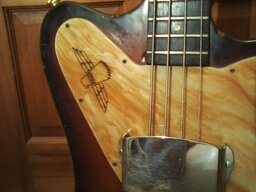
Just a thought for you on tone controls for a Fender Jazz. Open the the tone pot for the neck pup all the way. Back the bridge pot off full until you hear a big change in the tone. It will be even fuller and warmer the both full up.
 
  • Like
Reactions: chupacerveza
Just a thought for you on tone controls for a Fender Jazz. Open the the tone pot for the neck pup all the way. Back the bridge pot off full until you hear a big change in the tone. It will be even fuller and warmer the both full up.
Yup, I know all about Jazz Bass controls and different blends. I often use the setting you're describing when I've playing live. (I'm primarily a P-Bass person.) For this recording, I wanted the bridge pickup to be up full. (But not the "Jaco sound.")