

Enjoy the benefits of a premium membership!
Upgrade Account
-
TalkBass has been independent since 1998. Add your voice.
Create a free account to reply to discussions, view embedded media, and browse with fewer display ads.
Join free Log in
Want zero display ads or expanded classifieds tools? Compare plans.
You are using an out of date browser. It may not display this or other websites correctly.
You should upgrade or use an alternative browser.
You should upgrade or use an alternative browser.
Finally revisiting a fretless project
- Thread starter Dark Horse
- Start date
More options
Who Replied?

Please make a Youtube channel for these builds! This one was especially cool- love that spalting on the body.


Beautiful!!!

Andy this is just top notch! Seriously, you should open a small production shop. I think you’d have a line out the door.
Andy this is just top notch! Seriously, you should open a small production shop. I think you’d have a line out the door.
Thanks so much !!! I do it for fun… just follow my muse. But I’m trying to get better with each build, and learn something new almost every day from the guys here on the forum
I still have a little setup work, but she’s basically done…
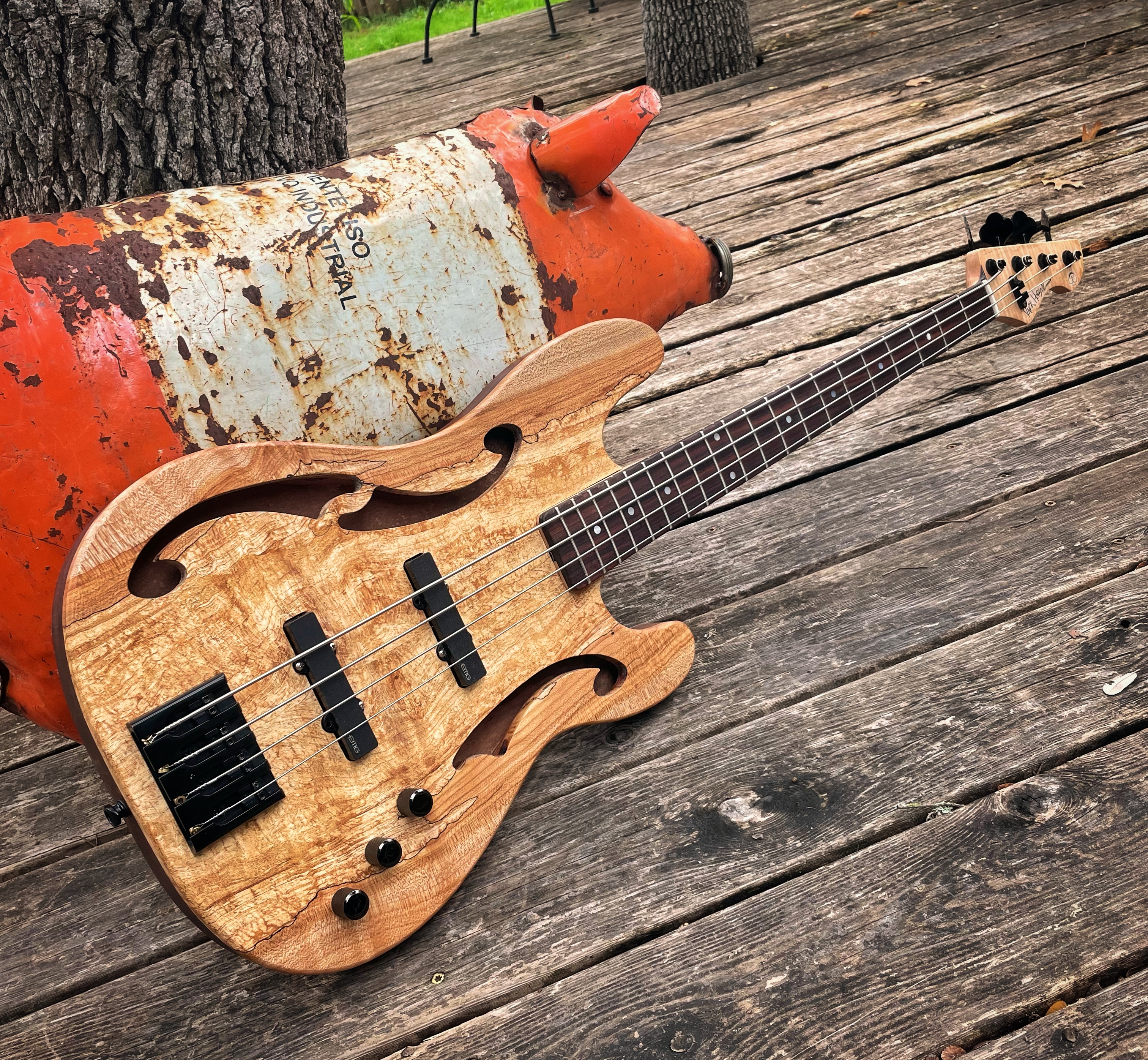
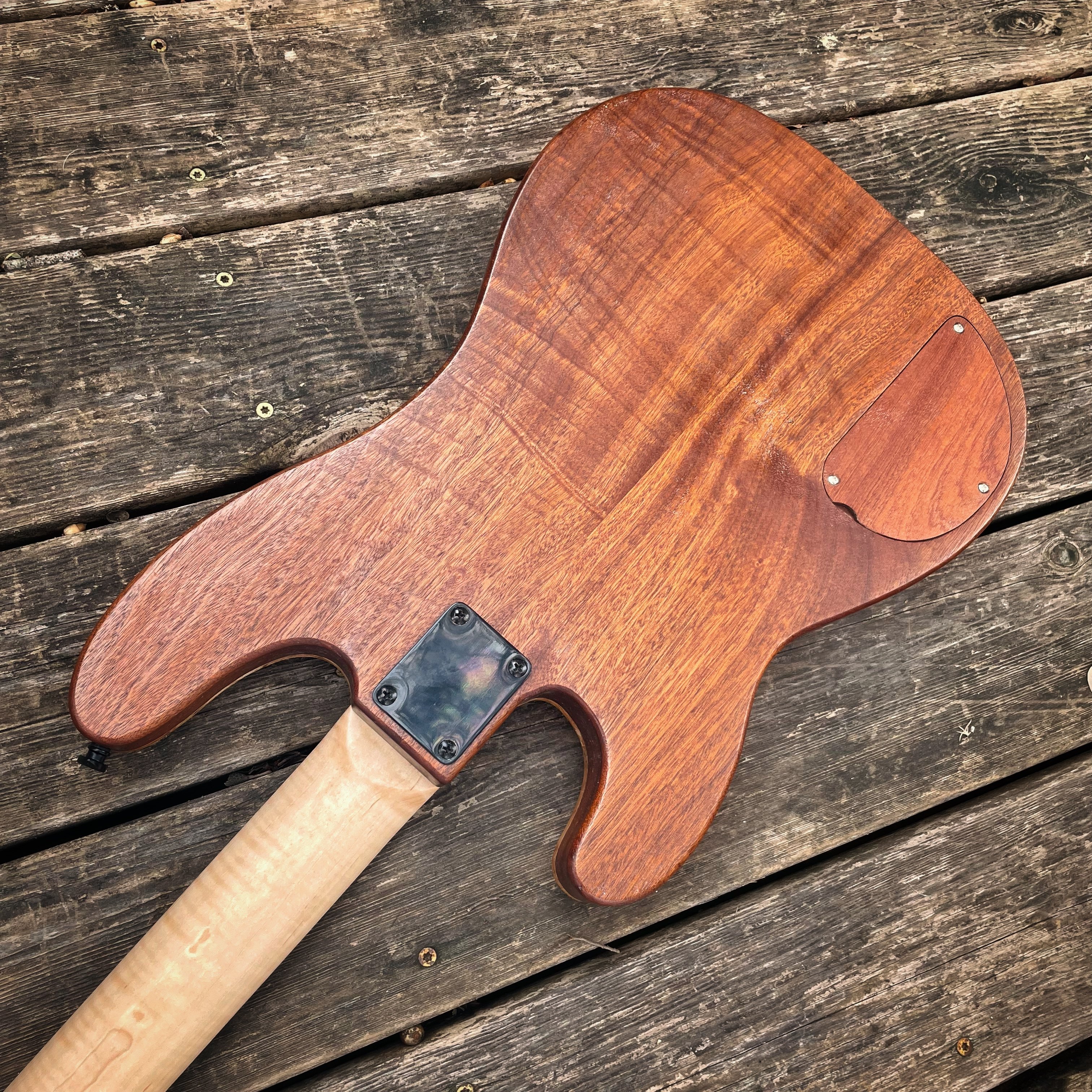
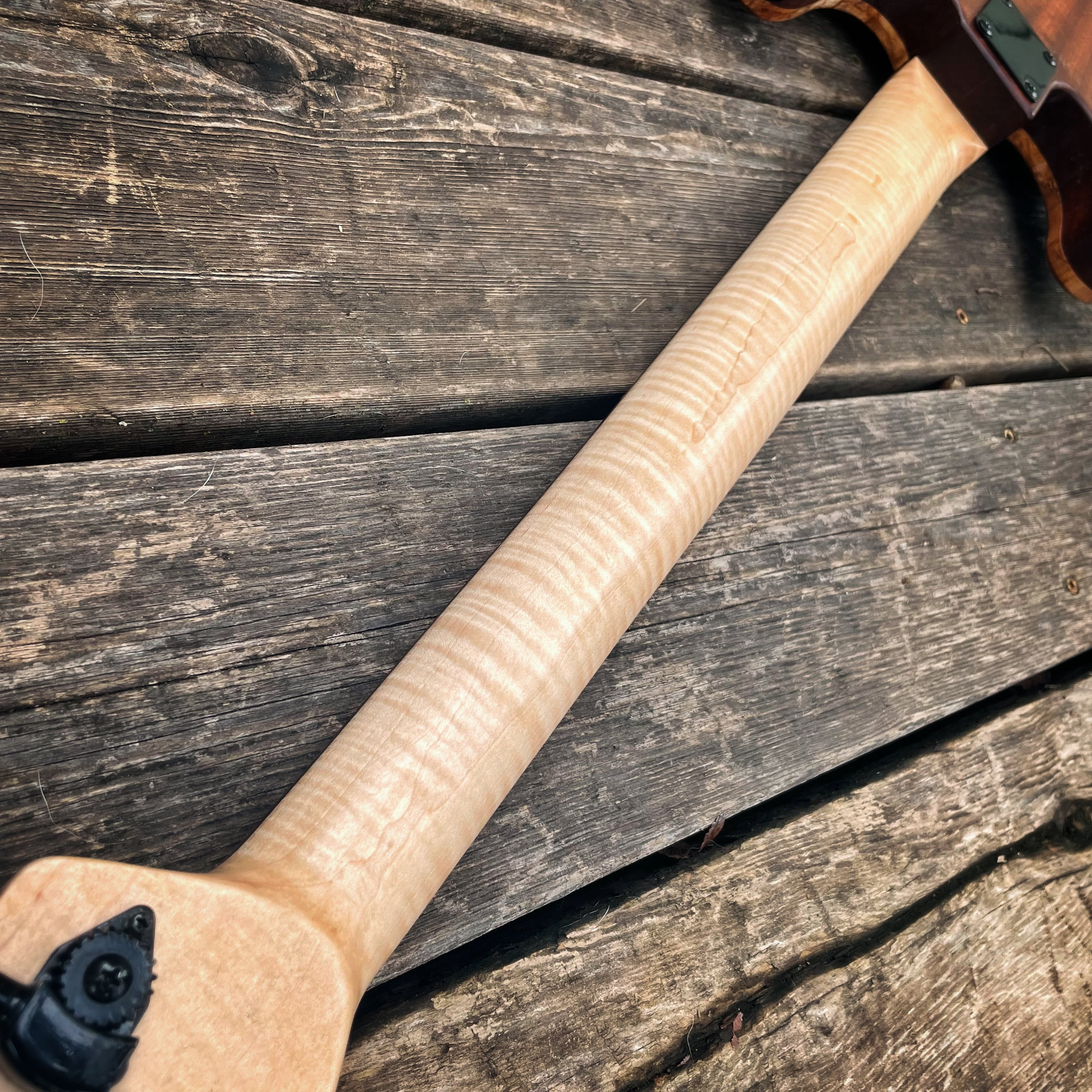
and here’s what she sounds like through a tiny Fender Rumble practice amp. Please excuse the crappy playing and the zingy new strings !
and here’s what she sounds like through a tiny Fender Rumble practice amp. Please excuse the crappy playing and the zingy new strings !


Interested that you used Polyx. I have a little left from doing the floors and doors in our house and I'm thinking of sanding down an old Yamaha BBN4III I got off Ebay last year. I was going to use Polyx but have only just seen this.First coat of osmo applied …
View attachment 5287134 View attachment 5287135 View attachment 5287136 View attachment 5287137
What grade did you sand down to? I was going to take it only to 120 grit as Osmo say any finer sanding clogs the grain even after wiping with white spirit and first coat won't penetrate and possible leave 'pooling'. I was also going to apply with a microfibre.
I've used Osmo a few times now, and I have a few thoughts.Interested that you used Polyx. I have a little left from doing the floors and doors in our house and I'm thinking of sanding down an old Yamaha BBN4III I got off Ebay last year. I was going to use Polyx but have only just seen this.
What grade did you sand down to? I was going to take it only to 120 grit as Osmo say any finer sanding clogs the grain even after wiping with white spirit and first coat won't penetrate and possible leave 'pooling'. I was also going to apply with a microfibre.
Their suggested 120 grit may work for a floor, but IMHO it's nowhere near smooth enough for what we expect to feel on a guitar. I did testers with 220 and they were also not smooth enough. I've ended up taking it to 320 grit with lots of grain raising in between (steam and damp cloths) to make sure it's smooth. I really, really like the feel when it's been grain filled with epoxy and then had Osmo applied, but that's not for everyone.
I made a couple of charcuterie boards out of walnut for holiday gifts and even though I sanded them to 320 before doing two coats of Osmo, there's enough grain feel for me to be irritated by it.

Interested that you used Polyx. I have a little left from doing the floors and doors in our house and I'm thinking of sanding down an old Yamaha BBN4III I got off Ebay last year. I was going to use Polyx but have only just seen this.
What grade did you sand down to? I was going to take it only to 120 grit as Osmo say any finer sanding clogs the grain even after wiping with white spirit and first coat won't penetrate and possible leave 'pooling'. I was also going to apply with a microfibre.
I went to 320 and then some 0000 steel wool. I wasn’t looking for gloss, or id go higher and polish

Steaming, hmmm. How exactly would you go about that? I've tried searching but all I'm seeing is resetting a neck using steam. I've got a very good pressure steam cleaner for using in the house, would that work?I've used Osmo a few times now, and I have a few thoughts.
Their suggested 120 grit may work for a floor, but IMHO it's nowhere near smooth enough for what we expect to feel on a guitar. I did testers with 220 and they were also not smooth enough. I've ended up taking it to 320 grit with lots of grain raising in between (steam and damp cloths) to make sure it's smooth. I really, really like the feel when it's been grain filled with epoxy and then had Osmo applied, but that's not for everyone.
I made a couple of charcuterie boards out of walnut for holiday gifts and even though I sanded them to 320 before doing two coats of Osmo, there's enough grain feel for me to be irritated by it.
Would you take it all the way down to 320, then steam, sand and repeat multiple times? How long do you leave the steamed wood befor embarking on the next rubbing down?
Sorry for bombarding you with loads of questions but this method sounds really interesting.
Happy to hear you can also go finer with the Osmo.

I sand up to 220, then raise the grain over the piece with a damp (almost dry) cloth. From there, I sand and grain raise again or twice more depending on how much grain raises up. I then go over the entire thing with a small swatch of terrycloth (towel) a small bowl of water and a soldering iron. I get it damp, apply it to any bumps or dings and then apply the soldering iron to the towel and it blasts the fibers with steam causing them to expand. I do this over the entire instrument to ensure everything gets very smooth. I'm a bit obsessive though.Steaming, hmmm. How exactly would you go about that? I've tried searching but all I'm seeing is resetting a neck using steam. I've got a very good pressure steam cleaner for using in the house, would that work?
Would you take it all the way down to 320, then steam, sand and repeat multiple times? How long do you leave the steamed wood befor embarking on the next rubbing down?
Sorry for bombarding you with loads of questions but this method sounds really interesting.
Happy to hear you can also go finer with the Osmo.
Thanks Beej really appreciate it, great advice from another master like DH.I sand up to 220, then raise the grain over the piece with a damp (almost dry) cloth. From there, I sand and grain raise again or twice more depending on how much grain raises up. I then go over the entire thing with a small swatch of terrycloth (towel) a small bowl of water and a soldering iron. I get it damp, apply it to any bumps or dings and then apply the soldering iron to the towel and it blasts the fibers with steam causing them to expand. I do this over the entire instrument to ensure everything gets very smooth. I'm a bit obsessive though.

I still have a little setup work, but she’s basically done…
View attachment 5293553 View attachment 5293554 View attachment 5293555
and here’s what she sounds like through a tiny Fender Rumble practice amp. Please excuse the crappy playing and the zingy new strings !
I keep having to return to this, it sounds gorgeous, honestly.
You said at the end you still needed to finish setting her up, I'd bite your hand off as it was  Well done, beautiful.
Thank you !I keep having to return to this, it sounds gorgeous, honestly.


