
Enjoy the benefits of a premium membership!
Upgrade Account
-
TalkBass has been independent since 1998. Add your voice.
Create a free account to reply to discussions, view embedded media, and browse with fewer display ads.
Join free Log in
Want zero display ads or expanded classifieds tools? Compare plans.
You are using an out of date browser. It may not display this or other websites correctly.
You should upgrade or use an alternative browser.
You should upgrade or use an alternative browser.
Finally starting my first build thread
- Thread starter Armacielli
- Start date
More options
Who Replied?
it looks like its "custom" bent, heated up and slanted, ive done it before to get better angles on mortises in coffee tables
Dude, this is going to be an AMAZING instrument! I'm thinking a more modern "John Entwistle"-type bass. Too cool! BTW; Where'd you get the schematics for that head stock off of this site? I *really* love that design and would love a copy of the plans to make it!
it looks like its "custom" bent, heated up and slanted, ive done it before to get better angles on mortises in coffee tables
It's my grandpa's chisel. I don't think it's custom done (not that I doubt his ability) since there are a hand-full of them with that same bend. I have no idea what exactly its purpose is but if u look at it you'll see that it isnt a flat chisel. It actually has a shallow curve to it.

Fear not, my friend, I have an update
and another handy technique from Grandpa Norm
first I made my control cavity without much of a template or foresight in general and added a 1/4" rabbet
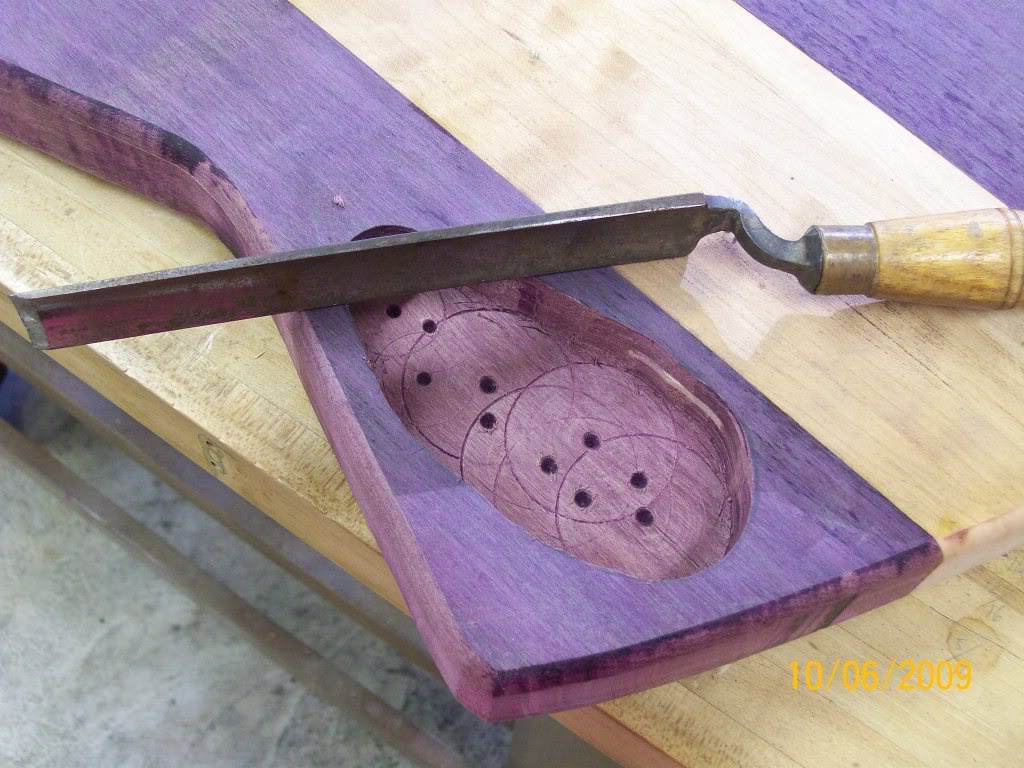
upon further review that pic doesn't show the rabbet or the cavity after cleanup
then I cleaned it up rerouted the rabbet so that I had cleaner edges, but how do I get a cover to match? Grandpa was all over it!
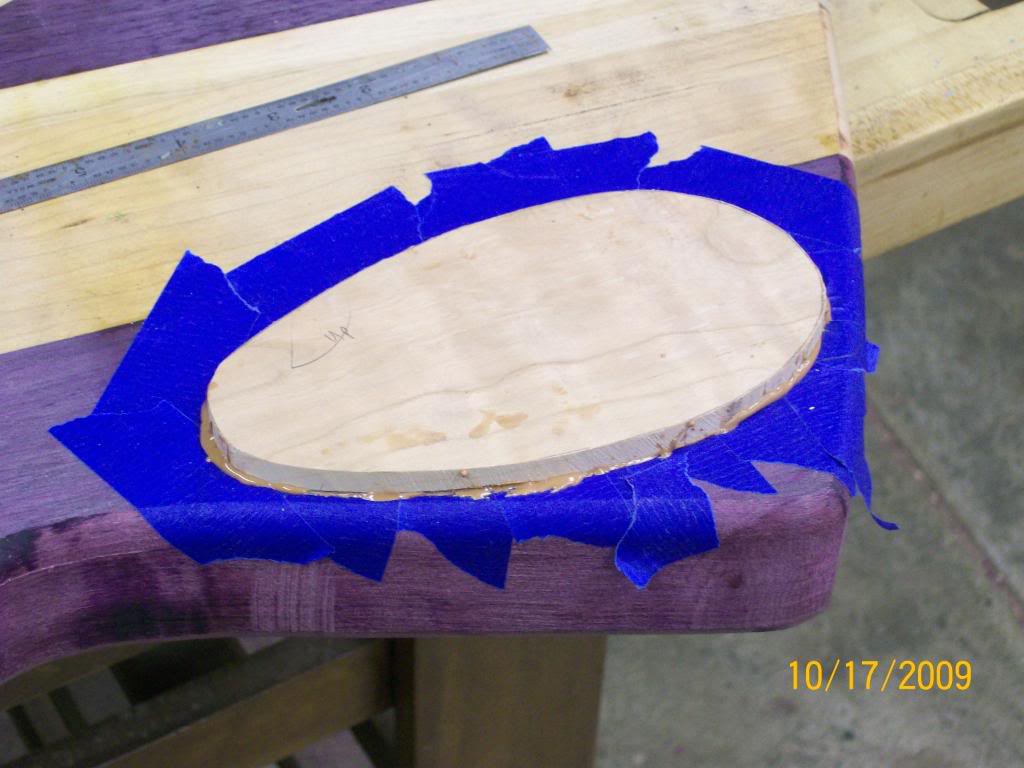
first I tape the edges of my cavity then I put some tuff-fill in the rabbet and set my cover blank atop it.
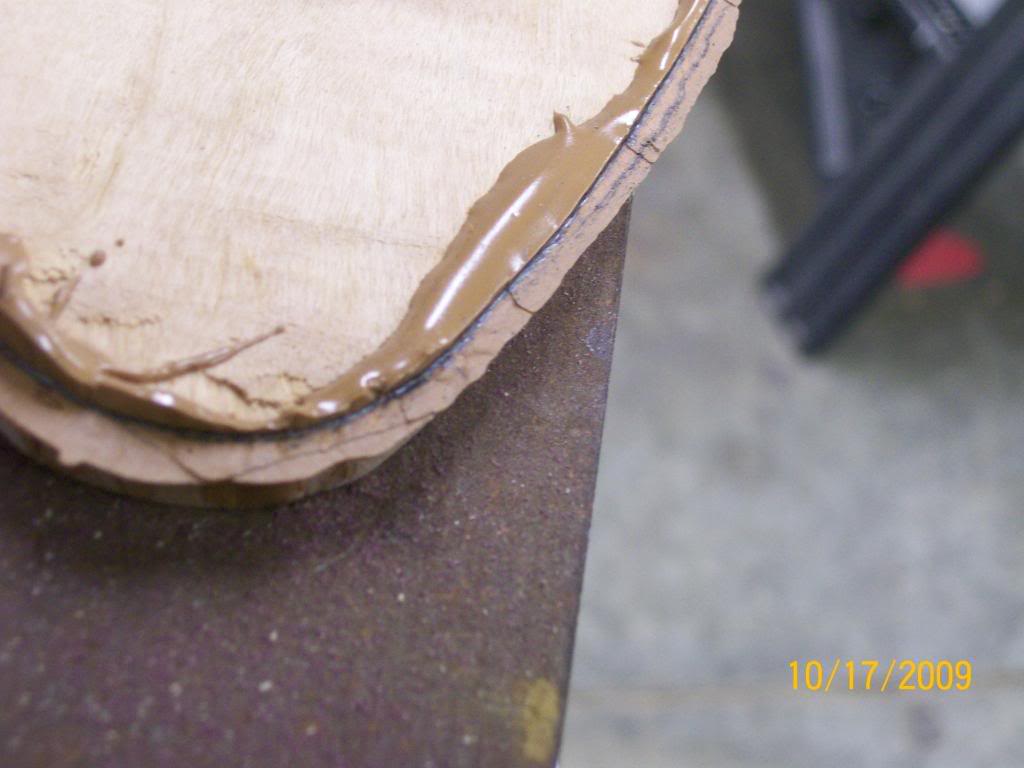
after it sets I pull the blank off and have a perfect ledge to sand to to match the cavity
then I have a cavity that has a fit that looks like it was made by someone competant
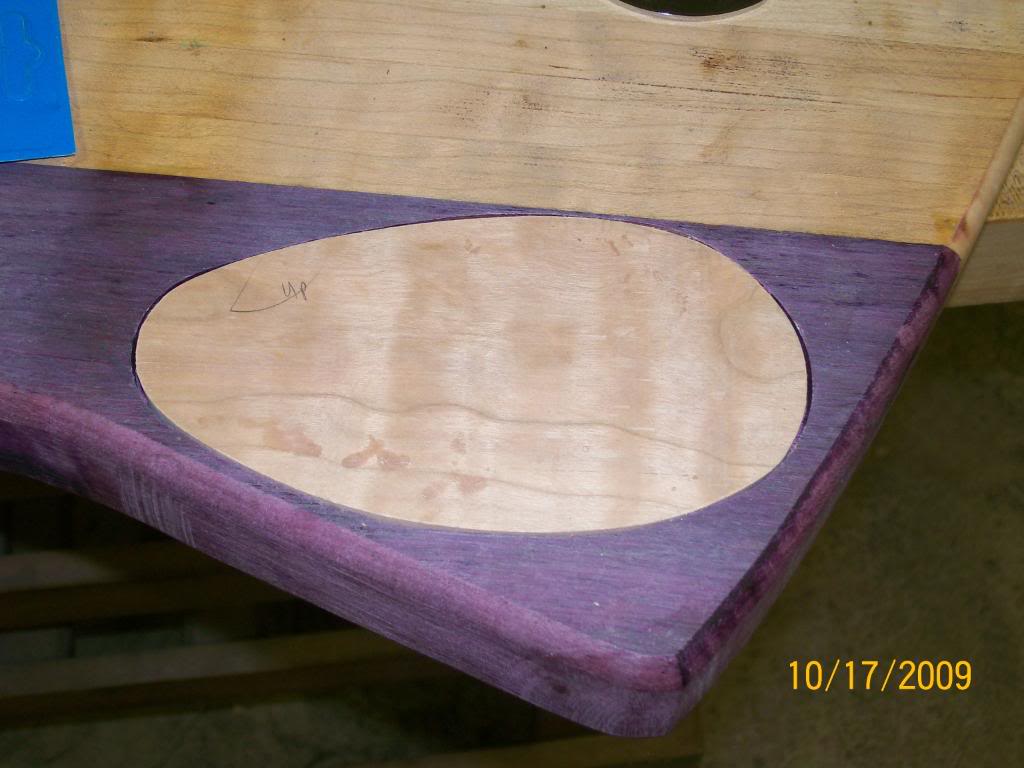
Due to my Grandpa's last tip being so popularly accepted and free I'm going to request that if anyone use this new one that you send a $5 pre-paid money order to
PO box 0747
Xenia, OH 45385
and another handy technique from Grandpa Norm
first I made my control cavity without much of a template or foresight in general and added a 1/4" rabbet
upon further review that pic doesn't show the rabbet or the cavity after cleanup
then I cleaned it up rerouted the rabbet so that I had cleaner edges, but how do I get a cover to match? Grandpa was all over it!
first I tape the edges of my cavity then I put some tuff-fill in the rabbet and set my cover blank atop it.
after it sets I pull the blank off and have a perfect ledge to sand to to match the cavity
then I have a cavity that has a fit that looks like it was made by someone competant
Due to my Grandpa's last tip being so popularly accepted and free I'm going to request that if anyone use this new one that you send a $5 pre-paid money order to
PO box 0747
Xenia, OH 45385
I glued on the FB, but photobucket is being stupid and not letting me upload any pics, so you'll have to take my word for it
I glued on the FB, but photobucket is being stupid and not letting me upload any pics, so you'll have to take my word for it
Lies!
it does not appear that the action will sit correctly as is. most basses have a higher sitting fingerboard. you will need to sink the bridge to compensate. pretty much, just make a template, and route it to the necsissary depth. i am guessing that it will be somewhere in the ballpark of 1/4" though. check your measurements though. it is much easier to do it right the first time, than to have to go back several times and keep lowering it, and even more to add wood back if you go too deep.
Either way, in the end, the strings are going to sit a bit closer to the body. i hope your prefered playing style is fingers and not slap or pick.
Either way, in the end, the strings are going to sit a bit closer to the body. i hope your prefered playing style is fingers and not slap or pick.
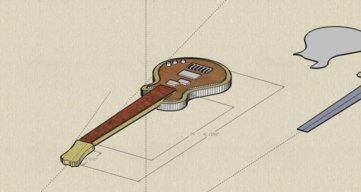
if that fretboard is around 1/4, a lot of bridges will set just right for action. Ive built necks like that, and my dolan custom is set flush. All have worked out just fine.
it does not appear that the action will sit correctly as is. most basses have a higher sitting fingerboard. you will need to sink the bridge to compensate. pretty much, just make a template, and route it to the necsissary depth. i am guessing that it will be somewhere in the ballpark of 1/4" though. check your measurements though. it is much easier to do it right the first time, than to have to go back several times and keep lowering it, and even more to add wood back if you go too deep.
Either way, in the end, the strings are going to sit a bit closer to the body. i hope your prefered playing style is fingers and not slap or pick.
if that fretboard is around 1/4, a lot of bridges will set just right for action. Ive built necks like that, and my dolan custom is set flush. All have worked out just fine.
I noticed on my carvin, I had to raise the saddles quite a bit to get them set properly. To be honest, i don't think there's a whole lot of thread left on those hex screws. It's got about an 1/8" to 1/4" bit of neck showing with a 1/4" fretboard. I don't know how other companies bridges are set up, but if the neck were about 3/16" thinner, the action would be perfect and the saddles would be set in a good, comfortable spot with room to go both up and down. I'm curious to see how a face-level fretboard and un-routed bridge work out for you.
I noticed on my carvin, I had to raise the saddles quite a bit to get them set properly. To be honest, i don't think there's a whole lot of thread left on those hex screws. It's got about an 1/8" to 1/4" bit of neck showing with a 1/4" fretboard. I don't know how other companies bridges are set up, but if the neck were about 3/16" thinner, the action would be perfect and the saddles would be set in a good, comfortable spot with room to go both up and down. I'm curious to see how a face-level fretboard and un-routed bridge work out for you.
Getaway, Most my basses the FB extended 1/4 over the body woods in height. I have yet to have an issue with fretted basses. On fretless, I build the next to have an extra 1/16-1/8 inch over the body, then 1/4 FB on that. Have yet to had an issue.
Armacielli, nice work so far and I applaud your choice in headstock... definitely my favorite type. This bass is going to sinnnnnnng! I'm really excited for you.
BTW - I see we have about the same type of shop (read: "sparse" with respect to cool a$$ power tools)
BTW - I see we have about the same type of shop (read: "sparse" with respect to cool a$$ power tools)
or compression blue
Don't you mean "Prussian" Blue (AKA: Milori blue, iron blue, Berlin blue... a pigment with a very high tinting strength?)
It's what I used when I blueprinted my race motors and ported heads... basically a fancy name for a blue colored dye.


