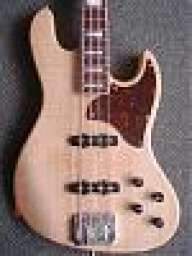
It's pointless. So many of the assertions that one species has a particular sound are based on flawed comparisons. Even comparing a huge number of Fender maples to Fender rosewoods utterly fails the test of controls. Why? Because Fender maple necks are one-piece maple necks with the frets on the same timber that is the neck itself. The rosewood boards are glued on to a maple neck. So, those tests totally fail to account for the impact of the glue joint.
Now, is someone were to make about two dozen bodies as identical as possible and set them up wtih the exact same electronics (and BTW, control for variances in pots and wires), and make two dozen necks that except for fingerboard material were identical, and then swap each of those necks onto each of those bodies, then we MIGHT be able to come up with some concrete assertions. Until then, it's all just conjecture.
My limited experience with simialar instruments is very inconclusive. I had a Lakland maple neck (maple board glued to a maple neck) and a Lakland rosewood (rosewood board glued to a maple neck). They were very similar, but the rosewood one was just a bit darker in A/B comparisons. Not so similar that I can tell from live board recordings which bass was used. And, the rosewood neck was on an alder body, not the ash/maple combination of the Deluxe. So that's another variable.
Having been a Fender dealer from 1977=1988, I can say that the whole "maple is brighter" is wrong about as often as it's right. And thats across not only basses, but also guitars. So, unless you're talking fretless basses, then base your choice on cosmetics rather than some ill-based aural consideration. Or, even better, ignore stuff like this totally, and focus on what THIS chunk of wood and metal sounds like in YOUR hands when YOU play it.
That's a great way to get rid of GAS. Ignore the catalog, ignore TB's pronouncements of what's appropriate, and just play the freakin' bass. It either sounds good to you or it don't. Only buy the bass that says "Hi, honey, I'm home!!". You'll save a lot of money, and you'll be not only a happier, but a better bassist for it.
John