• TalkBass has been independent since 1998. Add your voice.
    Create a free account to reply to discussions, view embedded media, and browse with fewer display ads.
    Join freeLog in
    Want zero display ads or expanded classifieds tools? Compare plans.

Double Bass First time using hide glue. What was I so afraid of?

groooooove

Supporting Member
Dec 17, 2008
9,043
6,883
Long Island, NY
I'm an orchestra teacher. I often voluntarily do my own repairs since most of what we see is pretty simple.

Last year I convinced my boss to order me a glue pot, some clamps and such, since I don't mind fixing stuff myself.


A student dropped this cello so it was a good candidate to try and fix. I definitely don't have the skills to remove a top and "properly" do this repair, so I opted for my stew mac repair magnets, and decided to also position the bridge foot and tighten the strings to add more downward pressure:


I let it sit for two days and came back and scraped off the excess glue. final results:


it's a 20 year old kolstein cello that has a history of repairs at the rib. My goal was to get one more year out of it, but honestly I think this should hold up fine.

In the past i'd just used wood glue because hide glue seemed so complicated. It's honestly no big deal. you just have to mix it with water and heat it up. and yeah, heat the surfaces to extend working time, which really is short.

just felt like sharing my little classroom repair, and encourage others to avoid the temptation of bottled glue.

I didn't get pictures but after this I re glued a small viola that had a broken neck. Came out totally perfect, strung it up and it sounded great.
 
All praise Sky Cat!

What I really came over to mention…saw a twoodfrd repair video today where he was gluing down a Martin guitar bridge with hide glue. He mentioned the working time was only one minute. THAT is a bit scary, IMHO. But if you’re a quick worker, more power to ya! :thumbsup:
 
  • Like
Reactions: KUNGfuSHERIFF
Photo 6-24-25, 8 33 08 AM.jpg
Photo 6-24-25, 8 33 12 AM.jpg
Photo 6-24-25, 8 43 09 AM.jpg
Photo 6-26-25, 11 24 55 AM.jpg
Photo 6-26-25, 12 18 13 PM.jpg
 
I'm an orchestra teacher. I often voluntarily do my own repairs since most of what we see is pretty simple.

Last year I convinced my boss to order me a glue pot, some clamps and such, since I don't mind fixing stuff myself.


A student dropped this cello so it was a good candidate to try and fix. I definitely don't have the skills to remove a top and "properly" do this repair, so I opted for my stew mac repair magnets, and decided to also position the bridge foot and tighten the strings to add more downward pressure:


I let it sit for two days and came back and scraped off the excess glue. final results:


it's a 20 year old kolstein cello that has a history of repairs at the rib. My goal was to get one more year out of it, but honestly I think this should hold up fine.

In the past i'd just used wood glue because hide glue seemed so complicated. It's honestly no big deal. you just have to mix it with water and heat it up. and yeah, heat the surfaces to extend working time, which really is short.

just felt like sharing my little classroom repair, and encourage others to avoid the temptation of bottled glue.

I didn't get pictures but after this I re glued a small viola that had a broken neck. Came out totally perfect, strung it up and it sounded great.

One of the great things about hide glue is that you can wipe off the squeeze-out using a rag dampened with hot water; no scraping required. :)
 
Your attachments got ate by the Sky Cat.
i see... just re-posted them
All praise Sky Cat!

What I really came over to mention…saw a twoodfrd repair video today where he was gluing down a Martin guitar bridge with hide glue. He mentioned the working time was only one minute. THAT is a bit scary, IMHO. But if you’re a quick worker, more power to ya! :thumbsup:
working time is definitely short. I've yet to get a real answer as to how long you have, but even in my quick little repair - brush the glue on, work it slightly by flexing the crack, push the magnets into place..... I could feel it gumming up in that ~40 seconds or so.
 
Not long ago a fellow TB member and luthier walked me through a seam repair using a box of gelatin from the supermarket. It was nowhere near as scary as I feared, and the repair has held fine since then. Double Bass - Busted seam help!!!
I looked at the thread; good work. But an open seam isn't going anywhere. Try replacing a fingerboard. That presents considerably more challenge.
 
  • Like
Reactions: Chris Fitzgerald
Heat up your workpiece with a hairdryer and you'll extend that hot hide glue working time to about 4 minutes.; it will also sink deeper into the wood pores. Most newbies heat up their glue well, but then use a cold brush to apply it to a cold work surface which kills the useable time to about 15 seconds.

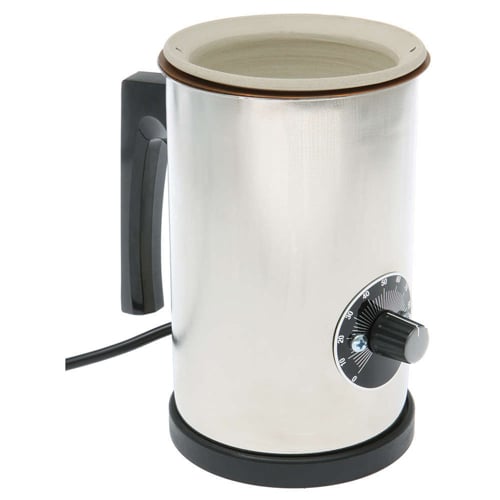
I find that the number one inhibitor for most folks wanting to get started with hot hide glue is all of the suppliers charging $150 for the stupid little heating pot. You can get the same results with a $7 candle heater and a mason jar. The old jedi that I learned from literally used a metal riser with a wax candle underneath it to heat his glue and to bend all of his wood with a copper pipe.
 
Impressive, but how do you get the magnets inside the instrument?

the smaller ones (without the brass handle) fit through the soundhole - they're small, i've even used them on a violin before. they're quite strong, actually.

 
  • Like
Reactions: KUNGfuSHERIFF
Heat up your workpiece with a hairdryer and you'll extend that hot hide glue working time to about 4 minutes.; it will also sink deeper into the wood pores. Most newbies heat up their glue well, but then use a cold brush to apply it to a cold work surface which kills the useable time to about 15 seconds.

I find that the number one inhibitor for most folks wanting to get started with hot hide glue is all of the suppliers charging $150 for the stupid little heating pot. You can get the same results with a $7 candle heater and a mason jar. The old jedi that I learned from literally used a metal riser with a wax candle underneath it to heat his glue and to bend all of his wood with a copper pipe.

I used an old space heater that I keep in the closet at school, not as hot as a hairdryer but worked just fine.

when the idea of "i think my school will buy me some tools" came up, i asked a local violin maker for tips on what to buy. we got the seemingly top-of-the-line glue pot, on his recommendation:


$400 is likely a lot more than i needed to spend, but anything we send out for repair is going to be $100 minimum so it's almost already paid for itself.

To my original point, i agree you do *not* need a fancy pot and there are countless ways to heat glue for a lot less money if you are careful and clever about it.