• TalkBass has been independent since 1998. Add your voice.
    Create a free account to reply to discussions, view embedded media, and browse with fewer display ads.
    Join freeLog in
    Want zero display ads or expanded classifieds tools? Compare plans.

Double Bass Flying fingers

with the caveat that it's better to have slightly too much pressure on the stop than slightly too little,
I think I am completely with your left hand approach, except for this.
Here it really depends, whether you are playing arco or pizz. With too little pressure pizz, you get buzz, or really just a dead sound, that is undesirable 99% of the time, I guess. But arco, you have all the time in the world, to adjust the pressure, because you are feeding the string with the bow. So starting with little pressure and increasing it later can get you a very nice, usable "whaaa" sound.
 
The other option, which is admittedly a more advanced technique (though I can't help but wonder if it should be thought of this way), is to utilize a technique where every note is stopped as though the note might use vibrato.

I like this thinking. I’ve found that the study of vibrato has really informed my overall left hand, just as working on off the string strokes has informed my bow hold in ways that have improved my detache stroke.
 
Informing a well functioning left hand is a completely different world than getting the hand to follow instructions in the first place!
I like this thinking. I’ve found that the study of vibrato has really informed my overall left hand, just as working on off the string strokes has informed my bow hold in ways that have improved my detache stroke.
 
  • Like
Reactions: Wasnex
I don't think I would ever try to play vibrato with the pinky while holding the other fingers down. When I use vibrato with the 4th finger, the other fingers relax into the inside of it for support, and the weight of the arm hangs on the hook of the hand and vibrates around it.
See 2:58 in the video. He plays a very gentle vibrato here. The index and middle finger appear to be very relaxed, but they stay pretty much in position.


If he were playing a more aggressive vibrato, his hand shape would move more towards the hand shape you describe. If yet a more aggressive vibrato were desired, I believe he would change his hand shape a bit and pivot on just the little finger, rather than allowing the index and middle finger to essentially float in position on top of the string.

Vibrato is a range of techniques that I think most players would perform fluidly, rather than using just one form that is always exactly the same. So I totally understand what you mean about the hand compacting towards the fourth finger. However there have been passages that I have played that required very aggressive vibrato that I would not play this way. Those were the passages that were the hardest on my hand. It's quite possible I need to learn to use more arm weight but the mechanics of the style of vibrato I am talking about are a pivot between the stopped finger and thumb, so a lot pinch strength is used. Normally I try to play with minimal thumb pressure, but I have not mastered this with my aggressive vibrato technique.

My most aggressive vibrato looks very similar to the technique shown in this video.


Here on another video on vibrato...I suggest starting around 7:00 for vibrato specific info. This one gets more into how to use vibrato expressively


I am having trouble visualizing the technique you are describing where you always play as if you are prepared to use vibrato. Is there a video that covers it.
 
I know some people do it and I love Geoff's channel, but maintaining a spread while vibrating with the 4th finger just doesn't compute with my brain or body.

I know that vibrato is different with pizz and arco, a phenomenon I plan to research and explore in depth later because it fascinates me...how can the same vibrato in the left hand sound wider when plucked than while bowed? What is the science behind that?... so I'll limit my comments to pizz vibrato here because I am at such a rudimentary level with the bow that it would be disingenuous to claim otherwise.

But in the realm that I use vibrato, it is like every other left hand technique in the respect that I feel it does not require the thumb to occur; the thumb provides an anchor and allows a higher level of precision and control, but is not needed to provide the force.

I am not aware of an instructional video about playing as though every note might use vibrato WRT the left hand, but at the past few ISB conventions I have seen more and more players playing in a style that features a relaxed LH shape; for some, it seems to be a technique that alternates with the more traditional approach, and for others, it seems to be their primary bread and butter. The example that comes first and foremost to mind is Joel Quarrington, whose left hand caused 500watt lightbulbs to fire around my brain when I finally saw him play live. Further research into his concept largely confirmed what I had seen live, especially as regards his extensive use of playing on the pads and the angle that the strings track across the fingers. These largely mirror the concepts I had been exploring on my own in a different context (and obviously on a much less advanced level). Here's a thread about his concept.

Here's a blurb from his book which explains more about the concept. I think this small bit of information falls under educational use:

Screen Shot 2020-05-19 at 8.53.55 AM.png


This all resonates with what my body is telling me.

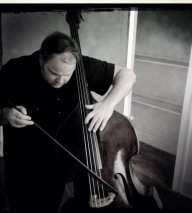
Finally, here's a video where you can see some closeups of his left hand doing a lot of "relaxed hand shape" playing:

 
I know some people do it and I love Geoff's channel, but maintaining a spread while vibrating with the 4th finger just doesn't compute with my brain or body.

I know that vibrato is different with pizz and arco, a phenomenon I plan to research explore in depth later because it fascinates me...how can the same vibrato in the left hand sound wider when plucked than while bowed? What is the science behind that?... so I'll limit my comments to pizz vibrato here because I am at such a rudimentary level with the bow that it would be disingenuous to claim otherwise.

But in the realm that I use vibrato, it is like every other left hand technique in the respect that I feel it does not require the thumb to occur; the thumb provides an anchor and allows a higher level of precision and control, but is not needed to provide the force.

I am not aware of an instructional video about playing as though every note might use vibrato WRT the left hand, but at the past few ISB conventions I have seen more and more players playing in a style that features a relaxed LH shape; for some, it seems to be a technique that alternates with the more traditional approach, and for others, it seems to be their primary bread and butter. The example that comes first and foremost to mind is Joel Quarrington, whose left hand caused 500watt lightbulbs to fire around my brain when I finally saw him play live. Further research into his concept largely confirmed what I had seen live, especially as regards his extensive use of playing on the pads and the angle that the strings track across the fingers. These largely mirror the concepts I had been exploring on my own in a different context (and obviously on a much less advanced level). Here's a thread about his concept.

Here's a blurb from his book which explains more about the concept. I think this small bit of information falls under educational use:

View attachment 3835294

This all resonates with what my body is telling me.

Finally, here's a video where you can see some closeups of his left hand doing a lot of "relaxed hand shape" playing:



The impression I get is the hand rotates a bit so the pressure is focused primarily on the stopped note. This relieves the pressure on the earlier fingers and they may lift up off the finger board.

In this video from the other thread you linked.

He plays a few faster ascending lines that are not in thumb position (see 5:38). I see his hand rotating and slightly lifting his finger as he crabs up. Watch in half speed.

I think this is conceptually similar to what I was trying to describe where you modulate the force so you decrease the pressure you use, but you don't entirely deweight the earlier fingers. Or perhaps you may actually lift the 1st finger slightly of the finger board as the hand rotates over on the middle finger to play the 4th finger, but I would probably not lift the 1st finger off the string.

So I think I understand what you are getting at because I sort of do it myself to some extent. But I still tend distribute the pressure across multiple fingers instead of just stopping the string with only one finger. This is especially true with the 4th finger.

As far as the vibrato. I do think there is probably a pretty big difference in the range of techniques that an arco player and pizz only player would use. My playing was about 50/50 pizz/arco.
 
  • Like
Reactions: Chris Fitzgerald
All this talk about fingers and nobody addresses hand shape and using your shoulders to pull the bass into you, With support from the core, thus relieving pressure from the thumb, which is a main cause of flying or floppy fingers.
I think it helps, I don't think it is the core reason. If the fingers still WANT to move and you are just keeping them still with arm weight / strength, then it doesn't solve the core issue.
 
  • Like
Reactions: Wasnex
All this talk about fingers and nobody addresses hand shape and using your shoulders to pull the bass into you, With support from the core, thus relieving pressure from the thumb, which is a main cause of flying or floppy fingers.
Hi Adam,
I agree about the hand shape part...
Q: Do you find that the approach above is specific to "sitters"? I stand, and the approach above, esp. the "pull the bass into you..." part is not applicable. IME.
Are you a "sitter", and do you ever teach "standers"? Just curious. (or, am I the Last Man Standing?)
(Not looking for a bass-brawl!)
Thanks for your time and expertise.
 
I recently went through the ‘Advanced Fundamentals’ course with David Allen Moore on Discover Double Bass.

He has a concept for standing with the bass - I’m not going to do it justice here, but… - Think of standing with the double bass as standing holding a spear, and holding the spear down on the ground. A strong position. And think of the arm weight not pulling back towards your chest to pull the fingers against the fingerboard perpendicular to the fingerboard. But, because the fingerboard has a steep slope relative to the ground, the arm weight is down, straight down, perpendicular to the earth, and this is the direction of the weight that keeps the strings to the fingerboard. I’m not doing it justice, but I found the video demonstration an invaluable revelation.

In a separate lesson, he discusses using a rotational force of the forearm as a way of applying the fingers to the string to stop them to the fingerboard. I believe that this is borrowed from or a variation upon Rabbath? Arm weight down towards the earth, fingers minutely rotating around the forearm to stop the strings to the fingerboard.

As I said, I’m sure I’m not doing it justice, but I found his explanation really valuable.
 
how can the same vibrato in the left hand sound wider when plucked than while bowed?

Is this because the pizz note decays quickly, giving the impression that the vibrato is narrower? Where the arco note doesn't necessary decay at all, and may swell?

I'm working on my arco vibrato and trills at the moment, and exploring changes within a single note to add expression. So I might have a crescendo within a single long note, and increase arm weight, move the bow closer to the bridge, and narrow and accelerate vibrato, all within the same note. Having been mostly interested in jazz pizz, I'm finding it fascinating how much expression one can put in a single note when it is sustained with a bow.
 
  • Like
Reactions: Chris Fitzgerald
Is this because the pizz note decays quickly, giving the impression that the vibrato is narrower? Where the arco note doesn't necessary decay at all, and may swell?

That's what logic would dictate, but in reality I experience the opposite: The pizz vibrato seems wider and deeper, and the same left hand movement with the bow barely seems to register. It may be that because the bow keeps the string humming, it cancels it out somehow. Whatever the cause, it's a really weird phenomenon!

In a separate lesson, he discusses using a rotational force of the forearm as a way of applying the fingers to the string to stop them to the fingerboard.

This is very much the sort of thing I am talking about: rather than moving the fingers to where they need to go, they more or less just hang out and the arm moves them into place. The only thing the fingers need to do in this paradigm is either relax (when they aren't playing), or fix themselves in place; this last part is the part that's like "monkey grip" in jiu jitsu. Imagine you were hanging from a narrow tree branch over the grand canyon and waiting for rescue. If you tried to grip the branch with force, your forearms would burn out quickly and you would fall. But if you just turned your hands into basic hooks and instead of trying to squeeze the branch, simply kept them from opening, you would last a lot longer. Try this on a pull up bar sometime - it's really a thing!
 
The title of this thread reminds me of a quote from a world class bassist in an interview in Dr. Applebaum's excellent series 'The Way They Play'.... "You must be prepared to make swift 'caterpillar' extensions" along the fingerboard. This, and the method of keeping the first finger on the string as you ascend, has helped me a great deal with intonation and speed in the upper positions.

John
 
Last edited:
That's what logic would dictate, but in reality I experience the opposite: The pizz vibrato seems wider and deeper, and the same left hand movement with the bow barely seems to register. It may be that because the bow keeps the string humming, it cancels it out somehow. Whatever the cause, it's a really weird phenomenon!


This is very much the sort of thing I am talking about: rather than moving the fingers to where they need to go, they more or less just hang out and the arm moves them into place. The only thing the fingers need to do in this paradigm is either relax (when they aren't playing), or fix themselves in place; this last part is the part that's like "monkey grip" in jiu jitsu. Imagine you were hanging from a narrow tree branch over the grand canyon and waiting for rescue. If you tried to grip the branch with force, your forearms would burn out quickly and you would fall. But if you just turned your hands into basic hooks and instead of trying to squeeze the branch, simply kept them from opening, you would last a lot longer. Try this on a pull up bar sometime - it's really a thing!

Yes, every last bit of this. Thank you Chris! You so eloquently stated what my “stay at home” with three kids brain couldn’t.
 
  • Like
Reactions: Chris Fitzgerald
It was taught to me as a stander, I think the first person I heard it from was Turetzky, he stands and sits.
Hi Adam,
I agree about the hand shape part...
Q: Do you find that the approach above is specific to "sitters"? I stand, and the approach above, esp. the "pull the bass into you..." part is not applicable. IME.
Are you a "sitter", and do you ever teach "standers"? Just curious. (or, am I the Last Man Standing?)
(Not looking for a bass-brawl!)
Thanks for your time and expertise.
 
Some random thoughts here:

Informing a well functioning left hand is a completely different world than getting the hand to follow instructions in the first place!

I basically play Simandl style 1-2-4. Intellectually I understood early on how to do it, but still there were a number of possible solutions to the problem of holding a three semi-tone position in tune. I worked at it diligently and everything seemed cool with the solution I arrived at until I tried to join this 1-2-4 solution with the my studies of the heel/transition area, thumb position, and vibrato. Studying each one of these independently gave me four things that I thought were true, but trying to integrate them all proved that my solutions were, in fact, false to a degree. To arrive at a technique where all things are seamless and singularly true seems to be everyone's goal. Why delay the process?

All this talk about fingers and nobody addresses hand shape and using your shoulders to pull the bass into you, With support from the core, thus relieving pressure from the thumb, which is a main cause of flying or floppy fingers.

About a year ago I started feeling some left shoulder pain and realized I was torquing my shoulder to pull the bass into me. I have worked since to be sure that I was implementing what I was initially taught. See below:

This is very much the sort of thing I am talking about: rather than moving the fingers to where they need to go, they more or less just hang out and the arm moves them into place. The only thing the fingers need to do in this paradigm is either relax (when they aren't playing), or fix themselves in place; this last part is the part that's like "monkey grip" in jiu jitsu. Imagine you were hanging from a narrow tree branch over the grand canyon and waiting for rescue. If you tried to grip the branch with force, your forearms would burn out quickly and you would fall. But if you just turned your hands into basic hooks and instead of trying to squeeze the branch, simply kept them from opening, you would last a lot longer. Try this on a pull up bar sometime - it's really a thing!

This is how my teacher describes it (without the jiu jitsu connection). In fact, he actually says, "It's just like a monkey hanging on a tree."

The example that comes first and foremost to mind is Joel Quarrington, whose left hand caused 500watt lightbulbs to fire around my brain when I finally saw him play live. Further research into his concept largely confirmed what I had seen live, especially as regards his extensive use of playing on the pads and the angle that the strings track across the fingers.

Yes, I have been instructed to maintain a violinistic orientation to the strings (closer to 45 degrees than 90).

Lastly, I love the way Quarrington manipulates the bow. It's as if he's pulling a string.
 
  • Like
Reactions: Chris Fitzgerald