• TalkBass has been independent since 1998. Add your voice.
    Create a free account to reply to discussions, view embedded media, and browse with fewer display ads.
    Join freeLog in
    Want zero display ads or expanded classifieds tools? Compare plans.

Fodera Club Part XIV

Status
Not open for further replies.
Well good, because I wasn't outright disagreeing with you. I think you're probably right about the physics of it; where we're not on the same page is whether or not the difference is too granular to count once you work in a band. Not to mention an amp or soundboard and the woods that went into making a given bass.

I'm not trying to convince you either. I'm of a differing opinion is all. And it's an interesting debate, no matter how you slice it.

I will try that experiment I mentioned earlier and see if there is a discernible difference and if so, how pronounced it is. It will answer some questions for everyone.
 
If it sounds good, it sounds good. The extended B can't make that kind of huge difference.

I'm going to take the E string off of my bass, and string the B to the B tuner, then to the E tuner, and I'll make a good quality recording and see if there is actually any discernible difference. Even with the change in angle over the nut, if there is difference in the sound, it will tell us in no uncertain terms that the termination makes a difference. Or, maybe it will make NO discernible difference.

Whether it does or doesn't, I don't really care. But I'm not going to accept people telling me it won't based solely on how they feel about it.

Give me some information! :hyper:

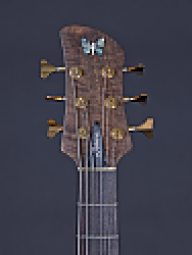
Hey Mike, if you're in the shop when my Viceroy-shape is done in a couple months, give it a try to see if you can hear a big difference in feel or sound from your Signature Viceroy. Not only did I not go with the extended B, I went the opposite direction and got a 3+2 headstock, so the tuning peg for the B string will be as close to the nut as it could be. The specs on mine are generally similar to yours - mahogany body, bolt-on neck, ebony 'board with Duncan/Fodera dual coils in the '70s position.
 
As folks have mentioned here before, the B string runs RIGHT next to the E string tuner already. So I'll just wrap it backwards around the E tuner, coming out of the B string nut slot. There will be a very slight change in angle, which I mentioned earlier as well, but I don't think it matters.
 
ya know.

instead of saying "why it won't work," why don't people just wait to see what happens?

frankly, this is a pet peeve of mine on tb. i've seen people say things won't matter or don't change anything *without actually trying it*.

and when people try something, they actually notice there was a difference.
 
The problem o the B tuner sitting right next to the E tuner...
Why not go for a 5 in line, reverse design and sit the B tuner on the other side...That way one maintains the Fender thing and still has the low B, potentially with an extended portion of the string running past the nut.
It might look good too and most of the tuners would be on the side of the playing hand(facing downward), making tuning more comfortable.
 
ya know.

instead of saying "why it won't work," why don't people just wait to see what happens?

frankly, this is a pet peeve of mine on tb. i've seen people say things won't matter or don't change anything *without actually trying it*.

and when people try something, they actually notice there was a difference.

Initial report....without sound examples YET.
The first thing I wanted to do was just swap back and forth between the E tuner and B tuner and listen acoustically. That doesn't necessarily translate to what it'll sound like through an amp. This is what I heard.

1) scraping the string longitudinally yielded a lower pitch with the string tuned to pitch when on the B tuner.
2) the attack was less thuddy and sustain (at least the beginning part of the sustain) seemed stronger (goes along with less thud at the attack).

No doubt to me there was a difference.

And before people start harping on me, if you have an extended B bass, try this for yourself. It takes 2 minutes.

And for the record, I used a relatively old string that was well broken in.

I will listen through an amp and make some recordings if there's anything there worth hearing.

Another note....why does the 12th fret on the B string sound different than the 7th fret on the E string? Because the longitudinal mode (heard as an "overtone") is lower relative to the fundamental on the B string, because fretting the note doesn't stop the longitudinal mode...at least not completely...but the transverse mode is cut in half.
 
...why does the 12th fret on the B string sound different than the 7th fret on the E string? Because the longitudinal mode (heard as an "overtone") is lower relative to the fundamental on the B string, because fretting the note doesn't stop the longitudinal mode...at least not completely...but the transverse mode is cut in half.

There are many other factors associated with the transverse modes of vibration that seem much more relevant than those from any longitudinal modes, if they are actually even present. Here are some:

1. The relative position of the pickup(s) relative to the vibrating string length is different on the E-string and B-string examples. This will result in the pickup detecting different contributions from the fundamental and various overtones in the two cases.
2. The difference in diameter of the two strings will affect the degree of excitation of the overtones in the two strings, resulting in differences in tonality. You can see that thicker strings do not flex as readily by distance from the bridge saddles to the nut - as the diameter of the string increases, the bridge saddle moves further from the nut. This will result in diminished energy in the higher frequency overtones.
3. The geometry of the pickup, especially the width of the coil, is constant in the two cases mentioned , but the vibrating string length is shorter in the B string case than the E string case. Therefore the pickup is capturing the induced magnetic field from a longer portion of the vibrating string length in the B-string case.

Even if there are longitudinal vibration modes present, in the frequency range of interest, I don’t think they would be detected by a magnetic pickup (even in the case of an unwrapped steel string). The way the pickup works is that it detects the magnetic field produced by the string in response to the field provided by the magnet. Electric currents on the surface of the string flow such that they cancel the magnetic field from the magnets, so the magnetic field does not penetrate the metal. These currents respond to the magnetic field on a time scale that is very much shorter than the period of oscillation of the fundamental and audible overtones of the string. The fields produced by the surface currents on the string are what the pickup detects. In the case of a longitudinal wave, the circulation currents would adjust to the fluctuations in density of the metal (which would be very tiny anyway) caused by the longitudinal wave so quickly that the resulting magnetic field produced by the string would remain unchanged in the time frames that we’re considering, and therefore undetected by the pickup.

Again, I just don’t buy that any longitudinal modes, if present , would affect what we hear from the amplified instrument.

Jim
 
thepontif said:
From one of the worlds foremost authorities on stretched string physics. All information derived from real-world experiments. He was the first to come up with a way to tune longitudinal modes to transverse modes.

Invalid Link Removed

Thanks, Interesting article Mike.

"The longitudinal frequency of a plain steel string in a piano can be changed only by altering its speaking length. In the case of wrapped piano strings, the longitudinal mode can be tuned only in two ways: either by changing the speaking length or by changing the weight of the wrapping wire in relation to the weight of the core wire".

"changing the weight of the wrapping wire in relation to the weight of the core wire" - Is this is over the speaking length? Or is the ext headstock idea that the longitudinal waves traverse the nut?

I think you already answered this. Acoustically it may be noticeable, but it will be interesting to see if in your recordings it is noticeable via the pickups.
 
There are many other factors associated with the transverse modes of vibration that seem much more relevant than those from any longitudinal modes, if they are actually even present. Here are some:

1. The relative position of the pickup(s) relative to the vibrating string length is different on the E-string and B-string examples. This will result in the pickup detecting different contributions from the fundamental and various overtones in the two cases.
2. The difference in diameter of the two strings will affect the degree of excitation of the overtones in the two strings, resulting in differences in tonality. You can see that thicker strings do not flex as readily by distance from the bridge saddles to the nut - as the diameter of the string increases, the bridge saddle moves further from the nut. This will result in diminished energy in the higher frequency overtones.
3. The geometry of the pickup, especially the width of the coil, is constant in the two cases mentioned , but the vibrating string length is shorter in the B string case than the E string case. Therefore the pickup is capturing the induced magnetic field from a longer portion of the vibrating string length in the B-string case.

Even if there are longitudinal vibration modes present, in the frequency range of interest, I don’t think they would be detected by a magnetic pickup (even in the case of an unwrapped steel string). The way the pickup works is that it detects the magnetic field produced by the string in response to the field provided by the magnet. Electric currents on the surface of the string flow such that they cancel the magnetic field from the magnets, so the magnetic field does not penetrate the metal. These currents respond to the magnetic field on a time scale that is very much shorter than the period of oscillation of the fundamental and audible overtones of the string. The fields produced by the surface currents on the string are what the pickup detects. In the case of a longitudinal wave, the circulation currents would adjust to the fluctuations in density of the metal (which would be very tiny anyway) caused by the longitudinal wave so quickly that the resulting magnetic field produced by the string would remain unchanged in the time frames that we’re considering, and therefore undetected by the pickup.

Again, I just don’t buy that any longitudinal modes, if present , would affect what we hear from the amplified instrument.

Jim

First of all, what do you mean "if there are any longitudinal modes present?" That's not up for argument. That's the way strings vibrate. It's fact. One string doesn't get a different set of physics than another. Longitudinal modes are part of life with stretched strings.

Of course there are other reasons for the difference in sound. But listen to it acoustically. Take the pickup completely out of the equation. Do they sound the same? Clearly not. Thickness of the string, of course it makes a difference too. But that inherently changes the pitch of the longitudinal mode too. Detune your E string to a D (I mentioned this before but no one seemed to notice) and listen to it. Even WITHOUT the amp. It sounds different. Tonally different. Detune your whole bass a whole step and see what it sounds like. Really, even through the amp, this should hold everything constant except the relationship between long and trans waves. Listen to the example in the article where he plays Yankee Doodle on a bunch of strings all tuned to the same transverse mode pitch.

Sorry, but saying it's not a factor at all or even questioning their existence is just not accurate.
 
Incidentally, I wasn't suggesting that all of the overtones we hear in a bass string are due to longitudinal vibration. Only that the longi vibration presents as that type of sound.

the notion that the pickup might not respond the longi vibration makes sense. But there is an inherent interaction between longi and trans vibration. The longi mode MUST have an effect on the way high frequencies propagate in the trans mode. It's a little like the argument that wood doesn't matter. Which, to people who have spent their lives making electric basses and guitars, is totally ridiculous. Change the wood, change the sound. Pickups pick up the sound of the bass, because the strings vibrate the bass, and the bass, in turn, vibrates the strings, and the wood is part of that interaction.
 
On the other side of the coin, I've had bad buzzes on the bridge of my bass, that simply didn't come through the amp for whatever reason. So not everything acoustically heard does make it through.

I'm shot for the day now. Doing a Tony Horton workout/diet thing this week at the end of a 90 day thing and I'm fried. But down almost 20lbs., so yippee!
 
thepontif said:
Incidentally, I wasn't suggesting that all of the overtones we hear in a bass string are due to longitudinal vibration. Only that the longi vibration presents as that type of sound.

the notion that the pickup might not respond the longi vibration makes sense. But there is an inherent interaction between longi and trans vibration. The longi mode MUST have an effect on the way high frequencies propagate in the trans mode. It's a little like the argument that wood doesn't matter. Which, to people who have spent their lives making electric basses and guitars, is totally ridiculous. Change the wood, change the sound. Pickups pick up the sound of the bass, because the strings vibrate the bass, and the bass, in turn, vibrates the strings, and the wood is part of that interaction.

This is true, the system is highly interactive.
 
First of all, what do you mean "if there are any longitudinal modes present?" That's not up for argument. That's the way strings vibrate. It's fact. One string doesn't get a different set of physics than another. Longitudinal modes are part of life with stretched strings.

Of course there are other reasons for the difference in sound. But listen to it acoustically. Take the pickup completely out of the equation. Do they sound the same? Clearly not. Thickness of the string, of course it makes a difference too. But that inherently changes the pitch of the longitudinal mode too. Detune your E string to a D (I mentioned this before but no one seemed to notice) and listen to it. Even WITHOUT the amp. It sounds different. Tonally different. Detune your whole bass a whole step and see what it sounds like. Really, even through the amp, this should hold everything constant except the relationship between long and trans waves. Listen to the example in the article where he plays Yankee Doodle on a bunch of strings all tuned to the same transverse mode pitch.

Sorry, but saying it's not a factor at all or even questioning their existence is just not accurate.

Mike,

The reason I said "if" is because the only time I'd ever heard of this (longitudinal mode in the context of a bass) was in a previous post of yours a couple of years ago, so I wasn't sure if it was your own theory or accepted science. I just read the article in the link from nuwavedc's post quoting your post, which I originally missed. It's a very interesting article. The fundamental of the longitudinal is comparatively high in pitch, as I had suggested would be the case in my post the other day. But what's puzzling me is whether the longitudinal wave is in the core or the winding. At first I figured must be the core, because we're calling it a longitudinal (pressure) wave, but it could be some kind of slinky-like effect in the winding/wrapping. (the article says it can be tuned by altering the speaking length, or the ratio of winding mass to core mass. I would not expect the latter to affect the tuning if was a pressure wave in the core...)

If it's in the core, then the pressure wave in the core wouldn't directly affect the magnetic field to the pickup (as I suggested above, and especially with the winding shielding it) - but what it could do is cause an oscillating force on the tuning peg and bridge that cause the instrument itself to vibrate, hence the pickup to vibrate relative to the string, and then the string's magnetic field responding, and thus the pickup detecting the strings response. Anyway, enough hypothesizing. Are you aware of more literature on this? I'd be interested to read more.

Jim
 
Status
Not open for further replies.

Latest posts