• TalkBass has been independent since 1998. Add your voice.
    Create a free account to reply to discussions, view embedded media, and browse with fewer display ads.
    Join freeLog in
    Want zero display ads or expanded classifieds tools? Compare plans.

Forget Fatfinger I found the deadspot fix!

Of course I over dramatized it just a bit, but seriously, it hadthe best sustain of any bass I’ve ever played. I also played a Kramer knock off of a Travis Beam, and hat the second best sustain of anybass I’ve ever played, but the electronics sucked. Neither one had and dead spots as I can recall.

I currently have an American Fender P and on rare occasions I will get a dead spot at D# on the G string, but what is odd is that it never shows up on recordings going direct into the board, and I’ve recorded with it a lot. The only time I’ll get that dead spot effect is when I’m playing through an amp. Sound cancellation?
 
  • Like
Reactions: cataract
Well, here's a question: Is it the dampening factor of the rubber washer, or is it that the thickness of the washer presses the strings more firmly into the nut? The latter makes a bit more sense to me. The firmer the pressure against the nut, the less that anything beyond it influences vibration of the string. I'm not saying this is what is happening, but it seems reasonable, sight unseen.
 
Well, here's a question: Is it the dampening factor of the rubber washer, or is it that the thickness of the washer presses the strings more firmly into the nut? The latter makes a bit more sense to me. The firmer the pressure against the nut, the less that anything beyond it influences vibration of the string. I'm not saying this is what is happening, but it seems reasonable, sight unseen.

When you’re fretting a note at C, C#, D - the downforce at the nut is irrelevant.
 
  • Like
Reactions: scuzzy and cataract
Any vibration of the strings past the nut (over the headstock) is negligible at best— I wish I had my old P (which had a dead spot on the 6th or 7th fret on the G) to test your theory but my brain’s telling me this is kind of grasping at straws that just aren’t there..
 
Please just post a picture for crying out loud.
So Mechanical-Not mechanic or I guess you would be familiar with a fender washer (lower
case f). So picture you're holding your bass out
in front of you with the string tree at eye level.
Now picture a hard rubber fender washer poking
out from behind it by an eighth of an inch.
Now picture your D and G strings under it.
You have now pictured life in America pre-
internet, back when dinosaurs walked the earth
and the P bass and I were born, when young
men took wood shop and metal shop and auto
shop so they could picture a fender washer
without it. Just sayin'
 
Any vibration of the strings past the nut (over the headstock) is negligible at best— I wish I had my old P (which had a dead spot on the 6th or 7th fret on the G) to test your theory but my brain’s telling me this is kind of grasping at straws that just aren’t there..
cataract-Hope thats not literal because you need to look up nodes,anti-nodes,hard and soft end points, standing waves and phase inversion.
 
So Mechanical-Not mechanic or I guess you would be familiar with a fender washer (lower
case f). So picture you're holding your bass out
in front of you with the string tree at eye level.
Now picture a hard rubber fender washer poking
out from behind it by an eighth of an inch.
Now picture your D and G strings under it.
You have now pictured life in America pre-
internet, back when dinosaurs walked the earth
and the P bass and I were born, when young
men took wood shop and metal shop and auto
shop so they could picture a fender washer
without it. Just sayin'
Is the hard rubber Fender washer like the rubber strap locks they sell? I’ve had a number of Fender items over the years, but I can’t picture this mystical rubber washer you speak of.
 
Is the hard rubber Fender washer like the rubber strap locks they sell? I’ve had a number of Fender items over the years, but I can’t picture this mystical rubber washer you speak of.

See post #34

In regards to TB / Kramer aluminum necks;
Going from an air conditioned dressing room to old fashioned PAR stage lights = out of tune.
The aluminum has too high a coefficient of expansion / contraction.
Even the alum. core necks with wood fillers did not work well IMO / IME.
 
  • Like
Reactions: RichSnyder
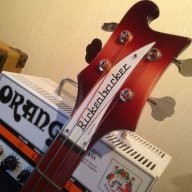
38EA6771-D117-4810-A3CD-57437F9F58FD.jpeg
 
  • Like
Reactions: andruca