

Enjoy the benefits of a premium membership!
Upgrade Account
-
TalkBass has been independent since 1998. Add your voice.
Create a free account to reply to discussions, view embedded media, and browse with fewer display ads.
Join free Log in
Want zero display ads or expanded classifieds tools? Compare plans.
You are using an out of date browser. It may not display this or other websites correctly.
You should upgrade or use an alternative browser.
You should upgrade or use an alternative browser.
Fret Board ?
- Thread starter bogie1519
- Start date
More options
Who Replied?

You've proven that you can't educate yourself.
An Ad hominem? Seriously?
Too funny.

The strings
Don't be silly.
Invalid Link Removed
"The guitar was excited by random Noise by a mini-shaker at the rear of the neck"
Wouldn't it be more valid if the strings were vibrating rather than artificially shaking the entire instrument with a transducer? That's what we care about, tone effect while being played, not vibrations when a transducer is attached to the neck.
I'm sure you read the paper that you're citing, but did you notice the findings? I could not find where the research stated that the neck construction affects the tone of the instrument. Their conclusion was essentially that dead spots exist. Do you have a follow-on study that establishes a link between fretboard tone and this study?
did you notice the findings? I could not find where the research stated that the neck construction affects the tone of the instrument. Their conclusion was essentially that dead spots exist.
You beat me to it.


I truly think based on my experience that even though Electric Basses don't have a sound chamber, they do vibrate. If you take a solid bar of rosewood and shape it into a key it becomes part of a marimba that produces sound.
To a lesser extent, a ebony or rosewood fingerboard placed onto a maple neck does vibrate, if if didn't the instrument would sound choked of muted. So although the vibrations are weak they are still present. Whether or not this
transfers into the pickups is debatable, but it does contribute to how a solid body bass feels under your hands. Just my take. I don't think it's a coincidence that bass guitars are made from the same woods that Double Basses are
made from, namely maple, ebony and rosewood. Tradition generally has reasons.
To a lesser extent, a ebony or rosewood fingerboard placed onto a maple neck does vibrate, if if didn't the instrument would sound choked of muted. So although the vibrations are weak they are still present. Whether or not this
transfers into the pickups is debatable, but it does contribute to how a solid body bass feels under your hands. Just my take. I don't think it's a coincidence that bass guitars are made from the same woods that Double Basses are
made from, namely maple, ebony and rosewood. Tradition generally has reasons.

Turnaround
Commercial User
I find the differences of opinion about Pau Ferro to be amusing. Especially since I encountered one individual who swore that Morado was far superior for tone and appearance. For myself, I prefer Bolivian Rosewood.
Yes.Pau Ferro it is a tonewood, right?
Every instrument has its own voice. My wife (Pro Flutist) Accompanies her better students, who want to buy an upgrade instrument to the shop, and let them test all the instruments in the shop of the same model and make. Until they find the instrument that matches their personal preferences and make them sound at their best.I'm buying a Fender Player Jazz Fretless Bass. What can I expect from this fretboard?
I did the same, when I was looking for a Squire Strat. I tried 12 identical instruments (Color was and is not an issue) and found that they all felt and sounded different.... only one came out as the one for me.
Could be I'm no expert.The only thing I've found is that it is harder than rosewood
It's possible, only you can experience that question. Let us know when you bought one.I have a MusicMan with ebony would that be close.

Yes: cost, availability, ease of work, physical properties (mechanical resistance to stress), and aesthetics, for example.Tradition generally has reasons.


I'd check out as many as possible if you want one that really looks good.Pau Ferro it is a tonewood, right? I'm buying a Fender Player Jazz Fretless Bass. What can I expect from this fretboard? The only thing I've found is that it is harder than rosewood. I have a MusicMan with ebony would that be close.
My opinion - in electric instruments, the tone is dominated by the strings and the electronics. Woods can have an influence, but they are minor. What little influence they have, I would put pau ferro (iron wood) as a denser, brighter wood. Basically, you want a (slightly) brighter tone similar to maple or ebony with the look of rosewood. I've also seen higher and lower grades of pau ferro. the lower grade looks more like dried out crap and the higher grade looks like a rosewood with more orange/brown hues. To me, pau ferro looks better with a gloss finish.
About fifteen years ago if memory serves, French luthier Paul Lairat made some of his basses with boxwood fretboards, a very hard wood used for chess pieces. I remember magazine articles from the time saying the feel and tone was similar to ebony.
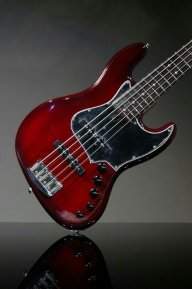
Tried out a couple Sadowsky's years ago back when Bass San Diego was still w us. Some say it sounds brighter than typical rosewood
What I heard whether imagined or not happened to agree w those some. Didn't care as much for lighter look either. Prefer rosewood across the board, No longer have any maple necks
Gotta check out for yourself and see
What I heard whether imagined or not happened to agree w those some. Didn't care as much for lighter look either. Prefer rosewood across the board, No longer have any maple necks
Gotta check out for yourself and see

I am an Audio Engineer, an Acoustical Physicist, and a musician. The place where a different wood has the potential to make the most difference is in the fretboard - that’s my educated opinion, you’re allowed to disagree if that suits you.
The bass that I have with a Pau Ferro board is “clackier” than my bass with a rosewood board They have the same pickup in the same location, the same body wood, neck back wood, bridge, and tuners. My theory is that it’s mostly a difference in damping - Pau Ferro being less oily, therefore less damped.
The bass that I have with a Pau Ferro board is “clackier” than my bass with a rosewood board They have the same pickup in the same location, the same body wood, neck back wood, bridge, and tuners. My theory is that it’s mostly a difference in damping - Pau Ferro being less oily, therefore less damped.

Don't you think it could be a difference in density?The bass that I have with a Pau Ferro board is “clackier” than my bass with a rosewood board They have the same pickup in the same location, the same body wood, neck back wood, bridge, and tuners. My theory is that it’s mostly a difference in damping - Pau Ferro being less oily, therefore less damped.

I own the fretless player series with pau ferro in white. To my ears, it is a little less dark than rosewood. I can't tell a difference in feel between the two. All together, they are both very similar. If it means anything, I am absolutely in love with this bass. It's intonation is perfect, and is the perfect blend of fretless mwah and jazz growl. You won't be disappointed.
Turnaround
Commercial User
There are many species of wood that are also commonly known as "ironwood". Pau Ferro is not one of them.What little influence they have, I would put pau ferro (iron wood) as a denser, brighter wood.
Lemme guess, the whammy bar?


