Use @, not #.How do I get Keith Guitars # so that the whole name is blue ?
@Keith Guitars and @RobbieK

TalkBass has been independent since 1998. Add your voice.
Create a free account to reply to discussions, view embedded media, and browse with fewer display ads.
Join free Log in
Want zero display ads or expanded classifieds tools? Compare plans.
Use @, not #.How do I get Keith Guitars # so that the whole name is blue ?
Overthinking is always better than underthinking. It's easier to delete the extra thoughts than to repair the damage from the thing you forgot.
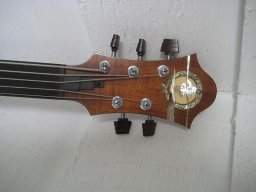
Osmo is the stuff of gods, it's such a joy to work with.View attachment 4810057
I had a small resonance at nut (E-string slot needed a few passes with nut file) and while I was at the shop filing it I sanded the neck end a bit more rounded. Osmo oil/wax is very easy to touch up, just sand to 400, finish with grey Mirka abrasive pad and wipe a thin coat of Osmo. Tomorrow I scuff it with grey pad again and wipe another coat and it’s done.

View attachment 4810057
I had a small resonance at nut (E-string slot needed a few passes with nut file) and while I was at the shop filing it I sanded the neck end a bit more rounded. Osmo oil/wax is very easy to touch up, just sand to 400, finish with grey Mirka abrasive pad and wipe a thin coat of Osmo. Tomorrow I scuff it with grey pad again and wipe another coat and it’s done.
Isn't that more or less how the original Steinberger necks were constructed? CF layup filled with insulation foam?To add to the lightweight aspect of this build technique, I am pretty sure that a hardwood core isn't even necessary. A lot of composite structures are built with with very lightweight filling, for example foam, honeycomb filler or balsa. I think with a balsa core the neck would be even lighter and you had even better stiffness control because the stiffness would be dictated mostly by the cf layup, not the core wood.
I was thinking the same thing; redwood or spruce would be very light but also very stiff as a core in this context. There could even be a harder sub-core to provide a more durable sleeve for the truss rod. A sort of core-within-a-core so that the wood immediately around the truss rod would be less likely to compress.To add to the lightweight aspect of this build technique, I am pretty sure that a hardwood core isn't even necessary.
The design is really, really clever.The mahogany I used was very light. Not balsa-light but not much heavier.
It’s hard to go wrong with cake.What more should I want?

I was thinking the same thing; redwood or spruce would be very light but also very stiff as a core in this context. There could even be a harder sub-core to provide a more durable sleeve for the truss rod. A sort of core-within-a-core so that the wood immediately around the truss rod would be less likely to compress.
That’s certainly the most common arrangement on unlined, fretless necks. With the dots positioned where the frets would be.…thinking of the regular 3-5-7-9-12 pattern, with a double dot at the 12th. I'm undecided, looking for suggestions...

I've made a few fretless basses for myself and others, all with plain ebony boards and side dots. That was a long time ago though, haven't had a fretless to play in a very long time. Fixed that now, making another fretless for myself but can't remember what dot patterns I used to prefer. I know I liked them where the fret would be, and I used copper wire to make the dots.
For this bass I have some 3mm copper bar, thinking of the regular 3-5-7-9-12 pattern, with a double dot at the 12th. Or maybe brass dots with a single copper dot at the 12th. I have plenty of brass stock, I can make any size dots I like.
I'm undecided, looking for suggestions...