
Bucephalus,
That's the best explanation of the differences, I have ever read. Thank you.


TalkBass has been independent since 1998. Add your voice.
Create a free account to reply to discussions, view embedded media, and browse with fewer display ads.
Join free Log in
Want zero display ads or expanded classifieds tools? Compare plans.
Bucephalus,
That's the best explanation of the differences, I have ever read. Thank you.

I don't know of a maker that offers an epoxy coating as stock.
But there are small businesses that will do it for you.
HG Thor Epoxy Fretless
Several years ago, I had reached out to him as well.I know this is an old thread...I contacted HG Thor through their web contact page. The page assured me that all inquiries are personally answered. It's been a week and I never heard back.
Is anyone else doing this?
Several years ago, I had reached out to him as well.
After a few months I received a response that he was sorry for not responding sooner.
But I had already done the job myself with great results.
Its really not too hard; anyone competent in finishing and/or epoxy should be able to do the work for you.
I've checked around with several guys who do refinishing and nobody wants to mess with coating a fretless fingerboard. Way harder than just a refin
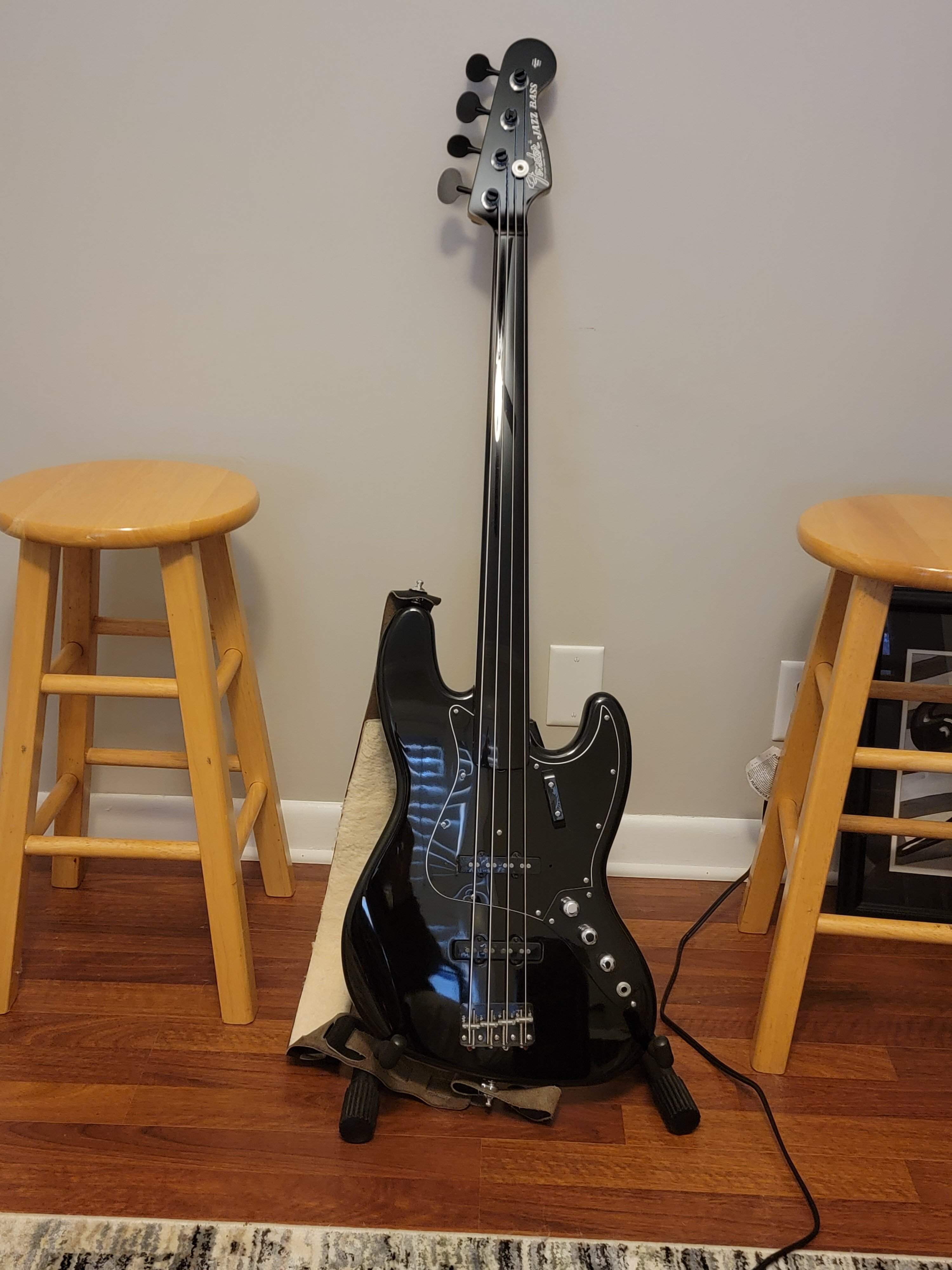
I did one of my basses in superglue, I've also done epoxy, superglue is harder and much easier to apply, you just need the proper stuff to do it and need to be very neat, if you take your time and really sand it it can come out like glass. I've also had a few necks coated by pros. I don't know what they charge now but I had a Fender done about 10 years ago for 300 bucks. Since I got my Fender TF fretless with ebony neck I prefer uncoated ebony to coated necks, always did actually but wear....ebony sounds better IMHO and stands up even to Rotosound RS66's.
I have 2 fretless basses. One has a gaboon ebony board and the other had Macassar ebony. Both show markings after a 6 months with nickel plated rounds.
I can feel some of them with my fingernail. I figure that if they are visible after 6 months, it'll probably get bad enough to need to be leveled every couple of years.I have markings on mine too but nothing you can hear or feel.
I've checked around with several guys who do refinishing and nobody wants to mess with coating a fretless fingerboard. Way harder than just a refin

I can feel some of them with my fingernail. I figure that if they are visible after 6 months, it'll probably get bad enough to need to be leveled every couple of years.
was yours epoxy or urethane? Who was the luthier?
i wonder if he'd do urethane or CA?

I did one of my basses in superglue, I've also done epoxy, superglue is harder and much easier to apply, you just need the proper stuff to do it and need to be very neat, if you take your time and really sand it it can come out like glass. I've also had a few necks coated by pros. I don't know what they charge now but I had a Fender done about 10 years ago for 300 bucks. Since I got my Fender TF fretless with ebony neck I prefer uncoated ebony to coated necks, always did actually but wear....ebony sounds better IMHO and stands up even to Rotosound RS66's.
I don't think so. His preferred method of coating a fingerboard is definitely epoxy, and he doesn't do any type of refinishing other than that. Urethane and CA will wear through, or peel off eventually. An eighth of an inch of epoxy is as durable as it gets.
Epoxy will also wear over time, maybe over a longer period of time over other methods, but it's not like you're coating the board with diamond dust.
I coated a fretless board with CA glue and found it pretty easy to get right. That included defretting, inlaying veneers in the slots, setting the relief on the neck dead-flat, and then carefully levelling the fingerboard with a sanding block.
I decided to use black super glue (Starbond) as a way to black-out the fretboard. It took many, many coats; definitely more than it would have taken were I not hellbent on hiding the fret lines and dots.
If you were starting with a fretboard that you already know is flat and true, then it's even easier. I just bought some disposable vinyl gloves and used my finger to spread the glue around. I didn't sand the fingerboard or use accelerator until I could tell that all the wood grain was sealed. The glue is thin enough to basically self-level since you're applying so little at once.
After the grain was sealed, I would apply a couple of coats over the course of the day (2-4 depending on my patience and the time I had), hit the last coat with accelerator, and then block sand to make sure everything was smooth. I didn't even use an entire small bottle of Starbond black CA. Once I had enough of a layer build up, I wet sanded up to some silly high grit (4k or something)
If I were to do it again, I'd start with water thin clear CA until it was built up enough to seal all the grain, and then switch to black. But, I hate lined fretless boards and dot inlays, so it was necessary to bury it all under a lot of black CA. If you don't mind fret lines you can just build up the glue as much or as little as you want for your desired finish.
I don't gig and fretless isn't my main, but I'm confident that CA is a resilient finish. I don't know how it would be possible for it to peel off, but I'm also not an expert in adhesives. Most people with patience could do a CA finish on their own, provided you have the time and a well-ventilated space to work in.

FWIW, Pat Wilkins can do a bang up job on a polyurethane coating for you. IME, the polyurethane has outstanding wear durability, while being somewhat warmer than epoxy - probably closest to wood of the options.
Epoxy will also wear over time, maybe over a longer period of time over other methods, but it's not like you're coating the board with diamond dust.
I coated a fretless board with CA glue and found it pretty easy to get right. That included defretting, inlaying veneers in the slots, setting the relief on the neck dead-flat, and then carefully levelling the fingerboard with a sanding block.
I decided to use black super glue (Starbond) as a way to black-out the fretboard. It took many, many coats; definitely more than it would have taken were I not hellbent on hiding the fret lines and dots.
If you were starting with a fretboard that you already know is flat and true, then it's even easier. I just bought some disposable vinyl gloves and used my finger to spread the glue around. I didn't sand the fingerboard or use accelerator until I could tell that all the wood grain was sealed. The glue is thin enough to basically self-level since you're applying so little at once.
After the grain was sealed, I would apply a couple of coats over the course of the day (2-4 depending on my patience and the time I had), hit the last coat with accelerator, and then block sand to make sure everything was smooth. I didn't even use an entire small bottle of Starbond black CA. Once I had enough of a layer build up, I wet sanded up to some silly high grit (4k or something)
If I were to do it again, I'd start with water thin clear CA until it was built up enough to seal all the grain, and then switch to black. But, I hate lined fretless boards and dot inlays, so it was necessary to bury it all under a lot of black CA. If you don't mind fret lines you can just build up the glue as much or as little as you want for your desired finish.
I don't gig and fretless isn't my main, but I'm confident that CA is a resilient finish. I don't know how it would be possible for it to peel off, but I'm also not an expert in adhesives. Most people with patience could do a CA finish on their own, provided you have the time and a well-ventilated space to work in.


