I guess it will have one interesting "plus" in that it'll screw with people's minds when they see you playing a fretted bass and doing fretless slides with lots of mwah and can't figure out how you do it.

TalkBass has been independent since 1998. Add your voice.
Create a free account to reply to discussions, view embedded media, and browse with fewer display ads.
Join free Log in
Want zero display ads or expanded classifieds tools? Compare plans.
Coming back to this thread, I'm realizing he could take the same amount of wood off the back of the neck and end up with a neck that's more or less the same as what he started with except with the frets under glass. That would be cool.If it has really bad neck dive, he can just pour more epoxy all over the body for counter weight. Yeah, that's the ticket.

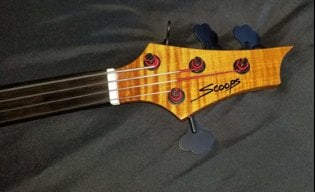
That neck is gonna be thick and crazy heavy, but I won't be too shocked if the bass winds up sounding great.
I guess it will have one interesting "plus" in that it'll screw with people's minds when they see you playing a fretted bass and doing fretless slides with lots of mwah and can't figure out how you do it.


Here I thought you were making frets that sat below the fingerboard. Turn the screws on a couple of cams and they raise up.
Don't give me that look, I'm not a builder.
Experimenting is fine and trying stuff is how we learn. Frequently we learn why nobody else does it that way -- and sometimes you strike gold.So as this progresses, and I need to remind people this is an experiment, I could add scalloping to this to make it a scalloped fretless



Paul.Why did Les Paul put a big plank of wood in a perfectly good guitar?
Why did Mr Tutmarc electrify a Bass
Why did Edison make the light bulb?
Why did man become a hunter?


I like this idea!Kinda.....
I was posing somewhat of a riddle
I'm thinkin something like this
I have this fretted neck, I dam it off pour in epoxy, once the epoxy dries shape the epoxy to be just above the top of the frets.
This is an experiment I've been wanting to do for a while so here goes
View attachment 3898190

You have been very defensive about some very benign comments throughout this thread, and what you are saying just doesn't make sense.Crazy thick? No more like @.01 thicker than it's original thickness...so what's that .011% thicker? Easily make that up by shaving that off the back of the neck.
So what are you predicting the weight gains is going to be 2 to 3 oz? I don't call that crazy. Ultralite tuners on and it'll be lighter than the original with the tuners.

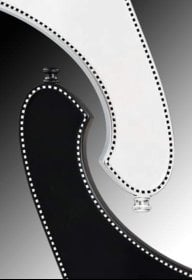

I played one of these a few times and actually liked it a lot!Ibanez has this thing -
SRAS7 | SR | ELECTRIC BASSES | PRODUCTS | Ibanez guitars