Hi everyone. This is my first post here. I have been playing piano for 9 years. I've learned a lot of music theory, and keep learning. But lately i keep thinking that if i could apply the things i know to a more intimate instrument than the piano that would be awesome. I'm considering cello, or electric fretless bass. Both have pros and cons that I've already considered. But the question that still remains is about translating into bass (or cello) all the music theory learned on piano. All the chords, progressions, inversions, counterpoint, scales, etc. It sounds fine on piano, and it would be amazing to do it on bass. But is it very hard to do? Off course i know every instrument is difficult. Previously to piano i played guitar for many years, but really didn't make much progress. With piano it's been different. And now i daydream about coming back to strings. But as i said, if learning bass is going to be too consuming (given that I'm still working like crazy on piano) maybe it's not a great idea. I don't know if it is reasonable to expect playing something nice in 2 o 3 years, practicing not much everyday, 1 hour top. I know 1 hour is nothing, but piano keeps me very busy. So i would appreciate any advice. Probably the most smart thing will be focussing on piano without distractions. Right? When i started piano i fantasized about playing advanced repertoire, and i regreted all the years spent on guitar. And now that i play advanced repertoire it bores me to death and dream about learning bass. Am i crazy?

Enjoy the benefits of a premium membership!
Upgrade Account
-
TalkBass has been independent since 1998. Add your voice.
Create a free account to reply to discussions, view embedded media, and browse with fewer display ads.
Join free Log in
Want zero display ads or expanded classifieds tools? Compare plans.
You are using an out of date browser. It may not display this or other websites correctly.
You should upgrade or use an alternative browser.
You should upgrade or use an alternative browser.
From piano to bass
- Thread starter soap
- Start date
More options
Who Replied?

You have a solid foundation for learning to play bass. But realize that the bass has a different role, and therefore should be approached differently. With your understanding of theory and chord voicings, using that knowledge on bass should translate easily. Just focus on technique at first, playing simple lines. Stick to chord notes and passing tones between them. Play along with songs you enjoy and try to learn certain bass lines that you find interesting. Enjoy the journey!
Advice: by a decent inexpensive bass and amp, and play it whenever the mood strikes you
Play it as often as you want. Of course the more time you put into it, the more you'l get out of it faster
Purchase The Improvisor's Bass Method by Chuck Sher | Sher Music Co. and play through it a little (or a lot) each day
That's all I got, except get out and play with other musicians and HAVE FUN!!
Play it as often as you want. Of course the more time you put into it, the more you'l get out of it faster
Purchase The Improvisor's Bass Method by Chuck Sher | Sher Music Co. and play through it a little (or a lot) each day
That's all I got, except get out and play with other musicians and HAVE FUN!!

The theory of course is the same, it's the only physical execution that changes.tsounds fine on piano, and it would be amazing to do it on bass. But is it very hard to do?
Some things are harder and some easier to execute.
Playing a minor 2nd dyad : Easy on piano, hard on bass
Playing A2 and A5 simultaneously : Easy on piano, hard on bass
Spanning more than an octave and half with your left hand: hard piano, easy on bass
Converting the shape of a scale to another key: harder on piano, easy on bass
Choosing exactly where to play a note: Automatic on piano, hard on bass
So I would appreciate any advice. Probably the most smart thing will be focussing on piano without distractions. Right?
It depends on your goals of course.
You "dream about learning bass" so I don't think ignoring it is "smart"
Outside of pursuing virtuoso level skill, learning one instrument takes nothing away form learning another
Thankyou very much you all. Your words are very encouraging to me. If i may keep asking, i 've seen these 2 models for sale.
https://www.thomann.de/es/harley_benton_b_650fl_bk_progressive_series.htm
[Invalid or Expired Link Removed]
Are they enough for learning?
https://www.thomann.de/es/harley_benton_b_650fl_bk_progressive_series.htm
[Invalid or Expired Link Removed]
Are they enough for learning?
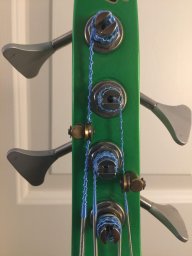
Harley Benton gets good reviews for the price. 4 string is easier on the hands, and you can do a lot with 4 strings - but if you plan to do a lot of chords, a 6 string is a good choice. The neck is just very wide, and string spacing on the right hand can still get tight.
I started on piano for years before switching to guitar and bass. All my theory is on piano - so when I think of theory, I do it mentally on the piano, and then apply it to bass.
You might want to go fretless at some point, but frets are a good way to start out playing in tune. Fretless just adds an extra level of challenge to get each note right.
Enjoy the journey!!
I started on piano for years before switching to guitar and bass. All my theory is on piano - so when I think of theory, I do it mentally on the piano, and then apply it to bass.
You might want to go fretless at some point, but frets are a good way to start out playing in tune. Fretless just adds an extra level of challenge to get each note right.
Enjoy the journey!!
Am i crazy?
 sounds like it!
but seriously, taking up fretless bass, with any string count, is bound to aid and abet both a rhythmic potential and a lyrical expressiveness that is completely different from the piano. seems like you're a good candidate to really love the experience.
i vote "go for it" --- good luck!

harley benton
I played piano and synth not so well for long time.
2 years ago I starter my journey on bass. I like very much to focus only on a single note at a time.
The most difficult thing for me was to make play only a single note. Learning to correctly mute all the other string has been the biggest challenge. It's automatic on piano. Need some time and exercise on bass
2 years ago I starter my journey on bass. I like very much to focus only on a single note at a time.
The most difficult thing for me was to make play only a single note. Learning to correctly mute all the other string has been the biggest challenge. It's automatic on piano. Need some time and exercise on bass
If you are approaching bass as a beginner I would also suggest frets
With fretless, in addition to the normal technique struggles, you'll also be dealing with intonation.
But, if you have a good ear already form piano, and know what it's supposed to sound like, you have an advantage there.
With fretless, in addition to the normal technique struggles, you'll also be dealing with intonation.
But, if you have a good ear already form piano, and know what it's supposed to sound like, you have an advantage there.


buldog5151bass
Kibble, milkbones, and P Basses. And redheads.
If you can practice bass an hour a day, you are probably practicing more than many of the members. I say go for it.
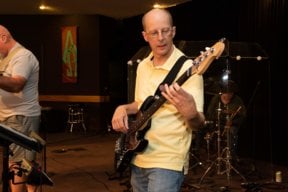
Piano player moving to bass? Just sit on your RIGHT hand.

First, of course you should go for it. Buy used stuff.
You may find bass boring compared to piano. Single half and whole notes, not every scale or run that sounds great on piano sounds as good on the low voiced instruments. If you do try to put in a bunch of notes, it might not server the song well (as bassists our job is to serve the song, not ourselves).
Or maybe you'll love it. A couple of well placed notes tells everyone what to feel about the music and life in general. So much power.
You may find bass boring compared to piano. Single half and whole notes, not every scale or run that sounds great on piano sounds as good on the low voiced instruments. If you do try to put in a bunch of notes, it might not server the song well (as bassists our job is to serve the song, not ourselves).
Or maybe you'll love it. A couple of well placed notes tells everyone what to feel about the music and life in general. So much power.
I think piano to bass is a great transition.
Off the top of my head some great pioneers of bass also played piano, Jack Bruce, Andy Fraser, John Paul Jones. I am sure a decent list could be created.
The biggest unsaid being, you already understand how bass compliments the melody and strengthens the song.
Off the top of my head some great pioneers of bass also played piano, Jack Bruce, Andy Fraser, John Paul Jones. I am sure a decent list could be created.
The biggest unsaid being, you already understand how bass compliments the melody and strengthens the song.
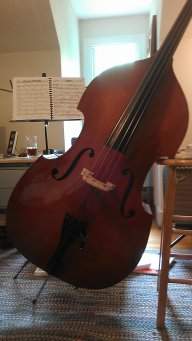
Hi everyone. This is my first post here. I have been playing piano for 9 years. I've learned a lot of music theory, and keep learning. But lately i keep thinking that if i could apply the things i know to a more intimate instrument than the piano that would be awesome. I'm considering cello, or electric fretless bass. Both have pros and cons that I've already considered. But the question that still remains is about translating into bass (or cello) all the music theory learned on piano. All the chords, progressions, inversions, counterpoint, scales, etc. It sounds fine on piano, and it would be amazing to do it on bass. But is it very hard to do? Off course i know every instrument is difficult. Previously to piano i played guitar for many years, but really didn't make much progress. With piano it's been different. And now i daydream about coming back to strings. But as i said, if learning bass is going to be too consuming (given that I'm still working like crazy on piano) maybe it's not a great idea. I don't know if it is reasonable to expect playing something nice in 2 o 3 years, practicing not much everyday, 1 hour top. I know 1 hour is nothing, but piano keeps me very busy. So i would appreciate any advice. Probably the most smart thing will be focussing on piano without distractions. Right? When i started piano i fantasized about playing advanced repertoire, and i regreted all the years spent on guitar. And now that i play advanced repertoire it bores me to death and dream about learning bass. Am i crazy?
No reason you can't play two instruments. Expect learning bass to be about as hard as learning piano, except you now got the theory stuff covered and know how bass works in music through piano. If you have the passion to play it, just do it. If you are not sure, maybe wait until you are.
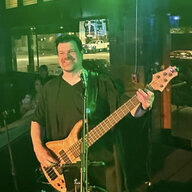
You can translate a lot of fun classical challenging pieces from piano to electric bass and its great fun exploring the instrument. Dont be locked down into the “only the 5th fret and below matters” its simply not true.
If you dont have a bass it might be fun and enlightening to go and ait with a teacher for an hour and get exposed to what type of challenges to expect, and what type of fun it is. It ls a super rewarding instrument that can at the very least add to your journey as a musician.
If you dont have a bass it might be fun and enlightening to go and ait with a teacher for an hour and get exposed to what type of challenges to expect, and what type of fun it is. It ls a super rewarding instrument that can at the very least add to your journey as a musician.

I would recommend starting with a fretted bass.
Maybe try playing some relatively simple left hand parts you know on bass.
I think it might give you a point of reference to translate the very different mechanics and feel.
Maybe try playing some relatively simple left hand parts you know on bass.
I think it might give you a point of reference to translate the very different mechanics and feel.
Yes, you're crazy. lol. I'm a bass player
and have always regretted not trying
one of my FAV instruments, Piano.
As a piano player you have a tremendous background
to apply to any instrument. Get a bass for fun, keep playing piano.
and have always regretted not trying
one of my FAV instruments, Piano.
As a piano player you have a tremendous background
to apply to any instrument. Get a bass for fun, keep playing piano.


