
Enjoy the benefits of a premium membership!
Upgrade Account
-
TalkBass has been independent since 1998. Add your voice.
Create a free account to reply to discussions, view embedded media, and browse with fewer display ads.
Join free Log in
Want zero display ads or expanded classifieds tools? Compare plans.
You are using an out of date browser. It may not display this or other websites correctly.
You should upgrade or use an alternative browser.
You should upgrade or use an alternative browser.
G&L Club Part 2
- Thread starter Bryan R. Tyler
- Start date
-
- Tags
- club
- Status
- Not open for further replies.
More options
Who Replied?
Chef
In Memoriam
IMO-for what' that's worth-you're not goona substantively change much but individual string response/balance by messing with the pole pieces.
IMO, there are only two routes towards a more single coil-ish tone from theose big MFD's:
One is to lower one side of the pickup, drastically. I've tried this (maybe templar pointed me that way?)
The other, and better, way, is to rewire you coil tap switch to provide acual single coil mode. The L1000's, and early L2000's had this, as did the recent BABP specials.
But, also IMO, those pickups are never gonna get you a "true knarly single coil Jazz tone." Just my opinion, but I've been a G&L player for 30 years now, and that's why I keep several nasty jazz basses handy...
ymmv, of course.
IMO, there are only two routes towards a more single coil-ish tone from theose big MFD's:
One is to lower one side of the pickup, drastically. I've tried this (maybe templar pointed me that way?)
The other, and better, way, is to rewire you coil tap switch to provide acual single coil mode. The L1000's, and early L2000's had this, as did the recent BABP specials.
But, also IMO, those pickups are never gonna get you a "true knarly single coil Jazz tone." Just my opinion, but I've been a G&L player for 30 years now, and that's why I keep several nasty jazz basses handy...
ymmv, of course.
I've got an ASAT that I love but want to try to vary it a bit tonally from my L-2500. My L-2500 is a bit more bassy and open sounding while the ASAT is more compressed and punchy.
Anyhoo, I'm looking for more of a Jazz sound or p/j sound out of it and have been messing with the pole pieces and pickup height.
so far I have it set up like this.
Neck Pickup: Reverse P/J style with the rear poles on the E and A adjusted up and the front poles all the way down, the D and G with the two forward poles all the way up and rear poles up way down.
Bridge P/U: Forward Poles up and rear poles all the way down with the rear of the pickup as much lower than the front as I could get it.
I like this setup so far but am open to suggestion. I prefer a bright grindy tone similar to what I get out of my P/J basses with a bit more ass. Thanks!
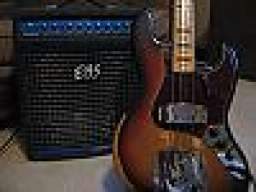
BlountEdge
I play (mostly) jazz basses
- Apr 15, 2004
- 480
- 28
- Disclosures
- Former contributing writer for Bassics Magazine
Yes, look in the repairs forum. Do you have a multi-meter?
Not an expert, but I'd be taking a hard look at that jack as a prime suspect. They do fail.
Yes, I have a multi-meter. Thanks for the advise!

Chef, et al, are the finishes on the 80's G&L's nitro or poly?
I have an '87 L2000 pictured a few pages back (black crinkly bridge, three bolt neck plate). The finish is worn through in the thumb anchor spot above the neck pickup, and I notice the wear patterns and checking you see on the finishes of older G&L basses is more consistent with nitro than poly.
Just wondering.
I have an '87 L2000 pictured a few pages back (black crinkly bridge, three bolt neck plate). The finish is worn through in the thumb anchor spot above the neck pickup, and I notice the wear patterns and checking you see on the finishes of older G&L basses is more consistent with nitro than poly.
Just wondering.

Chef, et al, are the finishes on the 80's G&L's nitro or poly?
I have an '87 L2000 pictured a few pages back (black crinkly bridge, three bolt neck plate). The finish is worn through in the thumb anchor spot above the neck pickup, and I notice the wear patterns and checking you see on the finishes of older G&L basses is more consistent with nitro than poly.
Just wondering.
From my understanding G&L's have always been Poly.
Chef
In Memoriam
I can't answer for sure when the switch happened, but, the early ones I have are nitro.
My newest is 1984.
My newest is 1984.

I had a couple of '80 G&L's that were nitro but I think they were poly by the time '87 rolled around....

My '83 has an incredibly delicate finish that I believe is nitro. My '90 is definitely different and tougher (both are gloss black SB-2s).
My '83 has an incredibly delicate finish that I believe is nitro. My '90 is definitely different and tougher (both are gloss black SB-2s).
My 86 L1K is definitely poly.
thanks all. It could be Poly, but if it is, its got to be the thinnest poly finish I've ever seen.

This has probably been answered before, but why the heck did G&L switch from a 3-bolt neck to a 6-bolt? My G&Ls with 3 bolt necks seem to be easier to adjust and play better up and down the neck than my 6-bolt G&L. I just keep thinking "if it wasn't broke, why did they try fixing it anyway"?

This has probably been answered before, but why the heck did G&L switch from a 3-bolt neck to a 6-bolt? My G&Ls with 3 bolt necks seem to be easier to adjust and play better up and down the neck than my 6-bolt G&L. I just keep thinking "if it wasn't broke, why did they try fixing it anyway"?
Personally I think it's because three bolt got a bad rap due to bad QC at Fender in the 70s and oversized neck pockets. The design is great when the pocket is tight but when it's not, the neck goes shifty due to the pivot point. I get the impression that people feel the 3 bolt design is faulted from experience with Fender so perhaps G&L switched for that reason. I love the three bolt adjustment I have used on various old G&Ls.
Chef
In Memoriam
Of the many, many G&L's I've had, I think I only actually *needed* to use the microtilt once.
I don't take any issue at all with the three bolt design.
Oddball note: some of the early 6 bolts still had microtilit!
I don't take any issue at all with the three bolt design.
Oddball note: some of the early 6 bolts still had microtilit!

Let's face it, what advantage can the 3-bolt arrangement possibly offer, other than saving the builder a few cents on hardware?
It doesn't facilitate the micro-tilt in any way, so why have it? It hasn't exactly inspired confidence in the buying public, either. G&L made the right move by dumping it, IMO.
To me, the 3-bolt concept was one of Leo's "bad" ideas, even if he wasn't the first to use it. It was one of the early marketing mistakes that helped keep G&L "off the map" for years. Which was cool with me, I liked it when playing a G&L was sorta ecclectic.
It doesn't facilitate the micro-tilt in any way, so why have it? It hasn't exactly inspired confidence in the buying public, either. G&L made the right move by dumping it, IMO.
To me, the 3-bolt concept was one of Leo's "bad" ideas, even if he wasn't the first to use it. It was one of the early marketing mistakes that helped keep G&L "off the map" for years. Which was cool with me, I liked it when playing a G&L was sorta ecclectic.
Chef
In Memoriam
to this day, they're ''hardly mainstream!"
True, I'm just glad I got my cadillacs before prices shot up.

Chef
In Memoriam
The reason I asked the original question was because of the many G&Ls I've owned over the years, the ones with 6-bolt necks (besides my current JB-2) always had neck issues such as heavily buzzing frets in the high registers with medium/low action. The three bolt ones I could always adjust to have not only low action, but clean playability even past the 12th fret. I haven't played a newer (post 2008) G&L, but has this problem been eliminated with the factory Pleking? It could also very well be that I could have gotten all duds!
Let's face it, what advantage can the 3-bolt arrangement possibly offer, other than saving the builder a few cents on hardware?
With the saddles bottomed out I often find that the action is higher than I care for. Micro-tilt is better than shimming.
Chef
In Memoriam
they don't' still make 6 bolt micro-tilt do they?
microitilt can cause the dreaded ski jump issue, so, i kinda prefer paper cut to the shape of the neck pocket.
if you need more than a double width, you gots other issues, IMO.
microitilt can cause the dreaded ski jump issue, so, i kinda prefer paper cut to the shape of the neck pocket.
if you need more than a double width, you gots other issues, IMO.
- Status
- Not open for further replies.


