
Enjoy the benefits of a premium membership!
Upgrade Account
-
TalkBass has been independent since 1998. Add your voice.
Create a free account to reply to discussions, view embedded media, and browse with fewer display ads.
Join free Log in
Want zero display ads or expanded classifieds tools? Compare plans.
You are using an out of date browser. It may not display this or other websites correctly.
You should upgrade or use an alternative browser.
You should upgrade or use an alternative browser.
Genzler Amplification Club
- Thread starter Discount Saint
- Start date
More options
Who Replied?

Jeff Genzler
Commercial User
- Feb 9, 2007
- 1,819
- 11,893
- Disclosures
- Currently GENZLER AMPLIFICATION / Formerly GENZ BENZ
This pickup should be just fine, plugged directly into the MG-800. Certainly experimenting with level and tone controls will be in order.
One item, there are many questions to consider when purchasing a pickup for an upright and if you'd like to PM me I can connect you with a dealer that can certainly assist with pick up selection and other thoughts before you purchase.
One item, there are many questions to consider when purchasing a pickup for an upright and if you'd like to PM me I can connect you with a dealer that can certainly assist with pick up selection and other thoughts before you purchase.



MG350-112 combo inbound!!! Got a smoking deal on the TB store closeout.

Congrats! I love mine! It sounds great, is loud, looks cool, handles a B string and is easy to carry.MG350-112 combo inbound!!! Got a smoking deal on the TB store closeout.

I have been considering adding either an NC115T or possibly the NC210T to my NC212T. Any thoughts?

I’m looking at the NC115T. I’ll have MG12T-V sit on top of it.

Why settle? Get both.I have been considering adding either an NC115T or possibly the NC210T to my NC212T. Any thoughts?

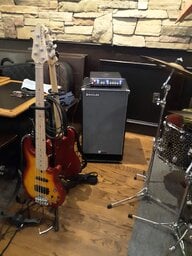
I have been considering adding either an NC115T or possibly the NC210T to my NC212T. Any thoughts?
Would this be to use at the same time as the 212 or as an option/alternative to the 212 for certain gigs? I have both and haven't tried them together (although I have to now!) and have been using the 212 for almost all my gigs but I ran into one where I couldn't get the NC212+112 to sound like I wanted it to. I switched it up to the NC210+112 for the following gig and I really liked how it sounded, and then just used the NC210 alone for a smaller gig after that and I really liked the 'snap' I got from that cab along with just a bit of grind (breakup?) when I played more aggressively.
Yes, to use at the same time as the NC212T. I appreciate your input. Thank you.

Two SLT cabs? I've got a 410BA and a 210BA SLT Would like to add a 115BA for a 210, 115 set up. the 115BA comes in a SLT only. So would it be too much of a slant with two slant cabs for my 3 space rack to stay on top while playing?
Jeff Genzler
Commercial User
- Feb 9, 2007
- 1,819
- 11,893
- Disclosures
- Currently GENZLER AMPLIFICATION / Formerly GENZ BENZ
My 2 cents is the NC115T would be the better choice under the NC-212T cab, offering a big rounded bottom under the push of the 212 cabs.Yes, to use at the same time as the NC212T. I appreciate your input. Thank you.
Just personal preference.

Joeykun
pronounced ジョーイくん
- Jun 22, 2007
- 4,200
- 16,150
- Disclosures
- Endorsing: LAKLAND SADOWSKY GENZLER DARKGLASS NORDSTRAND TEMPLEBOARD KIRLIN DRSTRINGS ACCESS
I agree with Jeff.
The NC210 with the NC112 is a nice rig.
A NC212 with the NC115 is mean rig!!
The NC210 with the NC112 is a nice rig.
A NC212 with the NC115 is mean rig!!
Found this well written review on BassChat and now owning one I agree 100%.
Here are my thoughts of the Genzler Magellan 800 bass amp after having gigged it for the past several months. I've deliberately left it a while to make sure that the honeymoon period was over so that any issues or quibbles that I may have with it have become apparent. For reference, I play in a 5 piece, female fronted, rock, pop and party band playing a mixture of pub and club gigs as well as some private work and functions. My cab is Tecamp M212 and I use a variety of basses, usually with a bias towards the neck pickup. I play finger style more or less exclusively and am pretty heavy handed too, I love to dig in when I'm playing!
If you're not already familiar with the amps here's what Genzler themselves have to say about them, the Magellan 800 and the Magellan 350. When I originally bought the amp, I tried it against some of its peers. To see how I thought it stacked up at the time see the thread here.
Overview
The 800 amp has both a transparent clean channel (that can be coloured by the Contour control, more of that later) and a coloured Drive channel. That makes it extremely versatile and usable for pretty much any and every musical situation that you're ever likely to find yourself in from soft jazz to the lesser extremes of metal.
Clean channel
The clean channel with the eq set to noon and the Contour control dialled out sounds even across the frequency range, there are no peaks or troughs in the signal. This sound works great in the mix straight out of the box. The Genzler marketing talks about a “weighted feel to the notes” and this is absolutely correct, the low end is definitely forceful, punchy and powerful but without being overbearing. Those that claim that class D amps lack heft should take an objective, unbiased listen to the Genzler.
Pre-amp
The EQ frequencies that the Magellan uses are absolutely perfect for real world live use. The bass EQ is voiced at 75 Hz which is great for adding audible bass to the sound if you're in a room where the bass is sounding a bit thin, or for backing the low end off if things are booming on stage. In my experience this has proven to be a far more useable frequency for controlling your low end than 40 Hz that many other bass amps use.
The semi-parametric mid covers a wide range from 150 Hz to 3 KHz. It sounds perfect with the mid eq control at noon, which keeps things flat but I personally like to give it a slight push in the upper mids to help the bass cut through a busy mix. But you have massive flexibility here to control those critical mid frequencies whatever you want to do with them.
The treble is voiced at 6 KHz so is useful for adding some presence to the tone or brightening up dead strings. Or backing things off a touch for a great retro tone. The treble never gets harsh and the tone is never completely dulled when the top end is backed off.
The simplicity of the tone stack and the choice of frequencies that they operate on cannot be praised enough. The Genzler just delivers everything you need and nothing you do not.
To finish of the awesome eq section there is also the dual voiced Contour control. A button on the front panel allows you to choose between curves A and B;
Curve A is a mid-scoop pre-shape. However, compared to similar controls on other amps, this one is more gentle and is more usable because of it, it is usable throughout most of its range. Its only when its cracked beyond about 3 o'clock that the bass sounds like it could potentially to disappear form the mix.
Curve B bumps the low mids while rolling off the upper mids and the extremes of the frequency range to give a great retro vibe or to tame a bright sounding, scooped rig . As with Curve A, things are still kept subtle and musically usable with this control throughout its range.
Drive channel
The 800 model also sports a footswitchable drive channel that has its own gain and volume controls. Genzler have wisely allowed the use of any generic latching footswitch to be used rather than forcing you into using a proprietary one.
Although the drive channel is completely valve-less, it is one of the most convincing, warm, valve-like sounds that I've heard. When engaging the drive channel a pre-set eq curve is applied that subtly rolls off the high and low ends and leaves you with a silky smooth, valve like drive that never gets fizzy. Even at full gain, the drive is always usable, it does not get into the realms of distortion. The slightly mid biased voice of the drive is more suited to Motown or classic rock than it is for anything extreme. If you want more gain, or a modern scooped distortion then you'll need a dedicated pedal. But for those of us who want that touch of hair or a light, usable drive that works in the mix, this is, as with everything about this amp, perfect.
HPF
There is no mention of any form of high pass filtering by Genzler, but I emailed them to ask about it and none other than Geoff Genzler himself responded to say that;
Yes, we do utilize a High Pass filter with the MG-800. It is a very steep slope and set low around the 30 Hz range. This allows us to achieve a clean, solid and authoritative low end without potential flubbyness. This also helps with protection from over-excursion for speakers under high power situations.
I hope this information is helpful.
Best Regards,
Jeff Genzler
How's that for customer service???
Construction and finish
The amp is a great looking design IMO and the quality of construction is flawless. Genzler describe it as; aircraft-grade, brushed aluminum (sic) chassis with a sleek custom extruded front panel. It certainly looks classy and feels substantial. Anyone concerns over quality because it was built in the far east are misplaced. And it has 4 ultra-important blue LED's on the front panel. Nice.
Niggles
As you have probably gathered by now, I'm struggling to find fault with the Genzler Magellan amps. However I do have a couple of very minor criticisms. It'd be great if the Contour voicings were footswitchable so you could switch between the different curve options on the fly. But this is just nit picking, and not something that I'm likely to ever do anyway.
And then there's the name. No doubt there is a reason or story about why Magellan was chosen, but it just seems a bit of a daft name for a bass amp to me, It's more like a name you'd give to a dog!
Summary
Honestly, I can't fault the Magellan amps. Everything about it is just right. It delivers everything you need in the real world. I've played many gigs in many different venues with mine and I'm yet to get a bad sound out of it or have ever been in a situation where the sublime eq section wasn't able to eq the bass to a room with poor acoustics in a matter of seconds.
In fact, I like it so much that I bought the baby 350 model as a rehearsal and back up amp. The 350 has the same great tone and features of its big brother but it does lack the jaw-droppingly brilliant drive channel. However is makes up for this by being smaller, lighter and cheaper. I've also gigged the 350 and don't let its nominally low power rating put you off, this thing has more volume than you're ever likely to need on a typical pub, club or function gig.
Edited December 11, 2017 by Osiris
Here are my thoughts of the Genzler Magellan 800 bass amp after having gigged it for the past several months. I've deliberately left it a while to make sure that the honeymoon period was over so that any issues or quibbles that I may have with it have become apparent. For reference, I play in a 5 piece, female fronted, rock, pop and party band playing a mixture of pub and club gigs as well as some private work and functions. My cab is Tecamp M212 and I use a variety of basses, usually with a bias towards the neck pickup. I play finger style more or less exclusively and am pretty heavy handed too, I love to dig in when I'm playing!
If you're not already familiar with the amps here's what Genzler themselves have to say about them, the Magellan 800 and the Magellan 350. When I originally bought the amp, I tried it against some of its peers. To see how I thought it stacked up at the time see the thread here.
Overview
The 800 amp has both a transparent clean channel (that can be coloured by the Contour control, more of that later) and a coloured Drive channel. That makes it extremely versatile and usable for pretty much any and every musical situation that you're ever likely to find yourself in from soft jazz to the lesser extremes of metal.
Clean channel
The clean channel with the eq set to noon and the Contour control dialled out sounds even across the frequency range, there are no peaks or troughs in the signal. This sound works great in the mix straight out of the box. The Genzler marketing talks about a “weighted feel to the notes” and this is absolutely correct, the low end is definitely forceful, punchy and powerful but without being overbearing. Those that claim that class D amps lack heft should take an objective, unbiased listen to the Genzler.
Pre-amp
The EQ frequencies that the Magellan uses are absolutely perfect for real world live use. The bass EQ is voiced at 75 Hz which is great for adding audible bass to the sound if you're in a room where the bass is sounding a bit thin, or for backing the low end off if things are booming on stage. In my experience this has proven to be a far more useable frequency for controlling your low end than 40 Hz that many other bass amps use.
The semi-parametric mid covers a wide range from 150 Hz to 3 KHz. It sounds perfect with the mid eq control at noon, which keeps things flat but I personally like to give it a slight push in the upper mids to help the bass cut through a busy mix. But you have massive flexibility here to control those critical mid frequencies whatever you want to do with them.
The treble is voiced at 6 KHz so is useful for adding some presence to the tone or brightening up dead strings. Or backing things off a touch for a great retro tone. The treble never gets harsh and the tone is never completely dulled when the top end is backed off.
The simplicity of the tone stack and the choice of frequencies that they operate on cannot be praised enough. The Genzler just delivers everything you need and nothing you do not.
To finish of the awesome eq section there is also the dual voiced Contour control. A button on the front panel allows you to choose between curves A and B;
Curve A is a mid-scoop pre-shape. However, compared to similar controls on other amps, this one is more gentle and is more usable because of it, it is usable throughout most of its range. Its only when its cracked beyond about 3 o'clock that the bass sounds like it could potentially to disappear form the mix.
Curve B bumps the low mids while rolling off the upper mids and the extremes of the frequency range to give a great retro vibe or to tame a bright sounding, scooped rig . As with Curve A, things are still kept subtle and musically usable with this control throughout its range.
Drive channel
The 800 model also sports a footswitchable drive channel that has its own gain and volume controls. Genzler have wisely allowed the use of any generic latching footswitch to be used rather than forcing you into using a proprietary one.
Although the drive channel is completely valve-less, it is one of the most convincing, warm, valve-like sounds that I've heard. When engaging the drive channel a pre-set eq curve is applied that subtly rolls off the high and low ends and leaves you with a silky smooth, valve like drive that never gets fizzy. Even at full gain, the drive is always usable, it does not get into the realms of distortion. The slightly mid biased voice of the drive is more suited to Motown or classic rock than it is for anything extreme. If you want more gain, or a modern scooped distortion then you'll need a dedicated pedal. But for those of us who want that touch of hair or a light, usable drive that works in the mix, this is, as with everything about this amp, perfect.
HPF
There is no mention of any form of high pass filtering by Genzler, but I emailed them to ask about it and none other than Geoff Genzler himself responded to say that;
Yes, we do utilize a High Pass filter with the MG-800. It is a very steep slope and set low around the 30 Hz range. This allows us to achieve a clean, solid and authoritative low end without potential flubbyness. This also helps with protection from over-excursion for speakers under high power situations.
I hope this information is helpful.
Best Regards,
Jeff Genzler
How's that for customer service???
Construction and finish
The amp is a great looking design IMO and the quality of construction is flawless. Genzler describe it as; aircraft-grade, brushed aluminum (sic) chassis with a sleek custom extruded front panel. It certainly looks classy and feels substantial. Anyone concerns over quality because it was built in the far east are misplaced. And it has 4 ultra-important blue LED's on the front panel. Nice.
Niggles
As you have probably gathered by now, I'm struggling to find fault with the Genzler Magellan amps. However I do have a couple of very minor criticisms. It'd be great if the Contour voicings were footswitchable so you could switch between the different curve options on the fly. But this is just nit picking, and not something that I'm likely to ever do anyway.
And then there's the name. No doubt there is a reason or story about why Magellan was chosen, but it just seems a bit of a daft name for a bass amp to me, It's more like a name you'd give to a dog!
Summary
Honestly, I can't fault the Magellan amps. Everything about it is just right. It delivers everything you need in the real world. I've played many gigs in many different venues with mine and I'm yet to get a bad sound out of it or have ever been in a situation where the sublime eq section wasn't able to eq the bass to a room with poor acoustics in a matter of seconds.
In fact, I like it so much that I bought the baby 350 model as a rehearsal and back up amp. The 350 has the same great tone and features of its big brother but it does lack the jaw-droppingly brilliant drive channel. However is makes up for this by being smaller, lighter and cheaper. I've also gigged the 350 and don't let its nominally low power rating put you off, this thing has more volume than you're ever likely to need on a typical pub, club or function gig.
Edited December 11, 2017 by Osiris
I have a BA-210 and I'm about to add a BA 12-3 that I got for a good deal. Was gonna get the 15 but the price on the BA-12-3 was too good to turn down.
Does anyone have any experience using this combination?
Does anyone have any experience using this combination?

Pre-sale alert.
I'm changing [Genzler] rigs, now that I have a FOH option. Looking to move a minty 12T-V WITH original Genzler cover AND bracket. (I kept the 12T-V in one place and moved the 350 to another location where I have the 10-2 combo). If interested, shoot me a PM and we'll look into shipping costs, etc). I'll keep this here for a few days and then put it over to Classifieds. I'll get pictures to interested parties.
I'm changing [Genzler] rigs, now that I have a FOH option. Looking to move a minty 12T-V WITH original Genzler cover AND bracket. (I kept the 12T-V in one place and moved the 350 to another location where I have the 10-2 combo). If interested, shoot me a PM and we'll look into shipping costs, etc). I'll keep this here for a few days and then put it over to Classifieds. I'll get pictures to interested parties.
It’s here, and it sounds fantastic! I think this will be plenty loud for practice and small gigs.
anyone know why it has a bass array sticker though?
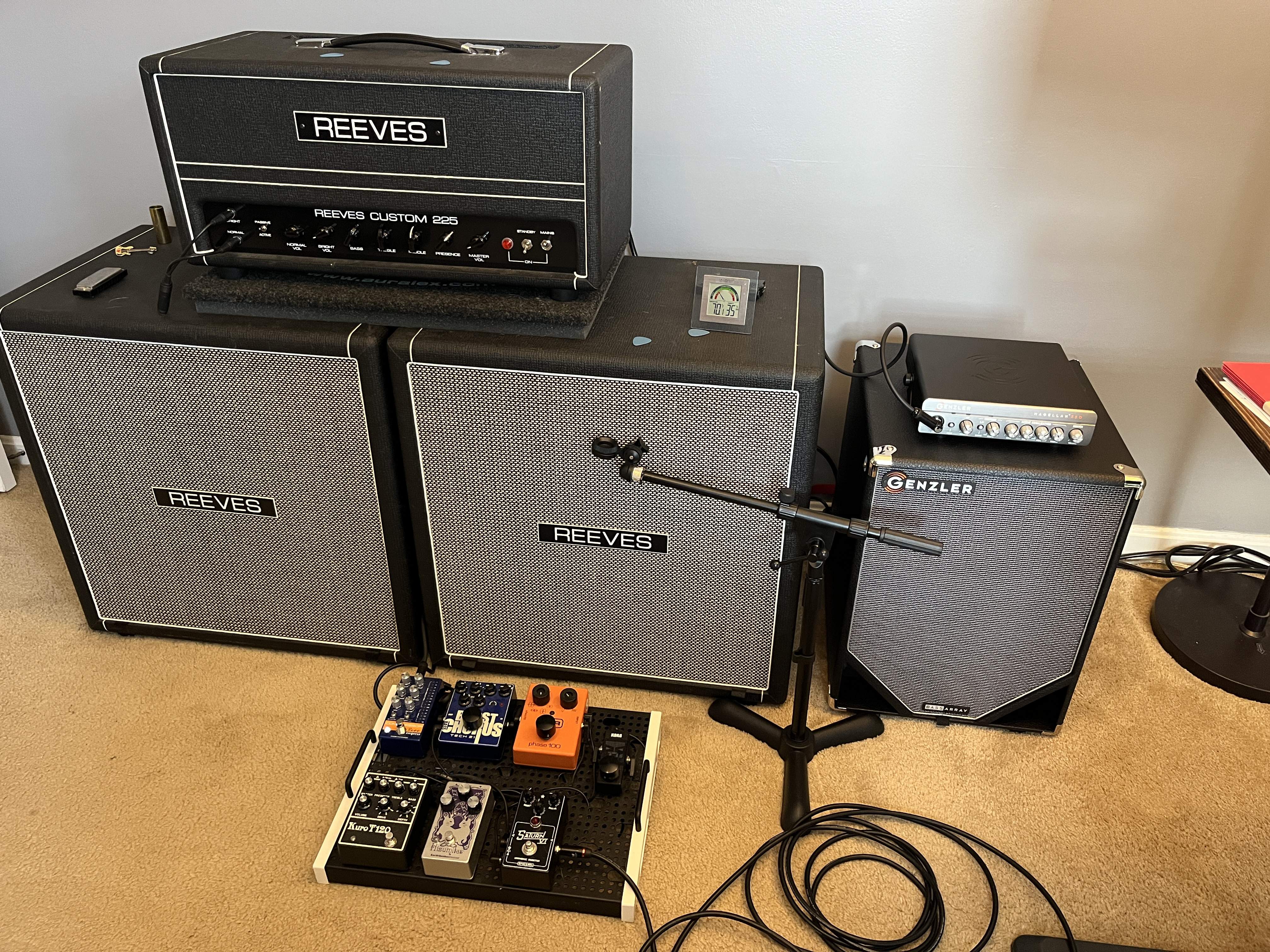
anyone know why it has a bass array sticker though?
Last edited:

It’s here, and it sounds fantastic! I think this will be plenty loud for practice and small gigs.
anyone know why it has a bass array sticker though?
View attachment 4907952
Ok. That's strange. Mine say "MAGELLAN".


