How about an extra long set? My choices for this bass are limited.
View attachment 3462830
VERY cool!

TalkBass has been independent since 1998. Add your voice.
Create a free account to reply to discussions, view embedded media, and browse with fewer display ads.
Join free Log in
Want zero display ads or expanded classifieds tools? Compare plans.
How about an extra long set? My choices for this bass are limited.
View attachment 3462830
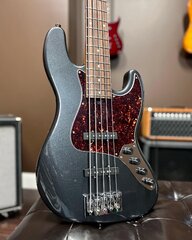

Would most agree that these strings are on the more supple/flexible end of the spectrum?

I would say they are more supple/flexible than hex core Bass Boomers or any of the NPS roundwound D'Addario. I really don't find all that much difference between the light and medium sets. I don't like the skinny 0.040 G string. You wouldn't think that just four thousandths of an inch from 0.040 to 0.044 would be very noticeable, but it is. Yet the five thousandths of an inch difference between the 0.101 and 0.106 E strings feels and sounds like no difference at all.Would most agree that these strings are on the more supple/flexible end of the spectrum? I can’t make up my mind on which gauge to stick with. There are things I like about both, lights and mediums. I’m leaning towards sticking with mediums, since these strings already feel very supple/flexible. These GHS NB’s are my favorite strings I’ve ever played, regardless of which gauge though.
I don't like the skinny 0.040 G string. You wouldn't think that just four thousandths of an inch from 0.040 to 0.044 would be very noticeable, but it is. Yet the five thousandths of an inch difference between the 0.101 and 0.106 E strings feels and sounds like no difference at all.
AgreedThe 40G is still better than any other 40G's I've tried, thanks to the "balanced construction"
 The light Balanced Nickels are the only light set that I have truly liked.

Similar experience...I loved the even balance tension across the strings, but liked the tone of Roundcore Boomers better.Not impressed. I have them for a week and a half now, gigged the first weekend and the second weekend, and now their tone is dulling and hasnt been two weeks yet.
Yes they feel stiffer and are less flexible than DR. Im also forever chasing tuning during the gig.
Hate the green silks too, it doesnt look good on a red bass...why green? Back to DR I go.
Hate the green silks too, it doesnt look good on a red bass...why green?


Similar experience...I loved the even balance tension across the strings, but liked the tone of Roundcore Boomers better.
Hate the green silks too, it doesnt look good on a red bass...why green?
Because no one liked the teal silk that I used for the prototype run.
Would the teal have been closer to the color of the package?
That is partly why I redesigned the RC Bass Boomers to capitalize on the Balanced Nickels concept, so more people could enjoy that.
I know this means the G has an extra layer, but does it also mean the E has one less? If so, is the outer wrap wire thicker on the E?
Nope.
I would have been okay with the darker, more subdued shade of green like the package.
Matching a dyed fabric to a printed page is damn near impossible. And when things get reordered, what used to be "dead on" could easily turn into "Eh, it's close."
I didn't necessarily mean the color of the silk matching exactly to the color of the package; just a "darker shade of green" such as forest green.
There's a pretty big tonal difference between the pure nickel of Balanced Nickels and the nickel-plated steel (of which, industry standard is 8% nickel, and 92% steel) of Roundcore Bass Boomers.