

Enjoy the benefits of a premium membership!
Upgrade Account
-
TalkBass has been independent since 1998. Add your voice.
Create a free account to reply to discussions, view embedded media, and browse with fewer display ads.
Join free Log in
Want zero display ads or expanded classifieds tools? Compare plans.
You are using an out of date browser. It may not display this or other websites correctly.
You should upgrade or use an alternative browser.
You should upgrade or use an alternative browser.
More options
Who Replied?

Well, the other shoe dropped...
Guitar.com: Judge orders Dean to cease production of Gran Sport, Dean V and Dean Z guitars following Gibson trademark verdict.
Judge orders Dean to cease production of Gran Sport, Dean V and Dean Z guitars following Gibson trademark verdict/
Guitar.com: Judge orders Dean to cease production of Gran Sport, Dean V and Dean Z guitars following Gibson trademark verdict.
Judge orders Dean to cease production of Gran Sport, Dean V and Dean Z guitars following Gibson trademark verdict/

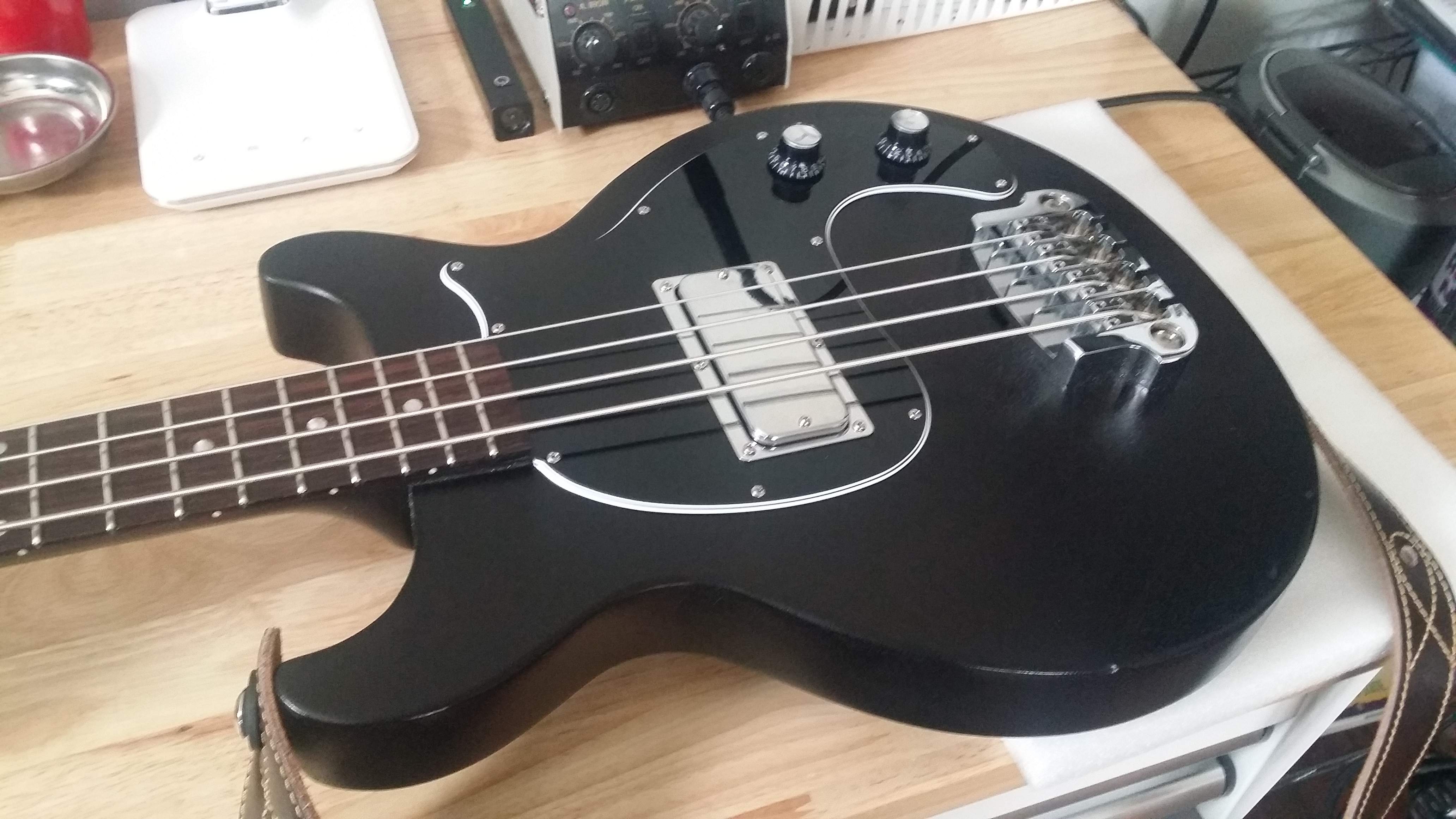
My 74 Ripper. Was working on the electronics when this picture was taken. Wired like a jazz bass. The pickguard gassed out but was able to save the pots.


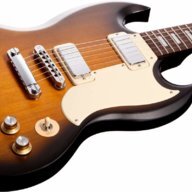
Well, the other shoe dropped...
Guitar.com: Judge orders Dean to cease production of Gran Sport, Dean V and Dean Z guitars following Gibson trademark verdict.
Judge orders Dean to cease production of Gran Sport, Dean V and Dean Z guitars following Gibson trademark verdict/
It’s not like you can copy someone’s homework and it’s ok because they didn’t say anything right away.

Could anyone out here with an original 70s Ripper do me a favour and take a few measurements for me? I'd like to know the distance from the nut to the pole pieces on each pickup. Please and thanks! 

I'm happy to be back where I belong~
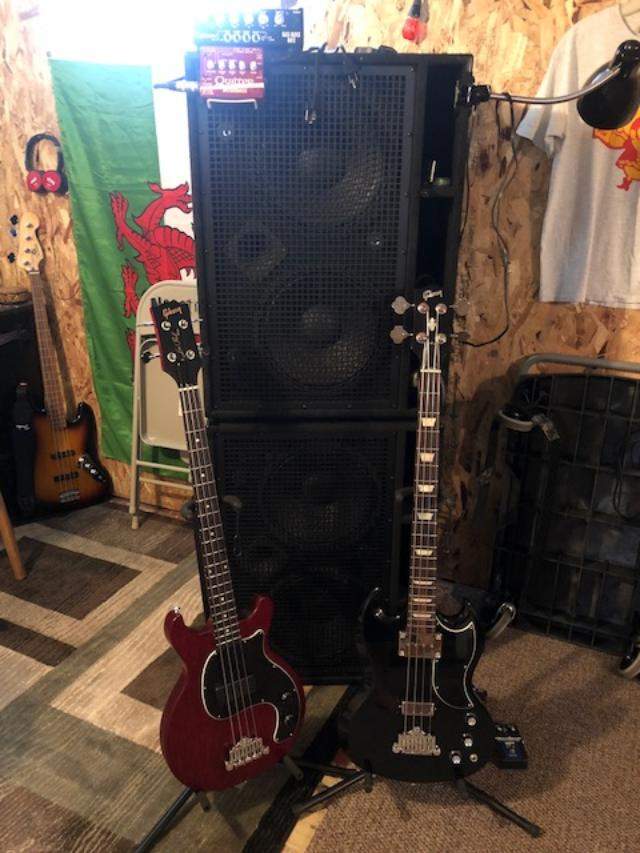

Cool. Should try the new D350 with that set upI'm happy to be back where I belong~View attachment 4793792
I could foresee some of the Subway cabinets for sure!Cool. Should try the new D350 with that set up

Here is my #1. A Gibson Les Paul Tribute DC. I was wondering if anyone has a wiring diagram for these.
I'm not sure about the push-pull volume pot. I know that its parallel when pushed in. But when pulled out is it single coil, split coil, or parallel? When pulled out I hear a little of the highs being rolled off and that's it. I wanted to check to see if its wired right. Also I'm considering the Lazen-P90 pickup that LowEndLobster put in his. It sounded really good in his video.
I'm not sure about the push-pull volume pot. I know that its parallel when pushed in. But when pulled out is it single coil, split coil, or parallel? When pulled out I hear a little of the highs being rolled off and that's it. I wanted to check to see if its wired right. Also I'm considering the Lazen-P90 pickup that LowEndLobster put in his. It sounded really good in his video.
A Hipshot bridge might be just enough weight to balance it. Mine has one and has no neck dive at all.Hello. Just got the blue one. It would be just about perfect, but has a bit of neck dive.
I opened it up and took a look. Its wired permanently in series. The only thing that happens when you pull out the volume pot is that a small capacitor is switched across the PuP. I checked the Gibson website and they call it a coil tap. Its certainly not that.. . . Gibson Les Paul Tribute DC. I was wondering if anyone has a wiring diagram for these. I'm not sure about the push-pull volume pot. I know that its parallel when pushed in. But when pulled out is it single coil, split coil, or parallel? When pulled out I hear a little of the highs being rolled off and that's it. I wanted to check to see if its wired right.
I was wrong about this. Here is the wiring diagram for the Gibson Les Paul DC bass.I opened it up and took a look. Its wired permanently in series. The only thing that happens when you pull out the volume pot is that a small capacitor is switched across the PuP. I checked the Gibson website and they call it a coil tap. Its certainly not that.

EdwardofHuncote
I Still Dream of Jeannie
- Aug 21, 2013
- 6,654
- 2
- 16,425
- Disclosures
- I privately own and operate a local musical instument repair shop.
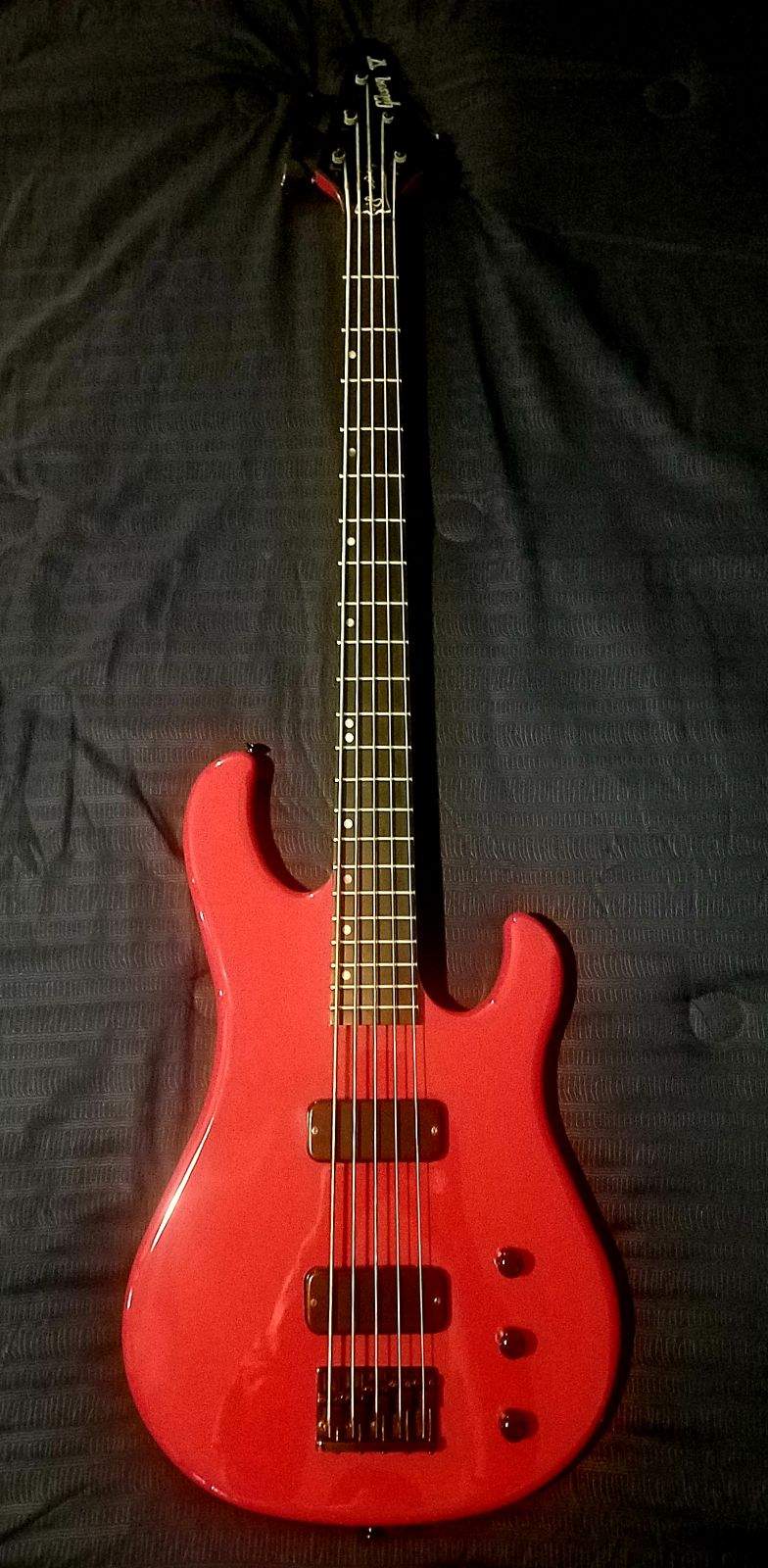
I'm on something of an extended hiatus from playing, but I'm still trying to keep the instruments rotated in and out of cases. I just had to fumble around and play a few minutes on my old Thunder Series V this morning. It's such a great bass, so comfortable to play. If I had just one gripe about it, the neck is very finicky. The smallest adjustments to the truss rod make a huge difference, and the blame thing is very sensitive to weather. So I've just learned to anticipate what it'll do. Y'all put your shades on, this thing is rad-RED!
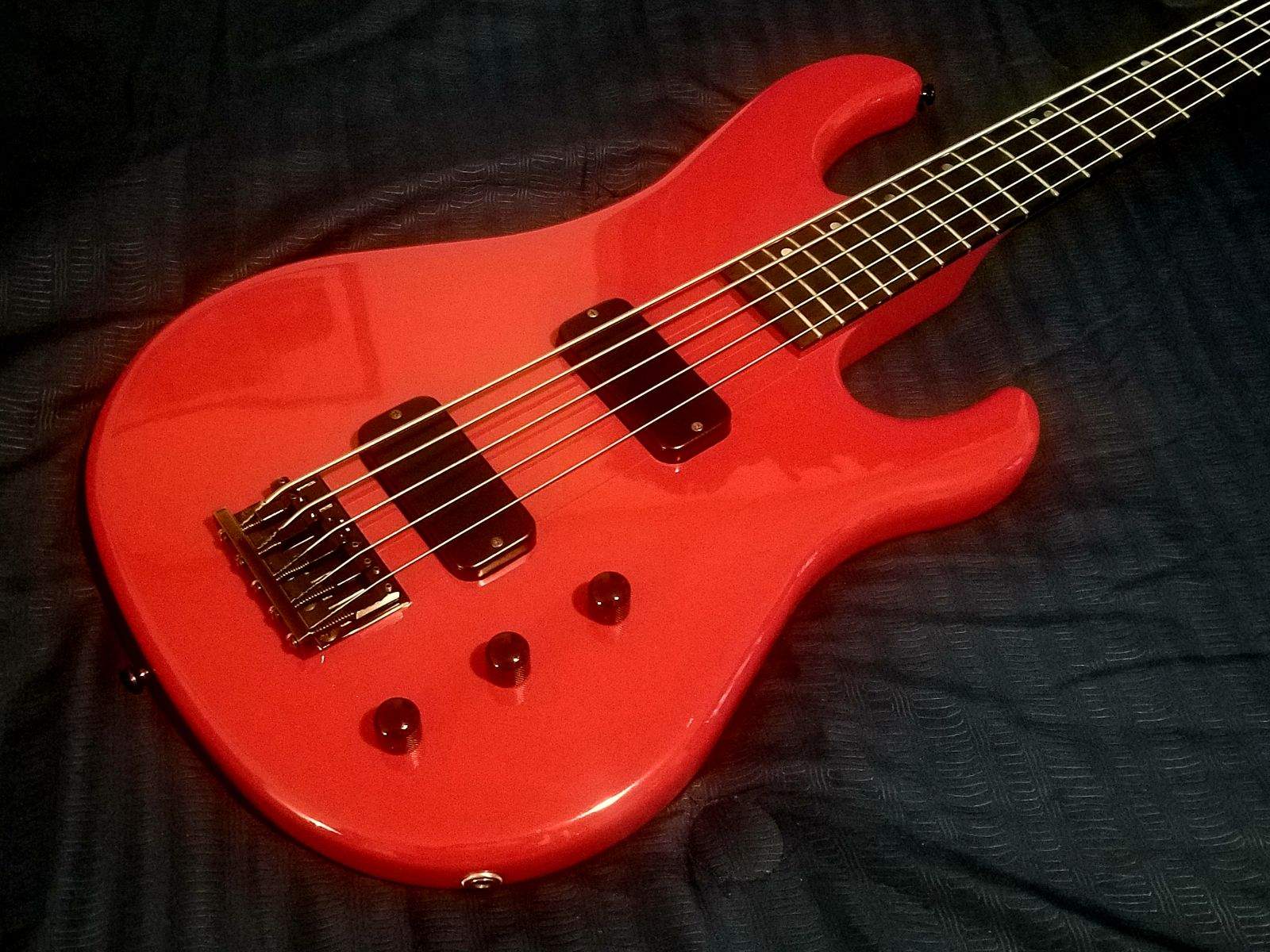
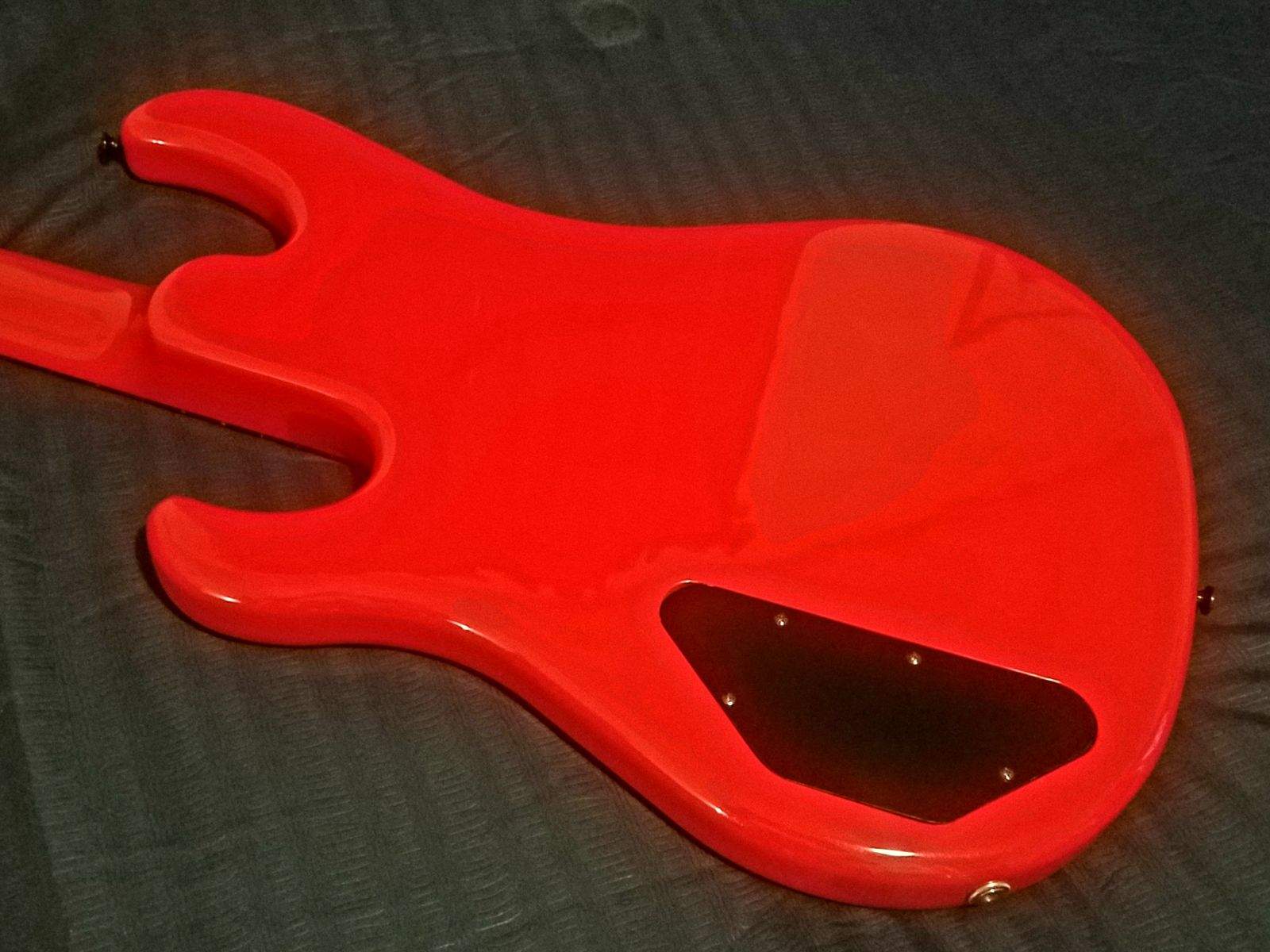
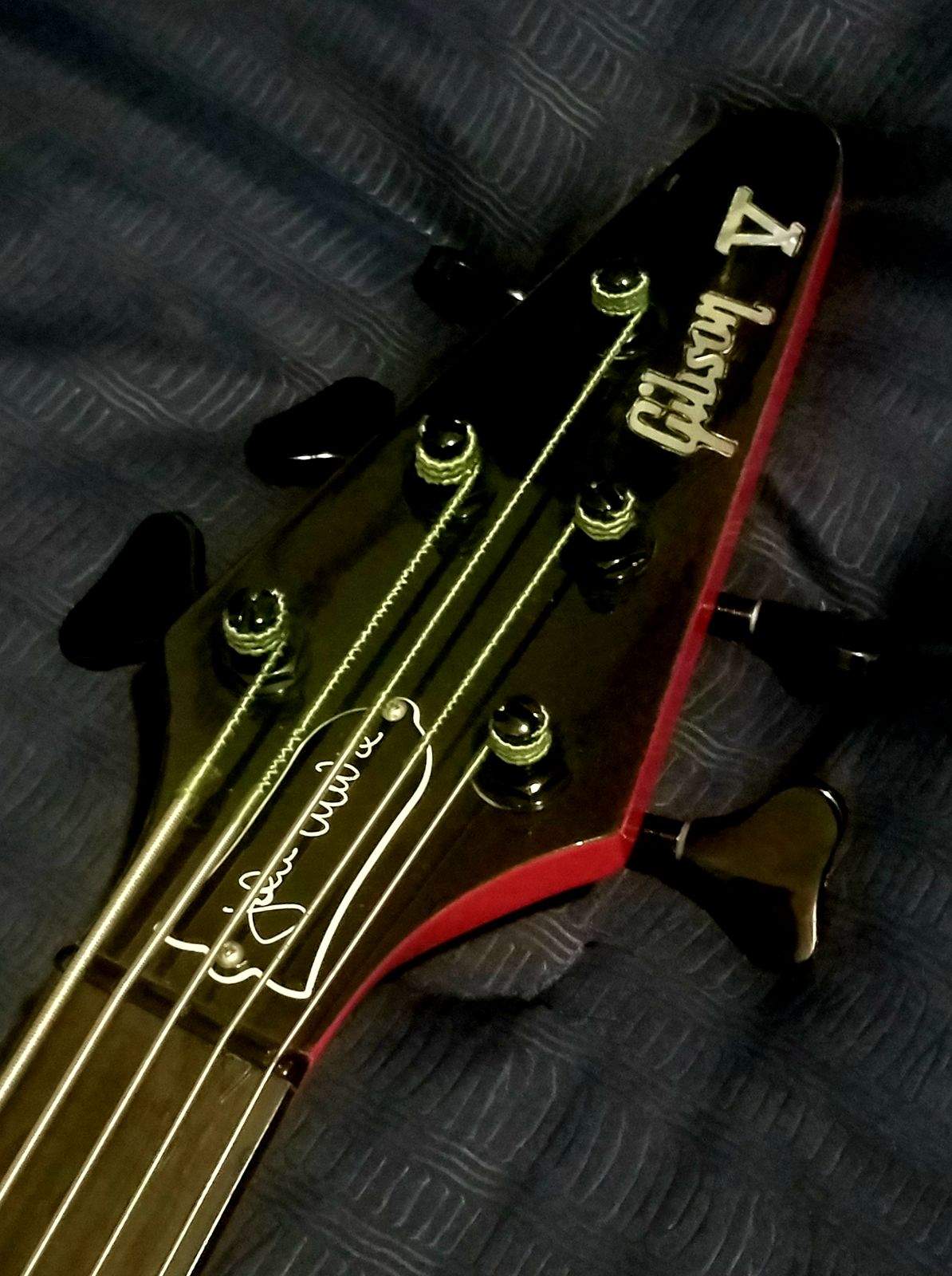
I've given some thought a couple times to switching the V-V-T harness for a a blend pot. But then I think, why mess with it? This works just fine! You can get pretty much what you need mixing the pickups' volumes, and tweaking the tone up or down. (and this is coming from a cat whose other bass is an Alembic Series I...) Just don't overthink it. It's a Studio Thunderbird.
I've given some thought a couple times to switching the V-V-T harness for a a blend pot. But then I think, why mess with it? This works just fine! You can get pretty much what you need mixing the pickups' volumes, and tweaking the tone up or down. (and this is coming from a cat whose other bass is an Alembic Series I...) Just don't overthink it. It's a Studio Thunderbird.

It's such a great bass, so comfortable to play. If I had just one gripe about it, the neck is very finicky. The smallest adjustments to the truss rod make a huge difference, and the blame thing is very sensitive to weather. So I've just learned to anticipate what it'll do.
If it makes you feel any better, mine's the same way - probably worse - in the respect of finicky neck. I'm getting a bit tired of it needing TR adjustment every couple of weeks.
Just don't overthink it. It's a Studio Thunderbird.
Having just finished recording two songs with mine, I'll agree with you to a degree...
 ...it's a Studio WeirdBird. A lovable one for sure...
EdwardofHuncote
I Still Dream of Jeannie
- Aug 21, 2013
- 6,654
- 2
- 16,425
- Disclosures
- I privately own and operate a local musical instument repair shop.
If it makes you feel any better, mine's the same way...
I can't figure why. Mahogany usually makes a stable neck. But yours, mine, and at least a couple more I know about suffer this same condition. It's manageable, but a PITA. I think enough of this bass that I'd considered having the fingerboard removed and a pair of graphite rods inlaid on either side of the truss rod just to stiffen it. I know a guy that'd do it, and you'd never tell. Again, no more than I play...
I can't figure why. Mahogany usually makes a stable neck. But yours, mine, and at least a couple more I know about suffer this same condition. It's manageable, but a PITA. I think enough of this bass that I'd considered having the fingerboard removed and a pair of graphite rods inlaid on either side of the truss rod just to stiffen it. I know a guy that'd do it, and you'd never tell. Again, no more than I play...
I've had various ideas, yours above included. Mine will be having a date - more likely a hospital stay, really - with my luthier so we'll see which possible solutions he can come up with...


Something you Gibson fanatics and detractors might me interested to know is that a very simple tool bar can be purchased on ebay for about $30 or less if you go direct to the manufacturer, that slips under the bridge and effectively lengthens the string to keep the windings off the saddles.
Makes a huge difference when setting intonation and also is mostly invisible, particularly on stage.
I have them on most of my Gibson basses and that troublesome bridge is now perfectly fine.
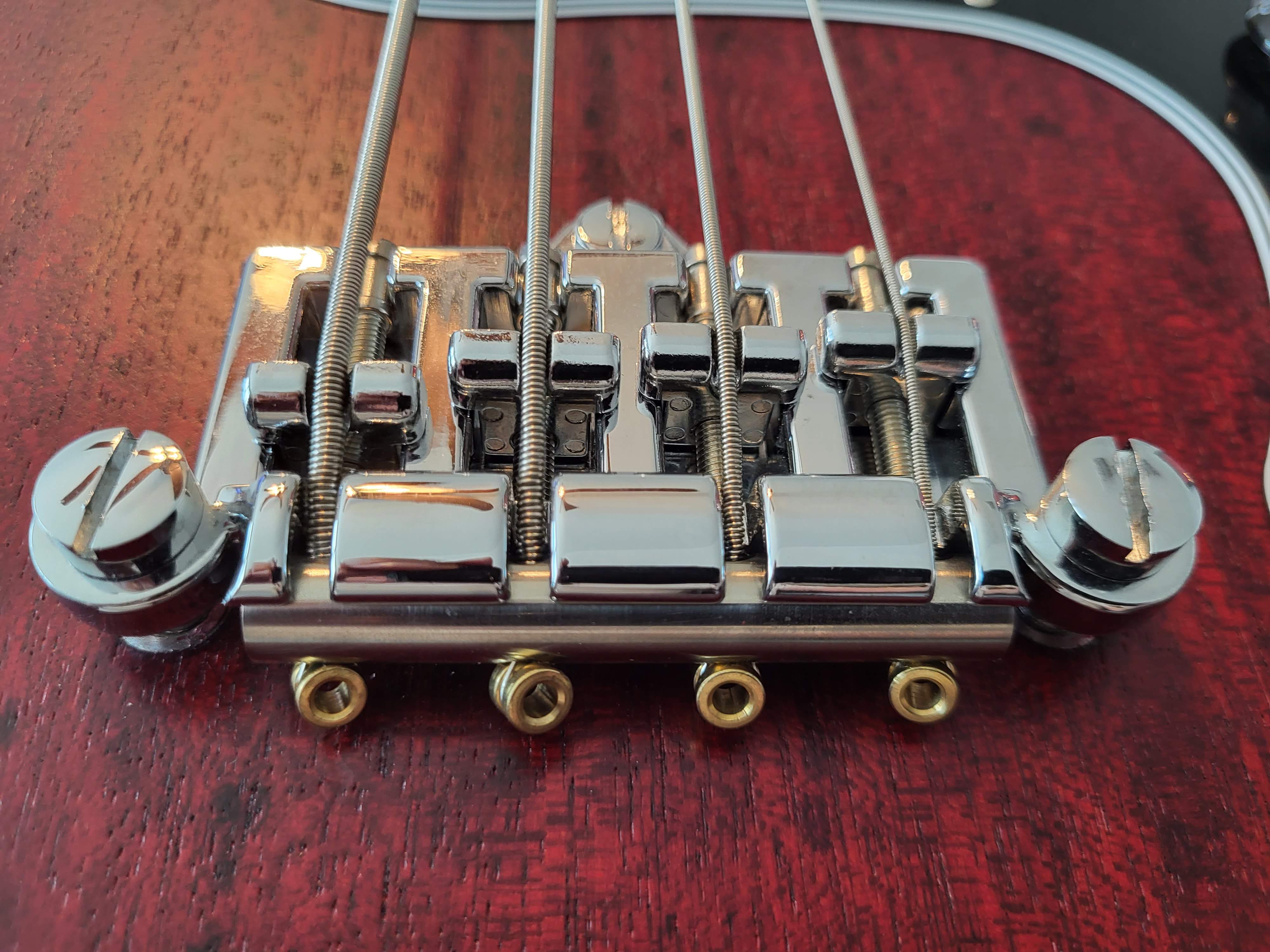
Makes a huge difference when setting intonation and also is mostly invisible, particularly on stage.
I have them on most of my Gibson basses and that troublesome bridge is now perfectly fine.

I think those were, like my SG-Z Bass, made in the early 2000s. Sadly they had a neck stabulity issue on the longscale models back then, probably because of the specific wood they used.I can't figure why. Mahogany usually makes a stable neck.
That's why a large number of the SG-Z have twisted necks. I ended up with a luthier replacing the whole fretboard and trusrod on mine and adding a volute to the back of the neck in the headstock area. Now ist is perfectly playable.
I think those were, like my SG-Z Bass, made in the early 2000s.
No, these were made from late '86 through very early '88.
The neck on all of these basses - and I presume that the same holds true for SG-Z which I've never owned - are very thin with insufficient support for a 5-string load. I've also owned the Bass IV - a four string version of my fiver - and the neck was absolutely the same size apart from the nut and headstock. That neck was perfectly fine, stable as a rock. I believe that there's simply not enough wood on Bass V neck to counter the tension with a single conventional truss rod.
My luthier basically told me to "live with it" last night which was not what I wanted to hear, but I understand his position as well. Back to the drawing board I guess...


