• TalkBass has been independent since 1998. Add your voice.
    Create a free account to reply to discussions, view embedded media, and browse with fewer display ads.
    Join freeLog in
    Want zero display ads or expanded classifieds tools? Compare plans.

Gibson SG headstock

Hi all,

So I found one of the new 2014 SG basses and it is truly a perfect little monster. I also really like short scales so that is a bonus. Here is my issue though, I notice a higher number of repaired SG basses and guitars, usually at the nut, than any other type of instrument. I've heard of the Gibson issue with their headstocks before...but why is this? Is it the stress? What causes it? How can it be avoided if I buy one? Thanks.

~BB~

 
Its not just basses, its guitars too. I don't know why myself but I think it is the angle of the headstock?

Here's what happened 1 year old vs Epiphone. This is after I removed the strings

epiphone.jpg
 
Hi.

"There's only two kinds of angled HS mahogany necks out there. Ones that have broken and been repaired, and the ones that have not been repaired, YET"

I've heard of the Gibson issue with their headstocks before...but why is this? Is it the stress? What causes it? How can it be avoided if I buy one? Thanks.

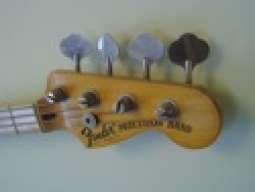
If You look at the grain orientation on the HS it's pretty easy to understand why it splits like it splits.

A bump (or an attempt to HS vibrato gone wrong) and the HS snaps off.

Easy(ish) fix.

Gibson tried to alleviate the problem by introducing a volute to strenghten the problem area in earlsy 70's, but they had to abandon that practise because people didn't like it.

It's not just Gibsons either, all mahogany necks are the same, especially if the HS is angled.

Not a big deal unless it is a super expensive vintage bass/guitar.

Not a big deal there either, ~15% hit on the re-sale value if done correctly.

Regards
Sam
 
I agree with pretty much everything said here. There a couple of reasons that this happens.

1. No volute. This would reinforce the area and give it more strength.
2. The removed material for the truss rod access. They use a one way rod with a nut on it. This requires more material to be removed then a modern two way rod does.
3. There is no scarf joint at the headstock. The problem here is "grain runout". The headstock is all endgrain, which is much weaker.
 
As others have said it how thin the neck is at the nut especially due to the truss rod access.

If you don't drop or knock over your bass it shouldn't be an issue, it wasn't for me. If you are in the habit of dropping or knocking over your bass I would buy something else.
 
Yeah, my upright has a repaired headstock. My EB-2 doesn't, and it is pushing 45 years old now. If you don't drop them, they don't break. A short scale neck is easier to keep out of harm's way, since waving it around doesn't cut such a wide arc. I'm grateful the P and Ric have maple necks, because those headstocks get whacked on all kinds of things when I get into it a little.