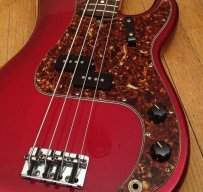
as a proud owner of a '96 american standard P that i also bought as a "platform", let me pipe in here;
don't change the bridge, it's one of the best things about that bass! low-mass, but rock-solid from being string-through, and with adjustable spacing. you won't improve on it, certainly not with a pot metal badass. (my favorite is the first generation, with the grey steel saddles; the finer grooves allowed for better spacing, and the steel adds a nice clear sustain.)
do change the pickups. the american standard pickups are fine, but they're not great. they use a molded plastic bobbin which puts a layer of plastic between the windings and the magnets, creating a magnetic gap; vintage pickups wind the coated wire right onto the magnets, so there's no gap. it's not a big difference, but it is a difference.
definitely change the keys! the old american standard keys are freakin' boat anchors; coupled with the often lighter-weight bodies from that time, you get a neck-diving bass. some lightweight keys (i used the black boron-housing schallers) will let it hang much better.
pickguards are easy; the stock white is boring, so anything else will be cool. i've found genuine fender guards to be both the best quality and the best-fitting. unfortunately, you don't get the jaco-style "no pickguard" option on the jazz, as there's a big ugly rout around the neck pickup.
paint is a major ordeal; i'd avoid this rabbit-hole, as you need real expertise, time and money to get something that looks half as good as a stock $200 squier.
with electronics, the sky's the limit. i went with a fralin pickup and 500k pots for mine; it's now an aggressive, loud and proud rock machine that will still do whatever else i need.
american standards have a really well-designed basic structure, with graphite rods in the neck, a thicker headstock to eliminate dead spots, and that through-body bridge. hopped up the right way, they can hang with lulls, laklands and sadowskys all day long.