- Apr 18, 2008
- 16,011
- 1
- 31,718
- Disclosures
- I'm highly opinionated and extremely self-assured
I suspect single-piece necks benefit the most from reinforcing rods. As I said earlier, my multi-lam necks don't need any help.

TalkBass has been independent since 1998. Add your voice.
Create a free account to reply to discussions, view embedded media, and browse with fewer display ads.
Join free Log in
Want zero display ads or expanded classifieds tools? Compare plans.

I once had a SR600 with a Jatoba/Walnut 5-pc laminate neck & it was The Flimsiest neck I've ever experienced.
It sounded OK, but I returned it immediately, the machine-head also was failing, as they tend to do on Standard Soundgear these days.

Ah yes, the float-test, hadn't thought of that. I've been looking at the wrong materials density chart for years, but just found the same info you posted here.
Density of water = 1 = Metric System in action
I think their bridges look fantastic but would like for them to allow string through stringing.interesting , Thanks & KTS at that ! Good stuff . I'd rock it !
I love their bridges
View attachment 3619072
It's not stiff.
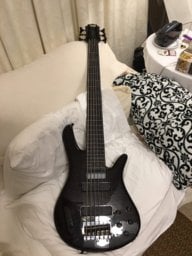
My Zon neck is screwed in to body; synth neck and board And No truss RodJust this week I compared two instruments with reinforced necks, one Graphite & the other Titanium.
No, they weren't all that similar, so it wasn't that sort of experiment, but...
I did start thinking that part of the reason I preferred the Titanium-reinforced neck instrument was due to some quality that the Graphite-reinforcement imparts to the other instrument.
We already did the neck-through vs. screw-on poll, & whether it changes the timbre, so now let's discuss if the type of reinforcement has impact.
Some would say that neck-through instruments have a more compressed or subdued sound.
I felt that way about the graphite-reinforced, set-neck instrument.
I once had a SR600 with a Jatoba/Walnut 5-pc laminate neck & it was The Flimsiest neck I've ever experienced.
It sounded OK, but I returned it immediately, the machine-head also was failing, as they tend to do on Standard Soundgear these days.
I like them for several reasons but I don't think I can answer your question directly . I like them for the very light weight , perfect saddle size with no shifting around and perfect string spacing as well as it's great looks . They sound fantastic on every instrument I put them on . Better than Steel or brass , hard to say . Different sure that same subtle difference that other little things make but probably not a night / day difference that could be easy to gauge .I think their bridges look fantastic but would like for them to allow string through stringing.
What kind of difference does titanium in the bridge actually make?
As in; how does the tone change from Brass/stainless steel/brass/Aluminium...?
Anything but wood in a neck is something I do not find an attractive idea though.
Thanks!I like them for several reasons but I don't think I can answer your question directly . I like them for the very light weight , perfect saddle size with no shifting around and perfect string spacing as well as it's great looks . They sound fantastic on every instrument I put them on . Better than Steel or brass , hard to say . Different sure that same subtle difference that other little things make but probably not a night / day difference that could be easy to gauge .
 .
. I agree , it would be a nice offering for folks . I tend to think Brass has a thicker , darker sound . Great for a telecaster but not always for a bass imo . Check the specs here Products-Bass|KTS Musical Products inc.Thanks!
I like the weight and the look but have no direct experience. I miss those grooves that keep the saddles in line( as found on the hipshot vintage) and think that this would be a sensible upgrade to the present design.
The possibility to string through the body would also be very much welcomed at thsi end
What I can say is that since I put steel saddles onto my stainless vintage bridge which had previously worn brass saddles, I feel that it feels better. More natural harmonics and less inhibited in some way...more 'free'. Yes, I know that this description may very well only make sense to me
That difference too is subtle and massive at the same time.
I'd love to try a titanium bridge!
What is the string spacing and are both saddlke options( threaded and non threaded) Titanium?
Thanks again!
Thanks for the specs link!I agree , it would be a nice offering for folks . I tend to think Brass has a thicker , darker sound . Great for a telecaster but not always for a bass imo . Check the specs here Products-Bass|KTS Musical Products inc.

My anecdotal evidence strongly conflicts with yours - I have a bunch of roasted (which helps stability) necks with graphite reinforcements (which also helps stability). The only time I ever tweak a truss rod (I don't really have to, but when you have the tools to measure neck relief within a thousandth of an inch), you end up doing that...is when I change to a set of strings with significantly different tension. That changes neck relief a bit, so I compensate, but if I didn't have the tools to do that measurement, I'd probably be happy never touching my truss rods. On a regular maple, non- reinforced neck, I'd be chasing the truss rod adjustment when the weather changes - at least a couple times a year. I also have had standard necks that warped to where they were not longer playable - that doesn't happen with well made reinforced necks.
I think their bridges look fantastic but would like for them to allow string through stringing.
What kind of difference does titanium in the bridge actually make?
As in; how does the tone change from Brass/stainless steel/brass/Aluminium...?
Anything but wood in a neck is something I do not find an attractive idea though.
..neither do the single piece necks on my two main basses.I suspect single-piece necks benefit the most from reinforcing rods. As I said earlier, my multi-lam necks don't need any help.

Being able to adjust for wood movement in a neck with a truss rod is an ADVANTAGE of non-hot rodded necks.
Or another way to think about it ... if your luthier is making you an instrument that needs reinforcement ... they should be picking their wood better. Honestly, the rods are just a reason to use substandard materials.
I suspect single-piece necks benefit the most from reinforcing rods. As I said earlier, my multi-lam necks don't need any help.
I think you missed the point on the reinforcement rods - the people using them are not the people using substandard wood. Quite the contrary.
It's a market upsell feature to people that don't understand how wood as a structural materials works ... or apparently, why you would WANT to be able to adjust your neck.