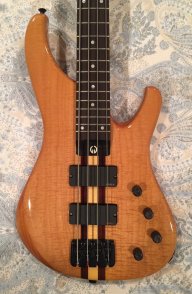
Over the years (decades) I've never had a laminated neck twist and have only had one neck from a major producer twist and it happened to be maple with a rosewood board. As a part time builder and repairer, I can afford to store wood for years and have some maple, mahogany, blackwood, ash and myrtle that has been racked, in a stable covered environment, for close to thirty years.
Any operation that is involved in mass production may not have the facilities to store wood under controlled conditions for years, or production deadlines might mean that wood doesn't have time to "settle" after kiln drying, before being cut and shaped. Wood that's kiln dried (often to around 6-8% humidity in the USA, generaly higher in Europe and I don't know what the usual levels are in Asia) will re absorb some moisture if the environment it is moved to from the kiln has higher humidity, which is just about everywhere that guitars and basses are made.
Likewise (depending on the finish applied) wood moved to in home situations where humidity is higher, may well absorb a degree or two of extra moisture. (often these changes, which may be seasonal too, cause "fret sprout" and other issues, hence the need for truss rod adjustments and in some cases lead to twisting and warping)
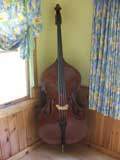
As a general rule, we electric instrument players seem to view our instruments as pretty indestructible, at least compared to many acoustic players, double bass, cello and violin players, who often work to ensure humidity levels stay within ideal ranges and minimize drastic temperature shifts. While it's true that a solid body guitar or bass is a lot more robust than a finely crafted vintage violin, with a ancient and permeable varnish finish, it's still made from wood, just like the violin, and wood is subject to moisture and temperature fluctuations.









 ).
).