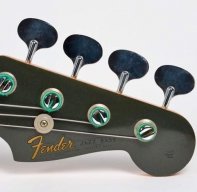
A real and unspoken danger to their dilemma is IF they were to go down, how on Earth would the major players who stock their stores (the Fenders, Gibson, Yamahas, Rolands, and on down the line) be affected? It would keep me up at nights in Corona or Nashville and elsewhere trying to figure out how to make that volume elsewhere
They could go back to an earlier business model and go more high end.
You can make a lot of money selling fewer high priced models as well as you can a lot of low priced instruments. The trick is to scale your manufacturing operations to meet the demand and your sales and support departments to provide top notch and uber responsive customer service.
Companies like Alembic and Fedora don’t worry about large and continually increasing sales numbers. Wal doesn’t worry about the players who aren’t willing to drop $7K+ and wait two years on average to get one. They’ve scaled their operations (a practice called “right sizing”) to accommodate
serious customers. And such businesses cry all the way to the bank.
For a business producing a highly personal and luxury item such as a musical instrument, SFH (small, fat, and happy) is the way you want to operate. Last thing you ever want to be known as is: “the low cost provider.” Competing primarily on price is the surest way to join what’s called “the race to the bottom.” SFH companies measure success by shrewdly managing the number of backorders rather than their sales. Whereas many low cost/high volume companies celebrate theit “best ever“ sales year by going out of business shortly afterwards.
And worst of of all is falling into Gibson’s current quagmire of wanting to be a high priced as well as high volume business. Because that’s never going to happen unless you have a unique, patent protected monopoly on a very necessary product. And the only businesses I know that have that advantage are the drug companies.
Worst case scenario for the instrument industry is it will need to scale back on volume and rapidly scale up on quality and service. Not an insurmountable hurdle. Many businesses have done it already. And many more, of necessity, will do so in the future. Because relying on endlessly increasing demand is not a sustainable business model.
It will, of course, create job losses. But that will (as always) be a burden borne by the former employees, not the businesses doing the layoffs. After the initial pain that comes with any major restructuring, the companies themselves (those that can pull it off) will emerge leaner and ultimately stronger for it provided they can boost quality and maintain a missile lock on the needs of their core customers.
For the unwashed masses, they’ll have the used market. New instruments will become the province of working professionals, the monied collectors, the well to do hobbyist musicians and semi pros.