• TalkBass has been independent since 1998. Add your voice.
    Create a free account to reply to discussions, view embedded media, and browse with fewer display ads.
    Join freeLog in
    Want zero display ads or expanded classifieds tools? Compare plans.

Happy being a "Pocket or Groove"player?

Being a pocket player myself and understanding my position in every band that I have played in, how many members feel the same way or strive to be "soloist's" requesting a solo in every song? Sometimes I feel my lack of theory has stifled my advancement, but my ear training has allowed me to play almost anything I can sing or hear. I am at the end of my career, and nothing worst than sitting back in your recliner with regrets of things you could or should have done. Any comments?
Soloing is wicked fun.
Yel_wink.gif
 
  • Like
Reactions: Wanker_Joe
I understand the value and importance of being an "anchor" player (think Ian Hill, keeps time like a clock and lays down a solid foundation to allow the ripping guitars a nice platform to jump off of)...but me personally, I am a melodic player mostly, more of a lead bass player...not in the "soloist" style of Wooten, "rubber fingers" style of Sheehan or Claypool, Geddy, etc...most like Geezer and Harris, thats just what comes out of me when I play, I would fall asleep pedaling without melodies or riffs...YMMV.
Rock on.
 
  • Like
Reactions: Nashrakh
I have a question, I was just trying to explain this to a drummer. Every song have a groove, but it’s the feel that gives it character. What do I mean. Let’s take the song electric Slide, everyone playing their part, but then the guitarist starts playing his line with a reggae feel, now the song takes on that feel. Does anyone understand what I’m talking about?
 
I'm not a spotlight sort of guy. Having said that, I also understand my role as a performer. I know what my job is. But I like to quote Rocco Prestia who was asked why he didn't take any solo's.
He said, "I feel like I'm soloing all the time."

I try to keep things effective and interesting.
 
We should avoid the tendency to think there is a right or wrong way to be a bass player. There is a strong tradition for the bass to be a rhythm section instrument, and nothing more. Probably this goes back to the days before electric bass. Back then, acoustic/upright bass was (is) simply a beast to articulate anything meaningful to anyone other than the bass player himself. You could hardly hear the individual notes. There were some jazz bass players who were breaking that ground up a bit, like Scott Lafaro. So, when electric bass come on the scene it took on that persona... support, rhythm section, etc. It took until the mid 70's for Jaco to break the mold. He opened the floodgates for bass players to see what was possible. The long standing issue, to this very day, is that our musical compadres still (in 2019) resist the idea that the bass player should get some air time. The reasons for that are probably complicated, but it's still history, tradition, expectations, but also probably greed. A bass solo takes away from the other guys. Most bands dont know how to support a bass solo. The old, "we will all stop playing during the bass solo", needs to go away. Arguably, we have the most challenging instrument on which to play a convincing solo, but using an effect or two, and having the band support you with the same fervor they support a searing guitar solo makes it work. All this , of course, assumes the bass player CAN take a solo. you have to be realistic about your abilities. If you havent developed those skills, dont waste everyones time, or worse, detract from the bands performance. So, in my opinion, a bass player can be a fantastic rhythm section, support player, AND be able to solo in a way that is enjoyable for the audience and the rest of the band.
 
Doing what's right for the song is key IHMO. That said, sometimes ego can get in the way of that and accurately figuring out what is right for the song isn't always as easy as it sounds. I find listen to a recording of the band and how you fit the song is a valuable tool.
 
I think too much emphasis is placed on soloing. I've heard so many band where the bassist overplayed everything and it just messed up everything for everyone else.
I look for that solid bottom end from hooking up with the drummer and putting out something so tight that everyone else can do pretty much anything. Not to say I don't have my moments that the band has me lead out and set the song in motion with an iconic bass line opening, but it's still keeping the right bottom end that makes everyone sound great.
We constantly get compliments from other bands about how tight we are and how hooked up the drummer and I are.
With two top notch guitarists and a vocalist that can blow the windows out, being in the pocket is crucial to making the entire performance great.
Playing five to six sets a night, keeping the dance floor packed, and playing what other bands won't, don't or can't so solidly has people from all over coming to see us.
It's funny to hear comments from people that hear other bands trying to copy us telling them that we do it so much better. Our bottom end is key to our band's success because we are so solidly in the pocket. Don't be afraid to be that bassist that cares about the final product more than being a flashy soloist. There's a place for you and you will be appreciated by everyone.
 
Doing what's right for the song is key IHMO. That said, sometimes ego can get in the way of that and accurately figuring out what is right for the song isn't always as easy as it sounds. I find listen to a recording of the band and how you fit the song is a valuable tool.


It's not always ego. Sometimes it's boredom. I have a few songs in an Americana-flavored band that basically just require fast 1-5 changes and I sometimes catch myself playing that stuff with more syncopation and notes than are needed. I still sneak it in now and then as long as nobody notices (no one in that band would complain even if I played like that all night long) and it doesn't mess up the song, but I recognize that it's not the way it's traditionally played and those little embellishments need to be occasional, not constant. Goes back to the idea that just because you can do it does not mean it needs to be done.

So I find myself holding back, but it's not the most fun thing in the world to play 1-5-8 all night. I know someone will come along and say they've made a great living at it for however many years. I think if I were being paid well for it I would find a way to be very content doing this :)
 
  • Like
Reactions: Russell L
Being a pocket player myself and understanding my position in every band that I have played in, how many members feel the same way or strive to be "soloist's" requesting a solo in every song? Sometimes I feel my lack of theory has stifled my advancement, but my ear training has allowed me to play almost anything I can sing or hear. I am at the end of my career, and nothing worst than sitting back in your recliner with regrets of things you could or should have done. Any comments?

I think so Lowe's have become really boring in general. For bassist it's slap for guitarists it's tapping it's an overused technique that really has its place in very little in the whole of music if you think about it. I think that only other musicians give a crap about soloing or technical virtuosity for that matter. If you ask the average listener, and they're all way many more of them than us, you'll find that most people don't care about nothing like that. The groove is where it's at. Keeping the song together and making it count is what it's all about for me.
 
In the cover gigs that are the staple of my gigging, soloing isn't an option. Even the guitarist has far fewer solos these days, as we're finding that the solo heavy songs just aren't going over well with a broader audience these days.

I'm finding myself increasingly attracted to bassists that groove like crazy, while constantly providing subtle variations to their part, and fills at appropriate times. An extreme example is Bootsy's playing on Sex Machine, where's he is varying what he's playing slightly every bar, while the guitar and bass aren't. With a casual listen, you think he's playing the same thing - and the song would flat out not work if he was.

What Pino, Tim Levebvre, Rick Danko, and of course Jamerson do are what I'm aspiring to. That takes the place of soloing for me.
 
  • Like
Reactions: Russell L
I can solo if asked. But I don't seek them out. What kind if bass player would "request" a solo anyway?
A jazz bass player would very likely be soloing at some point. I love to do that on fretless or upright. But I am also happiest in songs or music styles that require mainly keeping a groove going on my fretted basses... It is different but really gratifying when you hit the sweet spot and the music moves forward!
 
Being a pocket player myself and understanding my position in every band that I have played in, how many members feel the same way or strive to be "soloist's" requesting a solo in every song? Sometimes I feel my lack of theory has stifled my advancement, but my ear training has allowed me to play almost anything I can sing or hear. I am at the end of my career, and nothing worst than sitting back in your recliner with regrets of things you could or should have done. Any comments?
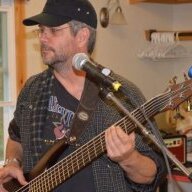
I consider myself a "support" player. In my beginning/intermediate years I learned lots of Entwistle and Geddy riffs and solos, but once guys like Billy Sheehan and Mark King became popular I said "screw this, I'm fine with grooving". And I worked on learning by ear... and took some theory lessons off and on.

And ya know what: that eventually paid off. Even though I don't sing and don't have flashy chops, and I'm far from one of the top-call bassists in my area, I still get lots of requests to join bands and do sub gigs because I'm a solid support guy who can fill in quickly. I'm pretty much as busy as I want to be with paying gigs (mostly bar gigs).

All that said: my guitarist brother told me "You certainly have your priorities (support and groove) straight as a bassist, but after all these years you should be able to do a melodic solo when called upon!" So, I've been working on that, even though it kind of goes against the grain of what I've been doing the past few decades. I've recently joined a couple of trios in which the BL wants me to take a solo now and then. I can fake 'em by throwing some bass licks togehter, but I really want to be more melodic, use stronger chord resolutions, etc.


Also: same as you I primarily learn by ear, but you really should start working on your theory. Learning theory basics helped my ear tremendously. It's also a key to creativity, and has a whole bunch more benefits. You don't even need a bass teacher. I've never actually had a "bass lesson"; I've taken theory from music instructors: a piano player, and a couple of guitarists.

Learning to read music would be great, but I can't do that either. Learning to read charts is the next best thing... I'm a bit shaky at real charts, but I have hundreds of songs sketched out in my version of the Nashville Number System (I keep 'em stored in a setlist app in my tablet), and that's been a lifesaver, especially at sub gigs.
 
Last edited:
I play in an 8 piece funk cover band... horn section, 2 vocalists, and rhythm section..... I have 2 solos in a 25 song night. An open solo at the end of Georgy Porgy... and a solo that follows a sax solo in the middle of What You Wont Do For Love. They both work. Nothing but kudos from audience and band.... I'm not bragging, just pointing out that it can work. The rest of the night I play "bass"..... funk, groove, support. I dont expect to take solos like a horn or guitar, but what most people tell me is that it adds interest to the bands overall presentation. The audience hears from the other guys all night long; a bass solo is just something different and unexpected. In a way, its no different than playing a ballad to slow things up, or having the horn section step off stage to change things up and give the listener something fresh.
 
When was the last time you heard someone say "Wow, that bass solo kicked ass!" I'm a pocket player that occasionally steps on a pedal, that's as wild as I get. I get my runs here and there but the best satisfaction is having a tight band. Let the guitarists and keys soak up the glory. I take pride in knowing there is no glory without a tight bottom end.:bassist: