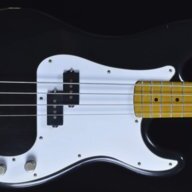
I would get the 60's. I've owned the CV 50 P and did not care for the tone of the single coil pickup. The split P pickup sounds way better IMO.

TalkBass has been independent since 1998. Add your voice.
Create a free account to reply to discussions, view embedded media, and browse with fewer display ads.
Join free Log in
Want zero display ads or expanded classifieds tools? Compare plans.


A little background, the wife is allowing another bass purchase and the budget is limited. I've got it down to two Squire choices. One is a standard P bass with split coils and the other is a 50's p single coil.
If you could have only one, which one and why?
Squier Classic Vibe '60s Precision Bass - 3-Tone Sunburst
or
Squier Classic Vibe '50s Precision Bass - 2-Color Sunburst
My advice, wait for one of the new late 50's precisions.
Squier Classic Vibe Late '50s Precision Bass White Blonde w/Gold Anodized Pickguard
Squier Classic Vibe Late '50s Precision Bass 2-Color Sunburst w/Gold Anodized Pickguard
Perfectly said.That's two very different sounding basses. At least they SHOULD be if they're anything like the models they're based on. In my experience the Squier CVs are usually "in the ballpark" rather than 100% true to the 50s/60s/70s Fender models they're based on. The single coil CVs are still VERY different from the split coil CVs though (as they should be). I think some people may think single coil and split coil P-basses are similar instruments because they're both Precision basses. They're not.
A split coil P-bass is the classic P-bass tone IMO. It's all about the wonderful mid presence. A split coil P-bass will work great with most genres and sit nicely in the mix. It may be a cliche but it's hard to find a bass that sits better in the mix than a passive, split coil P-bass. It's a mixing engineers dream and an industry standard for a reason.
The 50s single coil P-bass is different. It doesn't have the same mid range presence as the split coils. It can sound GREAT of course but if you're not careful it can be boomy and get lost in the mix (especially on stage). Single coil P-basses are very cool instruments but less versatile than split coil P-basses IMO. The single coil can also be noisy in many environments because they're lacking the hum-cancelling of the split coils. The dynamics of single coil P-basses are also quite different from split coil P-basses. The single coil feels less compressed with a more aggressive attack. It can get a bit clanky if you play it like a split coil. If you're used to a split coil P-bass you might find a single coil P-bass a bit unfamiliar at first. Personally I find the dynamics of split coil P-basses a lot easier to control but that's probably because I play my split coil P-basses a lot more often and only use my single coil P-bass occasionally in the studio.
My advice would be to get the 60s split coil version unless you're 100% certain you want the 50s single coil version. The 60s version is a lot more versatile IMO and probably closer to the tone and feel you think of as a "classic P-bass". A split coil P-bass is a great choice if you own ONE bass. You can play pretty much anything with a passive, split coil P-bass. A single coil P-bass is something I would rather recommend as a second or third bass (unless you're specifically looking for THAT tone/feel of course).
Yup, this one should be worth the waitI have serious GAS for the 50's for sure...I'm looking at the new Sire D5 coming next month I hope
looks like only $70 more
View attachment 4387618

Honestly, contrary to what some responses have indicated, I find the tone of single coil Ps to be very different from the split coil. I even have a Sting Precision MIJ with a stacked Fralin split coil, and that’s very different from a standard split coil. Without getting into trying to describe those differences, I would suggest the somewhat impracticable option of trying to A/B them side by side, if you can make that happen. Maybe find someone (like me) who is in your area and who has both and who would let you compare them. After playing post ‘57 split coil Ps with flats for years, my current P sound is the Sting bass with the Fralin pup and rounds.

This ^ pretty much covers it. It's what I would have written if I just wasn't such a lazy ass.That's two very different sounding basses. At least they SHOULD be if they're anything like the models they're based on. In my experience the Squier CVs are usually "in the ballpark" rather than 100% true to the 50s/60s/70s Fender models they're based on. The single coil CVs are still VERY different from the split coil CVs though (as they should be). I think some people may think single coil and split coil P-basses are similar instruments because they're both Precision basses. They're not.
A split coil P-bass is the classic P-bass tone IMO. It's all about the wonderful mid presence. A split coil P-bass will work great with most genres and sit nicely in the mix. It may be a cliche but it's hard to find a bass that sits better in the mix than a passive, split coil P-bass. It's a mixing engineers dream and an industry standard for a reason.
The 50s single coil P-bass is different. It doesn't have the same mid range presence as the split coils. It can sound GREAT of course but if you're not careful it can be boomy and get lost in the mix (especially on stage). Single coil P-basses are very cool instruments but less versatile than split coil P-basses IMO. The single coil can also be noisy in many environments because they're lacking the hum-cancelling of the split coils. The dynamics of single coil P-basses are also quite different from split coil P-basses. The single coil feels less compressed with a more aggressive attack. It can get a bit clanky if you play it like a split coil. If you're used to a split coil P-bass you might find a single coil P-bass a bit unfamiliar at first. Personally I find the dynamics of split coil P-basses a lot easier to control but that's probably because I play my split coil P-basses a lot more often and only use my single coil P-bass occasionally in the studio.
My advice would be to get the 60s split coil version unless you're 100% certain you want the 50s single coil version. The 60s version is a lot more versatile IMO and probably closer to the tone and feel you think of as a "classic P-bass". A split coil P-bass is a great choice if you own ONE bass. You can play pretty much anything with a passive, split coil P-bass. A single coil P-bass is something I would rather recommend as a second or third bass (unless you're specifically looking for THAT tone/feel of course).
This. I’m not a fan of the single coil sound. I had a Sting Signature and it just didn’t do it for me. I like the vintage design and the maple neck, but not the neck profile. So it would be 60s for me.Unless you really want that 50s sound, I'd pick the 60s or 70s CV.
The 60's. Better pickups and i'm not a huge fan of the 50's "Lego" pickguard.A little background, the wife is allowing another bass purchase and the budget is limited. I've got it down to two Squire choices. One is a standard P bass with split coils and the other is a 50's p single coil.
If you could have only one, which one and why?
Squier Classic Vibe '60s Precision Bass - 3-Tone Sunburst
or
Squier Classic Vibe '50s Precision Bass - 2-Color Sunburst


I have a Squier CV 70s P and it's probably my favorite bass. I'd go with the 60s P. But if you can find a CV70s bass from a.couple years ago (crafted in China), they are excellent quality.A little background, the wife is allowing another bass purchase and the budget is limited. I've got it down to two Squire choices. One is a standard P bass with split coils and the other is a 50's p single coil.
If you could have only one, which one and why?
Squier Classic Vibe '60s Precision Bass - 3-Tone Sunburst
or
Squier Classic Vibe '50s Precision Bass - 2-Color Sunburst

I read a bunch of posts from people who busted the bobbin resting their thumb on SC pbasses though you could install something I guess.