• TalkBass has been independent since 1998. Add your voice.
    Create a free account to reply to discussions, view embedded media, and browse with fewer display ads.
    Join freeLog in
    Want zero display ads or expanded classifieds tools? Compare plans.

Homemade Zero Fret

Rob Page

Commercial User
Oct 7, 2020
213
402
Culver City, CA
www.instagram.com
Disclosures
Pipe Dream Fretworks
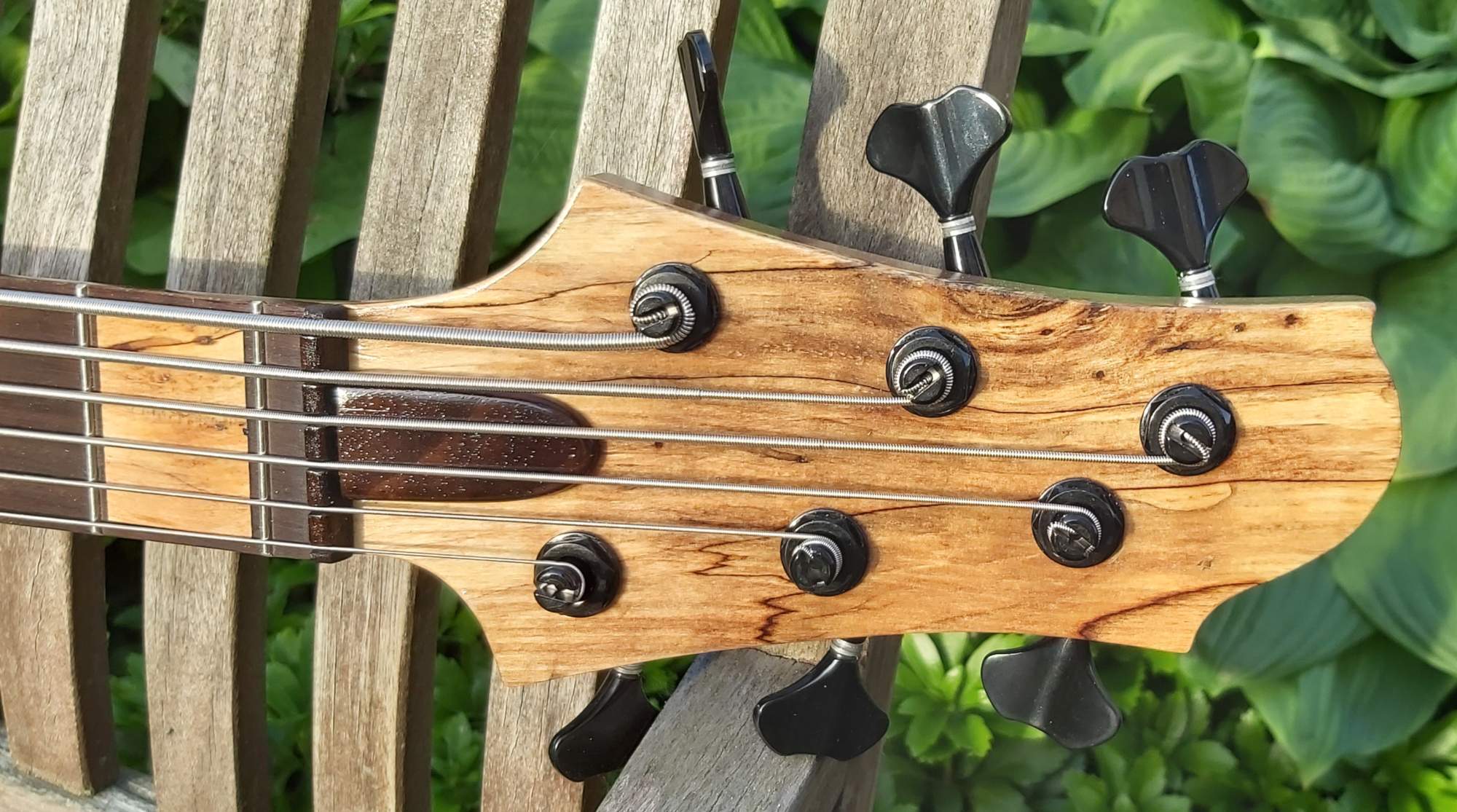
I've been curious about zero frets. Before I plunked down $$ for a Zero Glide I decided to bust out my files and make this one. Workmanship not great but big sound improvement. I'm sold. Going forward I'm going to always want a zero fret on my builds. So do most of you use Zero Glides or is there a trick for rolling your own?
IMG_2582-zero.jpg
 
  • Like
Reactions: wmhill
I am curious. What is the difference you hear with the zero fret? I was under the impression they were possibly helpful for controlling the string length and therefore helping to be in tune, not really impacting the sound.
Thx
Just sounds brighter and "springier." I can't explain it but I like it! If you like a muffled "hofner"-like tone then you won't like it. My first impressions anyway.
 
A zero fret shouldn't change your tone, other than the open strings. Once you fret a note, the nut is entirely out of the picture. I am concerned about where you've placed yours. If you look at the zero glide, the fret is set back into the nut so the top of it is where the original nut's witness point was. It seems like you've shortened your scale length without adjusting the position of all the frets... my brain tells me that's bad. I'd be curious to see what a tuner has to say as you play up the neck.
 
Last edited:
I've built a bunch of instruments with zeros and I do them by lengthening the board 1/4" and setting the string spacer (normally the nut) back from the zero fret. I most often do it on banjos because I build them so players can swap between steel strings and synthetics without needing to worry about slot width.

I posted on the banjo forum when the "Zero Glide" was first sold because they were marketing them at an introductory price of $10. A bunch of folks retro-fitted them and most liked them. The actual Zero Glide product is made so the stopping point of the fret is the same as the front face of a conventional nut.

Bob Taylor wrote in his "Wood and Steel" trade publication that he was not against zeros but opted to not use them because most players prefer a traditional nut.
 
You've shortened your scale length by 1/8", which will throw the intonation out of kilter. I don't know what you are hearing that's improved.
No, I haven't. The new zero fret is right on the fretboard side of the nut. I shaved part of the nut off to make room for the fret.
 
  • Like
Reactions: Beej
A zero fret shouldn't change your tone, other than the open strings. Once you fret a note, the nut is entirely out of the picture. I am concerned about where you've placed yours. If you look at the zero glide, the fret is set back into the nut so the top of it is where the original nut's witness point was. It seems like you've shortened your scale length without adjusting the position of all the frets... my brain tells me that's bad. I'd be curious to see what a tuner has to say as you play up the neck.
No, I shaved off 3/16" or so of the nut so the fret could sit right on the nut line. It plays beautifully now.
 
  • Like
Reactions: Reedt2000 and JKos
Would a brass nut accomplish the same result?
It's not the function of the material, it's the fact that zero fret is just another fret and as such, you can get the action much lower. Again, imagine a capo on a guitar. The fret in front of the capo would, in effect be "zero" in the new key the capo put you in. If you're really good at making guitar nuts out of brass then you can accomplish the same thing but I'm not so zero fret is great for me. I've heard that zero fret originally came about decades ago when manufactures started mass producing guitars and they needed a way for their builders—who weren't skilled luthiers to get the action right. Then they discovered what started as a make-do solution turned out to be a very elegant solution. These guys have a pretty good explainer vid if you're interested.
 
  • Like
Reactions: punchdrunk
It's not the function of the material, it's the fact that zero fret is just another fret and as such, you can get the action much lower.

Nothing prevents cutting nut slots to exactly the same height as a zero fret, (or higher, or lower), so a zero fret does not allow the action to be set any lower than it can be set with a nut. The slots in the string guide behind your home made zero fret must be lower than the zero fret itself, or the nut would be holding the strings up & off the zero fret.

Whatever the strings sit on at the zero location can made of the material & be the thickness (height) desired by the instrument owner. A nice rounded-top zero fret makes it simple to create a well defined witness point. A well cut nut can establish a definite witness point also, however, nuts aren't usually made of nickel or stainless steel, but they could be.
 
  • Like
Reactions: Reedt2000
Nothing prevents cutting nut slots to exactly the same height as a zero fret, (or higher, or lower), so a zero fret does not allow the action to be set any lower than it can be set with a nut.

agreed. That's what I was saying with "If you're really good at making guitar nuts out of brass then you can accomplish the same thing"