In the old days, "that wasn't so good, let's try it again". Nowadays "that wasn't so good, c'mon in and we'll fix it".

TalkBass has been independent since 1998. Add your voice.
Create a free account to reply to discussions, view embedded media, and browse with fewer display ads.
Join free Log in
Want zero display ads or expanded classifieds tools? Compare plans.


I did some bass tracks for this lady who sang. And this goes to another thread on whether we need to lock in with the bass drum. Anyway, they had a drum loop I was to play with so, old school me, I tried to 'liven up' the trackIn the old days, "that wasn't so good, let's try it again". Nowadays "that wasn't so good, c'mon in and we'll fix it".


I did some bass tracks for this lady who sang. And this goes to another thread on whether we need to lock in with the bass drum. Anyway, they had a drum loop I was to play with so, old school me, I tried to 'liven up' the track
by playing off of it as one would with a live drummer. That was not what they wanted
They took my track and cut it up and moved it to lock in with the drums but because my lines were more counterpoint, it sounded like animal excrement, like something out of a bass, drum machine playing a loop.
It was sad to me but, they liked it and I guess (?) that's all that matters
Exactly! And I was sitting there.And no doubt charged the client by the hour for the editing when they could have just asked you to re-record the track.



Since you all asked about what I'm doing and I know you care so much :/ we recorded 8 songs, I got stems for 6 drum tracks and a bass track per song to review, edited a few things in the drum parts (most I left alone, but it felt like a real shame to bag all these killer sounding drum tracks on the basis of an occasional slight flub that was just enough to where it would have spoiled an otherwise great take), and edited and recut my bass parts. Every single one of my drum edit points were flawless with nary a popping sound, and if you've ever tried to edit 6 drum tracks with a lot of bleed without making it sound like an edit, you know how hard that can be. And best of all, none of that mechanical sounding "fix everything to perfection" nonsense. No mistaking that we're using real drums. We have one more song, but I think we need to recut the drum track rather than chop it all up. Shouldn't be a big deal since the mics are still up.
I learned a lot about comporting yourself in a session from watching our drummer work, too. He used to do sessions in Miami at Criteria in the 70's and 80's, plus he used to tour with Stephen Stills, CSN, and recorded and toured with Bobby Caldwell and Benny Mardones, so he's all business when the red light goes on. And he's a lefty, which looks really cool onstage. He had a very nice Pearl Ringo-style set he recorded with, and when you're recording drums at someone's house, anything bigger than a Ringo set can cause a lot of technical nightmares, so I'm glad he's not a Neil Peart type. And there was no constant tuning and retuning of drums, no banging of drums when we were trying to talk, and did everything with no more than 3 takes, and often only one. No fuss, no muss. Do your business, then get out. Every musician should be that pro in the studio!
As for me, I ended up rescuing 2 tracks from the initial session at Lynne's house, kept one in its entirety, and recut 4 at home. I also tried to keep my real feel and edited only severe clams. Bass is a hell of a lot easier to edit than drums, but I resisted the temptation to loop everything. So after this, I've decided that there's nothing I can't do with a DAW and a mouse, I'm declaring myself the very best music editor in the business, and hanging my shingle on the front door...can't wait till we finish up the album so you all can listen and agree with me, and then the money's gonna start rolling in
In case anyone's really bored and wants to know how I recorded my tracks:
Everything was recorded with my 09 AmStd Fender Precision with EMG Geezer P and dead Dunlop flats. Tried a couple other flats basses, but nothing worked like my Precision so I didn't bother going beyond the test stage. Signal path at Lynne's was Broughton HPF and LPF for emulating a tweeterless 115, and we took a direct from my Ampeg PF-50T's transformer DI with bass boosted to 2:00 and treble cut to 10:00, and no cab. I was going to bust out the B-15 and mic it, but honestly, this setting on the PF-50T sounded so much like it that I went all in on direct. Plus it made it easier to cut tracks at 2 in the morning. Didn't use any dirt pedals...if I wanted a dirty sound, I cranked the amp, and turned it down for cleans. At home I subbed out the Tech 21 VT Deluxe for the Broughton pedals and did the same signal path otherwise. I only recorded one track for every song except one, too. None of this "Let's wait and experiment in the mix with different sounds" business. I find it really annoying to mix when you leave yourself so many choices (analysis to paralysis, anyone?). And even though we're doing this ourselves and I could experiment if I wanted, nobody ever does any extra stuff in the mix on bass, and if you leave them options, they always go for the clean solid state DI because "you're just the bass player and I know better than you what you really want."
The one I used two tracks for was pretty interesting...first track was a high octave through the PF-50T running pretty dirty, second was with my new MXR Vintage Bass Octave (sounds like a Boss OC-2 but has many improvements) with only clean lower octave into the Broughton pedals and into my REDDI. Tried experimenting with a dirt pedal on it but preferred it clean...sounded a little too synthy with dirt. Then when we mix we're going to lightly pan them left and right. Should sound pretty massive against the tom-tom beat of that song. I'm a little disappointed that I haven't worked fuzz into a song yet, but I still have one more left, so I'm going to try.
First batch of original stuff I've done in quite a while, and while we realize we're not going to tap into the Bieber marketshare with this stuff, I think we have a pretty excellent batch of rootsy sounding light rock music courtesy of our guitarist/singer Lynne. And now that bass and drums are pretty much done, on with the overproducing!
Well I hope you enjoy them, then! They will throw you for a loop at first because they're so bright and zingy, but two or three coats of Eucerin original moisturizing cream takes care of that. They're recording like I've been using them for a year when it's only been a month and a half. But I should add that I take zero responsibility if you don't like themOn your suggestion I just bought a set of the Dunlop Flats, 45-105.
Well I hope you enjoy them, then! They will throw you for a loop at first because they're so bright and zingy, but two or three coats of Eucerin original moisturizing cream takes care of that. They're recording like I've been using them for a year when it's only been a month and a half. But I should add that I take zero responsibility if you don't like them
I guess. But I want it all...thump AND punch!!!I am always a little surprised how bright flats are overall, I think the Chromes I have sounded like I would expect. I have flats on all my basses at this point. This Embassy is a new bass for me, I haven't worked with it yet but I guess it's better to have too much zing than not enough punch.

...
As for me, I ended up rescuing 2 tracks from the initial session at Lynne's house, kept one in its entirety, and recut 4 at home. I also tried to keep my real feel and edited only severe clams. Bass is a hell of a lot easier to edit than drums, but I resisted the temptation to loop everything. So after this, I've decided that there's nothing I can't do with a DAW and a mouse, I'm declaring myself the very best music editor in the business, and hanging my shingle on the front door...can't wait till we finish up the album so you all can listen and agree with me, and then the money's gonna start rolling in
...
That is true, but if there's a lot of bleed into other mics, you can't just bump a snare hit over without accounting for it in the other mics. If I needed to fix one track, I'd have to do them all. And that's where the difficulty and increased possibility of major clicks and pops arises.I find drums are the easiest to edit. Everything has very clear transients, so it is extremely easy to find what you are looking for.
Holy crap! First thing I'd do is create a new file for it, separate usable tracks from garbage, and delete the garbage. I get the idea of having options, but I seriously don't want to be dealing with 60 freaking tracks!@JimmyM to your point about too many takes / too many options... if ease of editing is the upside to digital, ease of adding more and more tracks is the downside. I'm mixing a record now (that I did not track) where they are using upwards of 50 to 60 tracks per song for a rock record. Sure, double the distorted rhythm guitar. But I do not need bottom mics on the toms, every background vocal to be doubled, 2 mics on every guitar, etc...
I have a mixture of the two approaches. I still record using a digital audio workstation, but I use real amps through a load box because of the of AxeFX/Kemper/Helix/PODHD stuff has too many menus and I just kinda get lost in analysis paralysis.Sorry, I'm old and set in my ways. I miss the days of tape recording. I struggle with figuring out how to work all this new digital stuff. I have trouble following the signal path, and it takes me way longer to do stuff than it should. Give me back the days when I could follow a wire.
I miss the days when we embraced our clams

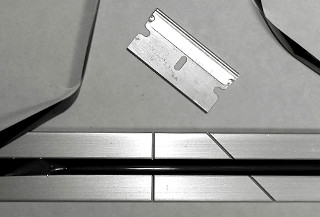
But it makes me think of how miserable tape editing was. I've never done it myself but I've seen engineers do it, and it's a giant pain in the ass to sit there endlessly rolling the tape across the head till you're positive you have the right edit point, cut the tape with a single edged razor, then tape it to another piece of tape and hope that your tape job holds up through mastering. And God forbid you run one too many bounces, lest you ruin sound quality. It's as mind-numbingly slow a process as you think it is, too.
Miss the days of tape? I sure don't miss that. I also don't miss the cost of tape.
Agreed. But I'm still going to edit if it means bagging an otherwise great track. Can't turn dogcrap into gold, but you can turn gold into shiny goldBefore digital editing, I did a few recordings with bands. I insisted we know our material cold before we walked into a studio - well enough that we could play them several times in a row without major mistakes. We didn't have the budget for lots of studio times and tons of editing. That's still a good approach.
Neil Young always said he was after a good recording of a great performance, not the other way 'round. Prepare for a great performance, let the guys in the studio figure out how to capture that. Don't try to edit your way to greatness.