• TalkBass has been independent since 1998. Add your voice.
    Create a free account to reply to discussions, view embedded media, and browse with fewer display ads.
    Join freeLog in
    Want zero display ads or expanded classifieds tools? Compare plans.

How did we survive before digtal editing???

Miss the days of tape? I sure don't miss that.
Not a damn bit. My tape editing days were in radio (late '80s/early '90s), not recording. But the same pains in the rear you talk about (making promos and such), rolling tape back and forth along the head to get the right edit point. Or worse, snapping the tape (1/4" 2 track) in the middle of a taped interview, destroying that section, and trying to find a new, coherent place to cut that whole section out and still make sense to the interview.
 
I just rescued two bass tracks from my band's upcoming new album through a little judicious editing magic. I hated to cheat but I hated to throw otherwise good tracks away over a couple of minor clams even more, so a little nudge closer to the beat here, a cut and paste there, and my tracks are now golden and completely seamless in the editing. If I didn't tell you, you'd never know. Did have to recut one because it was easier than editing, but I've saved two so far. Only 5 more to go, then everyone else can go to work. Ask me how badly I feel over doing it...

HINT: Not even a little.

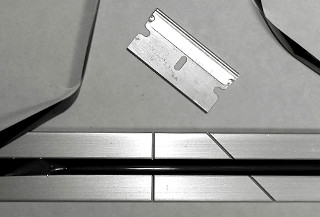
But it makes me think of how miserable tape editing was. I've never done it myself but I've seen engineers do it, and it's a giant pain in the ass to sit there endlessly rolling the tape across the head till you're positive you have the right edit point, cut the tape with a single edged razor, then tape it to another piece of tape and hope that your tape job holds up through mastering. And God forbid you run one too many bounces, lest you ruin sound quality. It's as mind-numbingly slow a process as you think it is, too.

Miss the days of tape? I sure don't miss that. I also don't miss the cost of tape.
Makes us all appreciate the great studio musicians who did simul sessions with 30-40 people in the same room...like a lot of those classic Sinatra recordings.

He didn’t like doing multiple takes anyway, but regardless, there was no overdubbing on those, much less fixing a wrong note with a tape edit. You hit a clam, it was a ruined take.

Talk about pressure!
 
  • Like
Reactions: DJ Bebop and JimmyM
Big mistakes are one thing... but little musical imperfections express the human quality which make songs sound so sweet to us. When you leave in some of those things that are a little off, music can sometimes get thick and fat... and that's a good thing. :D

When today's producers and engineers digitally align every stinkin' thing to pristine perfection, you lose that sonic attractiveness we tend to subconsciously gravitate toward. Yes, there is a drawback to everything sounding too good -- you wind up sounding like everybody else who using the same tricks and the music develops a mechanical quality, like a Bruno Mars record.

When we look back at in 50-60 years, making everything "perfect" with digital editing is going to be seen as one of the missteps of the 2000s and 2010s music. Everyone's music sounds the same and as a result, it's got that cotton candy quality = it quickly dissolves and is seldom remembered.

YMMV... but I know I'm right. :smug:

I completely agree. Its why i usually prefer the live recordings compared to studio.
 
  • Like
Reactions: DJ Bebop and JimmyM
No doubt today's technology is fascinating... too bad the talent pool isn't as full. :smug:

In another 50 years, artists from the 50s, 60s, 70s, 80s and 90s will still have more worldwide longevity and reach than music recorded in the 2000s or 2010s. Regardless of genre, there's simply not as much lasting strength in most artists who have come around since 2000. Like I wrote earlier, today's new music is like cotton candy = a little taste for a few seconds and then it's gone.

While I certainly agree that music you find on the radio today has significantly less substance overall than that of some decades past, there was also plenty of absolute dreck being released in the 80s and 90s: there is also still plenty of exquisite music being made now, you just might have to look a bit harder to find it.
 
  • Like
Reactions: DJ Bebop and JimmyM
Makes us all appreciate the great studio musicians who did simul sessions with 30-40 people in the same room...like a lot of those classic Sinatra recordings.

He didn’t like doing multiple takes anyway, but regardless, there was no overdubbing on those, much less fixing a wrong note with a tape edit. You hit a clam, it was a ruined take.

Talk about pressure!
I've done it a few times, and mostly did well, but yeah, there's a little pressure.
 
  • Like
Reactions: DJ Bebop
The thing that usually isn’t mentioned in this discussion is why editing is now truly necessary for modern music production.

It has nothing to do with “embracing imperfections” versus not.

It has everything to do with the fact that the clarity of digital versus analog, as well as the significant increases in the amount of compression (as well as the volume) of the final product would make certain “human” performances from say the 70’s sound downright awful if recorded today.

The soft edges of the analog/light compression world is what made those performance mistakes seem desirable instead of jarring and unseemly in hi-def digital.
A good point. When CD came out, all of a sudden edits that you'd never hear in a million years on records or tapes were absolutely glaring. Good Vibrations by the Beach Boys is a perfect example of that.
 
I remember in the mid 90s working on a set of MCI tape machines working on my editing skills.
If you needed to edit one track off the 24 track, you had to fly that track, plus a pulse/clock track to a 2 track, do your splices, then manually line the tapes up and dub back to the 24 track. The pulse track wasn't for sync, it was only to maintain speed and overcome speed drift moving stuff back and forth.

I remember another engineer screaming at me because I worked without a mask. Apparently I was supposed to wear a breathing mask? Who knew? maybe he was pulling my leg. Fingers were black as coal at the end of the job.

I once got to work with film-sound multitrack. That was a nightmare. My fingers were black after 12 hours of cutting, taping, and re-splicing, but at least I was able to work on all 8 tracks at once.

I do kinda miss the weird smell of those food-dehydrators we used to "Bake" master tapes that were shedding.
 
Every time I'm deciding whether to record to tape or digital, I think about paying for the tape, and decide that it's not worth it. That said, there's nothing like the sound of a really good day on tape. And when I record to digital, I like to do it as if I was recording to tape. I don't want to be messing around when I could be playing.

It is nice to be able to fix stuff, though.
 
  • Like
Reactions: JimmyM and DJ Bebop
The ease of recording these days has made some musicians lazy .
I recorded four songs for an artists album last year and the drummer was so cocksure about his tracks being great- long story short, all of his tracks had to be re-recorded and not only that, edited to high hell after the fact. The engineer ( being inexperienced), thought he could doctor it later. What he learn his that it’s easier to get a great track up front instead of fixing a poor performance.
Where my tracks were concerned, I did various takes but took pride in my work. In the end, my tracks were EQ’d and that was it for editing.
If you listen to just about every professional recording, there may be clams, but they are extremely minute overall. Any engineer/producer worth their salt would not stand behind a product that didn’t capture the best an artist could be. Reputation is on the line.
My point is I appreciate the technology, but at the end of the day, I want to do a great pass initially and only fix if I absolutely have to. I’m not proud.
Footnote-
That album I recorded on? It’s so sterile sounding that I find it unlistenable; it totally lacks that special something and it’s because of the sheer amount of fixing the bad. Not the engineers fault, but the musicians.
 
Big mistakes are one thing... but little musical imperfections express the human quality which make songs sound so sweet to us. When you leave in some of those things that are a little off, music can sometimes get thick and fat... and that's a good thing. :D

When today's producers and engineers digitally align every stinkin' thing to pristine perfection, you lose that sonic attractiveness we tend to subconsciously gravitate toward. Yes, there is a drawback to everything sounding too good -- you wind up sounding like everybody else who using the same tricks and the music develops a mechanical quality, like a Bruno Mars record.

When we look back at in 50-60 years, making everything "perfect" with digital editing is going to be seen as one of the missteps of the 2000s and 2010s music. Everyone's music sounds the same and as a result, it's got that cotton candy quality = it quickly dissolves and is seldom remembered.

YMMV... but I know I'm right. :smug:
100% that’s why vinyl sounds so good
 
The ease of recording these days has made some musicians lazy .
I recorded four songs for an artists album last year and the drummer was so cocksure about his tracks being great- long story short, all of his tracks had to be re-recorded and not only that, edited to high hell after the fact. The engineer ( being inexperienced), thought he could doctor it later. What he learn his that it’s easier to get a great track up front instead of fixing a poor performance.
Where my tracks were concerned, I did various takes but took pride in my work. In the end, my tracks were EQ’d and that was it for editing.
If you listen to just about every professional recording, there may be clams, but they are extremely minute overall. Any engineer/producer worth their salt would not stand behind a product that didn’t capture the best an artist could be. Reputation is on the line.
My point is I appreciate the technology, but at the end of the day, I want to do a great pass initially and only fix if I absolutely have to. I’m not proud.
Footnote-
That album I recorded on? It’s so sterile sounding that I find it unlistenable; it totally lacks that special something and it’s because of the sheer amount of fixing the bad. Not the engineers fault, but the musicians.

When technology makes jobs easier, most artists just do less work. When things were more difficult, you worked harder, AND it weeded out the halfhearted. Think of photography, when you needed to know how to expose film, most people were not very good photographers, now everyone's at least good out of the box. The same goes for music, I can write a perfectly passable song using apple loops in 20 minutes. Back in the day, you'd have to know how to play instruments. I wouldn't be as critical about technology if the tendency was to do things that were inconceivable before the technology. But it seems that people just end up at a final passable version sooner, not really unleash the technology. Myself, I use Logic, but work with it the same way I recorded when I did analogue. It's rare that my bass parts are comped. I will play it 20 times before I cobble takes together.
 
  • Like
Reactions: JimmyM and DJ Bebop
100% that’s why vinyl sounds so good

But also I think old school engineers had more astute technical acumen, and the average musician was better than today's average musician, they had to be. And most of the recordings you listened to were done in studios with natural acoustics. I don't really miss the record industry, but I do miss the RECORDING industry. It still exists in a way, but not like it once had.
 
tape_splice.jpg

:)
 
The one negative with digital recording is that with limitless tracks, some people think they have to fill them all.

I can't agree with this more. I'm very pleased with how my bands album turned out, but we sent an ABSURD number of tracks off to be mixed. I'm not innocent on this one either; we wanted our engineer to have options, so for my bass tracks he got DI pre pedal board, he got DI post pedal board, he got DI from the amp (POST EQ), and three different cab mics. Completely overkill. But hey, digital tracks are cheap!
 
  • Like
Reactions: JimmyM and DJ Bebop
Today I run into far too many project studio types that have the home equivalent of a supercomputer, a state of the art ProTools or Ableton DAW setup, and 200+ plug-ins - but no real understanding of how to really use half of it.
Or have the musical ability to match the toys :)
I know folks like this, they have all the toys and spend their time trying to understand them. When IMHO, they should be spending time learning how to make the music they are worried about how to record.
:)
 
  • Like
Reactions: JimmyM