• TalkBass has been independent since 1998. Add your voice.
    Create a free account to reply to discussions, view embedded media, and browse with fewer display ads.
    Join freeLog in
    Want zero display ads or expanded classifieds tools? Compare plans.

How did you adapt to 6 string?

Well, not exactly as the neck is probably wider than your 4 string...there is an adjustment.

some people blow that out of proportion, to me it was natural and obvious, you can use the exact same fingering you know to play your song using the middle 4 strings.

Wider or not it never botter me, I never choke the neck or put my thumb over it either maybe this is why.
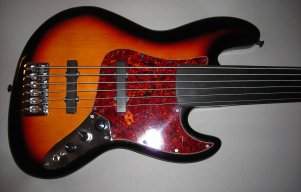
 
Well you do have a 4 strings bass in the middle ... so you can play music you learned on the 4 strings exacly the same ...

Yes, you can, but since 6 string has been your voice for past 8 years, tell us do you play it like a 4 string with a couple of extra high and low notes or do you give it a whole 'nother philosophy?

Tells us.
 
1&2- Better if you already have a good technique ... many people can't get used to a 5 strings so 6 is out of the equation

3- Yes it may be more work for some people but again if your technique is already good you shouldn't have a problem.

4- You can play your scale whatever you like ...

5- No need for that, you only need to know how a chord is constructed and what you can sacrifice then experiment.

6- Yes but your creativity is the most important thing ... Victor Wooten and Micheal Manring create incredible solo only with 4 strings ... depend of your creativity and the level of confort with the instrument.

7- yes

1&2. Quite true. Good technique is always a plus. And one need only peruse TB to see that many people just can't get comfy with 5 or 6 strings. There is no "graduation requirement" that everyone learn to play those.

3. No, it's more than just technique (though of course it depends on WHAT technique you've leaned for muting). I say that because playing fingerstyle on a 4 string with two fingers people tend to not bother thinking about damping because your right hand fingers automatically damp the next string you are going to play and your left hand tends to damp the strings you are not fretting. Yes, one needs a bit better technique than that, but many people (including me for many years) get by like this. Don't even think of damping.

You go to a 5er and things start to ring, but that is quickly fixed by using the B string for a thumbrest. Gives auto damping of the extra string. But then you get a 6er or worse a 7 string and it's like playing a piano with damper pedal down all the time! The damping problem you may have never thought about is now right in your face. I know it was in mine! And you have to learn to deal with it. It's great if you already have the techniques to deal with that but not everyone does.

4. Yes you CAN play any scale you like. And you can play the inner 4 strings like a 4 string. But the whole point of different ways of doing things is that each way gives you certain advantages and disadvantages. Musicians often argue: Which is "best" pick or fingers?" "trad grip or matched?" "4 strings or 6 strings?" But you have to say "best for WHAT?" Each "way" has advantages and disadvantages. so for a 6er one advantage is a couple of octaves right across the neck. So if you are playing something a new way, why would you purposely ignore the disctinct advantages that the new way has to offer? But obviously one should be familiar with all ways of playing and all scales. But note the OP already plays 4 string so he would know that already.

5. And lastly. Yes one CAN derive all 6 string chords from first principles. And certainly there is a LOT of education to be gained from that exercise. But if you want to learn how to do something, what is the fastest way to learn? Simple. You find someone who already knows how and have them show you. Next best is you buy a book they wrote telling people how. Most time consuming is to re-invent the wheel by working out again what other people have already long ago discovered.
 
Yes, you can, but since 6 string has been your voice for past 8 years, tell us do you play it like a 4 string with a couple of extra high and low notes or do you give it a whole 'nother philosophy?

Tells us.

it is just a bass, nothing more nothing less. It isn't a different instrument at all. It is still a bass with more string to bother with.

I don't need to think differently or whatever I just play it. Want to groove like you'll do on a 4 ... yes why not ? You want to throw a few chord sure you have everything to do that. Why not a low C, sure you have it. Want to do a Bmajor arpeggio starting from the open B to the 23rd fret of the C string, sure go ahead. Want to play Donna Lee an octave up from what you would normally do on a 4 strings? Well you have that option.

I may find a fingering better if I only stick to EADG or maybe it would be easier if I put one or two notes on the B strings ? Why not move what you would play around the 15th fret G string at the 10th fret of C string ... that could help with a shorter jump.