
Enjoy the benefits of a premium membership!
Upgrade Account
-
TalkBass has been independent since 1998. Add your voice.
Create a free account to reply to discussions, view embedded media, and browse with fewer display ads.
Join free Log in
Want zero display ads or expanded classifieds tools? Compare plans.
You are using an out of date browser. It may not display this or other websites correctly.
You should upgrade or use an alternative browser.
You should upgrade or use an alternative browser.
How did you adapt to 6 string?
- Thread starter J Gold
- Start date
More options
Who Replied?
I don't play my open B that much as I think it's plenty low. I can't imagine an F#.
Don't try to imagine that, having your mind opened can be painful

This is all great stuff..thanks!
I may tune one of my guitars like a 6 string bass just to start practicing...I like to keep pushing my skills to the next level, so that's why I'm trying it..
That's cool but that B 6th str is really nice to have. Tuning like a guitar E:E kinda defeats the purpose of the 6, but whatever you like. I'm telling you, B:B isn't so bad at all & I prefer not to have E as a 1st string anyway.
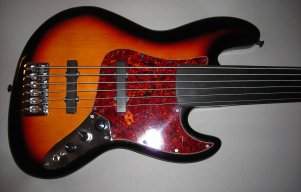
How did I adapt? I bought a 6-er Ibanez BTB for $500 because I wanted a 5-string and this was available and cheap. No real adapting necessary. It was pretty intuitive.
Well, I guess this depends on just how "Intuitive" you are!
Basically as others have said, put the 4 string away. You are learning to play a different instrument.
1. You need to get used to the aircraft carrier neck until it no longer feels wide to you! As other have already said the answer for that is PRACTICE! As much as you can until it no longer feels strange. (took me about a month)
2. Because the neck is so much wider, proper hand position is important. Keep your thumb on the back of the neck. No ball bat 4 string grips allowed.
3. Because there are more strings to vibrate damping becomes a serious problem. The "use the B string as a thumbrest" solution for 5 strings no longer works for 6-7 strings. Hence you need to practice your damping technique. "floating thumb" for the low strings and left hand for the high strings. (RH players)
4. The key to a 6 string is that scales are played ACROSS the neck rather than up and down the neck as with a 4 string instrument. Because it's tuned in fourths patterns can be moved up and down the neck and side to side starting on various strings. Learn how that works and practice till you've got it.
[Invalid or Expired Link Removed]
5. Buy a chord book for 6 string bass and learn them. Pick out your favorites that don't sound muddy.
6. If stratospheric solos are of interest look into tapping on a 6 string.
7. Follow your muse to wherever you are led!
Good luck.
Gotta agree, damping is the most long-standing issue with the big six. First problem most have is thinking that B string is an E. No joke. After you surmount that hurdle, and get used to the "no throttling the neck," damping takes a long time to get. Eventually it becomes intuitive, like it does on a four string, but it is definitely different on the sixer.
It's a great instrument.
It's a great instrument.
Patience, patience and then more patience.
I'm also trying to get comfortable on a 6 after mostly 4 for decades
Biggest issue for me is the string spacing and two string skips, in particular A to G.
I just started playing 6ths scale exercises and I recommend this it addresses that issue directly
Good luck
I'm also trying to get comfortable on a 6 after mostly 4 for decades
Biggest issue for me is the string spacing and two string skips, in particular A to G.
I just started playing 6ths scale exercises and I recommend this it addresses that issue directly
Good luck

What worked for me was ignoring the outer two strings. I played it like a 4 string so that I could get used to having my E string being the second one down and my G string being the second one up. After a while, I just started using the other two strings. I believe the low B and high C are like spices and should be used sparingly.

My 7 is setup f#beadgc but i more often than not have tuned g#beadgc with a 145 or 150 for the low g#. I like the sound of f# but the low f# and g notes just don't ever seem to get into any of our songs. I use the low A the most and i use the low g# enough to justify having it.
There aren't any rules to how you set up a bass for different tunings. There's no law that you can't tune a 5 eadgc, heck instead of a low b you can use a 115 or so for a nice tight D as opposed to tuning down an E string to d and having to deal with the tension difference. There's even guys who tune 7 strings eadgcfBb. Ive mess with tunings a lot especially when I've had multiple basses or extended range basses
There aren't any rules to how you set up a bass for different tunings. There's no law that you can't tune a 5 eadgc, heck instead of a low b you can use a 115 or so for a nice tight D as opposed to tuning down an E string to d and having to deal with the tension difference. There's even guys who tune 7 strings eadgcfBb. Ive mess with tunings a lot especially when I've had multiple basses or extended range basses

Bassist4Eris
Frat-Pack Sympathizer
I'm an avid player of the 6-string bass, but there's been so much good advice in this thread that I find I have very little to add.
I am self-taught and originals-oriented, and my main method for learning bass has been to figure out the necessary technique needed to play my ideas. With this in mind, when I got my first sixer, I immediately started trying to write music that required a 6-string bass. This was mainly an exercise; I can't say I kept many of those riffs. But it helped me to familiarize myself with the instrument and its unique possibilities.
At this point, most of my band's originals would be impossible to play on a 4-string, and difficult (or impossible) even on a fiver. Having played 6-string bass for seven years now, I've come to think of it as its own unique instrument, with its own possibilities.
BTW, I definitely found it helpful to play the sixer exclusively for a while, as others have suggested. But I actually found the 4-string to be confusing once I picked one up again. That's despite 18 years experience on the 4-string before I switched. Nowadays, I enjoy playing 4- and 5-stringers in less formal situations, and in my band I also play an 8-string (octave courses, so fundamentally like a 4-banger) on five songs. So while an initial period of separation is recommended, eventually I think it's beneficial to reacquaint yourself with other configurations.
I am self-taught and originals-oriented, and my main method for learning bass has been to figure out the necessary technique needed to play my ideas. With this in mind, when I got my first sixer, I immediately started trying to write music that required a 6-string bass. This was mainly an exercise; I can't say I kept many of those riffs. But it helped me to familiarize myself with the instrument and its unique possibilities.
At this point, most of my band's originals would be impossible to play on a 4-string, and difficult (or impossible) even on a fiver. Having played 6-string bass for seven years now, I've come to think of it as its own unique instrument, with its own possibilities.
BTW, I definitely found it helpful to play the sixer exclusively for a while, as others have suggested. But I actually found the 4-string to be confusing once I picked one up again. That's despite 18 years experience on the 4-string before I switched. Nowadays, I enjoy playing 4- and 5-stringers in less formal situations, and in my band I also play an 8-string (octave courses, so fundamentally like a 4-banger) on five songs. So while an initial period of separation is recommended, eventually I think it's beneficial to reacquaint yourself with other configurations.

thanks again for all of this great advice... the only problem about being exclusive is that I have a weekly worship leader gig, and rock cover gigs most weekends....so it's almost impossible for me to put down the 4 string. I'll have to use both for a while.
John Myung in the latest Bass Player magazine basically said it's a 4 string with two extra strings. You'll just adapt mate
...I have a weekly worship leader gig, and rock cover gigs most weekends...
Are 6's excluded from those events on religeous grounds?
This is actually the perfect learning environment, because you already know what you have to play. Just play that on the new instrument...
(Yeah, you might backslide a little at first. But stay committed...)

...one learning method I highly recommend is using DR neon strings to help you "adjust" to more strings, so if your going from a 4 to a 6 buy a 4 string set of neons, and buy 2 normal single strings for the low b and high c. Itll help you see where the 4 strings are that your used to having and it will help you not accidentally play the high c when your wanting to play the g string or the low b when when your wanting to play the e string and so on. obviously it looks a bit silly, but you don't have to do it forever. I only bought one set of DR neons and did this while the band didn't have any shows. you'd be surprised how much it helps.
That's a brilliant idea IMO!

When I started playing a 6, I took my main 4-string along to gigs, -just in case, but I forced myself to only play the 6. I had read that when the Dead's bassist, Phil Lesh switched to a 6, he focused only on the E,A,D,and G strings and gradually started adding in the B and C strings after he had become more comfortable with the instrument. This is the approach I used. I still hit quite a few wrong notes at first, but over time it all worked out.
I really enjoy playing the 6-string, and as already posted, the ability to play in a more vertical fashion within a position really helps me to focus more on my singing while playing.

Hi.
I found it to be easier when strung F#BEADG than the "traditional" BEADGC.
The narrower string spacing and the wide neck takes some time to get used to, but for me it was surprisingly quick.
Switching back and forth between 4 string and a 6er between songs, that's still pretty hard for me.
Regards
Sam
Which cabs do you use to reproduce the F# with hi-fi?
John Myung in the latest Bass Player magazine basically said it's a 4 string with two extra strings. You'll just adapt mate
Oh great! Now John Myung has put me in a position to disagree with him!
Sometimes great musicians say the dumbest things!
It's a 4 string with two extra strings in a PHOTO of the bass, but certainly not when you play it although some attempt to play it that way. Truly it's about WAY more than just a couple extra low notes and couple extra high notes. It's a about a way of life.
John Myung of all people should know this. Maybe it's time for him to go back "home" to 4 strings.
Reminds me of some of the dumb things Buddy Rich had said, like practice is a waste of time or you don't "tune" drums. <sigh>

I already thought of some stuff before I played a 6 strings ... then I strung my 5 strings with a high C and then I bought a 6 strings bass.
After a small adjustement and abusing the super low or the super high I felt confortable with the bass and it is been my voice for the past 8 years.
After a small adjustement and abusing the super low or the super high I felt confortable with the bass and it is been my voice for the past 8 years.
Oh great! Now John Myung has put me in a position to disagree with him!
Sometimes great musicians say the dumbest things!
It's a 4 string with two extra strings in a PHOTO of the bass, but certainly not when you play it although some attempt to play it that way. Truly it's about WAY more than just a couple extra low notes and couple extra high notes. It's a about a way of life.
John Myung of all people should know this. Maybe it's time for him to go back "home" to 4 strings.
Reminds me of some of the dumb things Buddy Rich had said, like practice is a waste of time or you don't "tune" drums. <sigh>
Well you do have a 4 strings bass in the middle ... so you can play music you learned on the 4 strings exacly the same ...
Well, I guess this depends on just how "Intuitive" you are!
Basically as others have said, put the 4 string away. You are learning to play a different instrument.
1. You need to get used to the aircraft carrier neck until it no longer feels wide to you! As other have already said the answer for that is PRACTICE! As much as you can until it no longer feels strange. (took me about a month)
2. Because the neck is so much wider, proper hand position is important. Keep your thumb on the back of the neck. No ball bat 4 string grips allowed.
3. Because there are more strings to vibrate damping becomes a serious problem. The "use the B string as a thumbrest" solution for 5 strings no longer works for 6-7 strings. Hence you need to practice your damping technique. "floating thumb" for the low strings and left hand for the high strings. (RH players)
4. The key to a 6 string is that scales are played ACROSS the neck rather than up and down the neck as with a 4 string instrument. Because it's tuned in fourths patterns can be moved up and down the neck and side to side starting on various strings. Learn how that works and practice till you've got it.
[Invalid or Expired Link Removed]
5. Buy a chord book for 6 string bass and learn them. Pick out your favorites that don't sound muddy.
6. If stratospheric solos are of interest look into tapping on a 6 string.
7. Follow your muse to wherever you are led!
Good luck.
1&2- Better if you already have a good technique ... many people can't get used to a 5 strings so 6 is out of the equation
3- Yes it may be more work for some people but again if your technique is already good you shouldn't have a problem.
4- You can play your scale whatever you like ...
5- No need for that, you only need to know how a chord is constructed and what you can sacrifice then experiment.
6- Yes but your creativity is the most important thing ... Victor Wooten and Micheal Manring create incredible solo only with 4 strings ... depend of your creativity and the level of confort with the instrument.
7- yes
Well you do have a 4 strings bass in the middle ... so you can play music you learned on the 4 strings exacly the same ...
Well, not exactly as the neck is probably wider than your 4 string...there is an adjustment.
Latest posts
-

-

-

-
 Thinking about finally buying a Ric...not a bad price at Walmart.
- Latest: birminghambass
-
