• TalkBass has been independent since 1998. Add your voice.
    Create a free account to reply to discussions, view embedded media, and browse with fewer display ads.
    Join freeLog in
    Want zero display ads or expanded classifieds tools? Compare plans.

How do I help bandmates improve timing?

I know that many bands these days all play with IEMs, a click, and backing tracks. Most of us pros, even us old geezers, do it too if that's the gig. And every session, you're typically playing to a click and need to work on being good with all that. But man, for a young "beginner" band as you describe it---you should be putting in at least as much time just.....playing! Live, no click, like, human and all. Getting into that zone with the ensemble, learning how to vibe and groove with others. How to make it tight and grooving without a click. Preferably w/o the IEMs too sometimes if your setup supports that. If all you ever do is rehearse with the click, you're leaving out a huge part of your musical development, as individual players and as a band. I'd be curious as others say to see what would happen if you ditch the click and just play--do that for a while. Then go back to the click and see how it goes. My 2 cents.
 
Last edited:
  • Love
Reactions: Dust2Dust
Unless they acknowledge the problem and practice to fix it themselves, there ain't much you can do beyond addressing there's a problem.

Only if they're taking active steps to improve their own time can you help, and even then, the most you can do is point out when time is lost or counts are off and rehearse it with them over and over until they figure out how to do musical time correctly.
 
The click track is useless here for one simple reason: your bandmates don't recognize the relationship between the clicks and the music.
...
Yes! That's the way the problem shows up! These people I'm talking about, the idea that they can pull a string, or push a piano key, or what have you, in exact time with that thing clicking, just cannot get into them. They often cannot hear what's going on around them - poor situational awareness.
 
Thanks for all the ideas everyone. Much appreciated. I have suggested ditching the click and we tried that for a few songs. I thought the rhythm section was better locked in without the click, though with tempo drift, and I thought ditching the click did not have much effect on the guitar. I had previously thought that with click, it was as though we had three disparate rhythms going on at once…click, drums, and guitars all doing different timings.
 
Anyway, first things first. You have to ALL BE IN THE SAME ROOM. In ear monitors are like each one of you in a separate room, listening over the telephone. Ain't gonna happen. Yes, experienced players do this all the time. Your folks aren't experienced players.

I'll return to my statement -

Absolutely everything that CAN be acoustic, do it acoustically. Drums with brushes. You're not working at this point to "sound like the record". You're working to PLAY TOGETHER. That means every one of you has to be able to hear every other one of you. Don't mess with solos, vocals - just play the rhythm parts, over and over and over.
 
From a performer perspective I'd repeat what other's have said - find a group at your level, even better if they are a bit above. Your obvious drive to do better will lift you to their level.

For helping a group learn...

I don't know many adults who will sit for this, but it works, even for people who insist they have no sense of rhythm. Successful with groups of kindergarten hooligans, senior citizen rec center folks, and everything in between. Builds the skills, and also a sense of team. Bonus - I've seen a capella groups form up out of this kind of thing.

Very foundational -

No instruments.

March, in a single-file line. Each step is a beat. 1-2-3-4. Move arms, bob heads, etc. You'll be surprised how fast a group of people whether kids or adults will fall into a rhythm.

Once settled in, add a clap on 2 and 4 (I assume you are doing American pop or rock). It will be very obvious who is struggling, and it will correct.

Move to clapping 8ths through 2 and 4. Marching 1-2-3-4, clapping x-2 and-x-4 and. Again, it will be obvious, and it will correct.

Once everyone is tightening up, it's time for songs.

No instruments.

Put down a beat. Drummer tapping on table is good. Then each person rhythm-sings their part. Yeah, air guitar style. Pitch doesn't matter. Get the timing and rhythm together. It will probably get goofy (it really should) but it will also work.
 
I have played bass for a year and a half. Six months ago, I joined a self-proclaimed beginner band figuring that with a year of bass experience, I should start with a beginner band. I am not a beginner musician, and my musical background is in classical violin plus a few years of guitar lessons. I have hit the woodshed consistently since picking up bass and in my mind the instrument chose me and not the other way around. My goal when showing up for rehearsal is to play my part note-for-note. Six months in, our timing as a band still needs improvement. We are playing with click tracks through IEMs with individual IEM mixes for everyone. Our drummer and one of our guitarists are not quite staying on the click track and sometimes miss things like transition bars of 2/4. I like all of the band members personally and everyone brings a great attitude to rehearsal. Is there any way I can help fix these timing problems? I want to play shows and gigs and I feel that some of us are individually ready to do that, but we are simply not ready to play out as a group until fixing these timing problems.
You should start by playing with people much better than you. It’s the fastest way to improve. First ten years you should always strive to be the worst musician in the room at all times
 
  • Like
Reactions: urkel3000
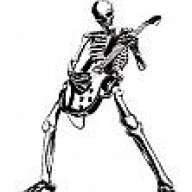
May I suggest the following? Minus the helmet, if it doesn't appear to be working...
 

Attachments

  • Screenshot 2025-10-15 152437.jpg
    Screenshot 2025-10-15 152437.jpg
    555.3 KB · Views: 24
  • Haha
Reactions: Dust2Dust
Go to a high school or middle school band concert. Watch the feet of the players. You'll see some who tap in time until they hit a tough section then they lose the beat. You'll see some who are never in time. Some will be solid. It can be very entertaining.
 
Unless they acknowledge the problem and practice to fix it themselves, there ain't much you can do beyond addressing there's a problem.

Only if they're taking active steps to improve their own time can you help, and even then, the most you can do is point out when time is lost or counts are off and rehearse it with them over and over until they figure out how to do musical time correctly.
Perfectly said.
 
  • Like
Reactions: FullumMusic
Additionally, I've always been taught that one job of the bassist is to keep the time. The drums should be listening to you, so you stay with the click track like your life depends on it.
its everyone's job to keep the time.
if your picking up on the errors and they are not then stop them immediately and explain the problem. If nothing else you'll do it enuf times that they will either fix the problems or rage quit.
Practice should be on their time and when the band is together it should be rehearsal.
 
Last edited:
The trouble with IEM and click for inexperienced bands is that people play against the click, they push/pull against the click whilst ignoring each other and everyone is feeling different pull/push grooves. IEM tends to make people play quite insularly
This 100%.

It sounds like pulling the click helped right away.

Another trick - have the click easily muted (like with a pedal switch). Start the song to the click to establish tempo then drop it as soon as it wobbles AT ALL.

The other point about Iems made upthread is also true in my experience. Ensemble playing requires listening to each other first and foremost.

Last,as others said, you are not going to learn as quickly playing with other newbs. Maybe keep this going for now but branch out some.
 
You can’t practice for them. They need to spend time with a metronome, recording themselves. Are they rushing, dragging, when do the rush or drag, do they actually know the songs?

There is a wealth of information you can get from using a metronome, that you can’t easily get without it.
 
I know that many bands these days all play with IEMs, a click, and backing tracks. Most of us pros, even us old geezers, do it too if that's the gig. And every session, you're typically playing to a click and need to work on being good with all that. But man, for a young "beginner" band as you describe it---you should be putting in at least as much time just.....playing! Live, no click, like, human and all. Getting into that zone with the ensemble, learning how to vibe and groove with others. How to make it tight and grooving without a click. Preferably w/o the IEMs too sometimes if your setup supports that. If all you ever do is rehearse with the click, you're leaving out a huge part of your musical development, as individual players and as a band. I'd be curious as others say to see what would happen if you ditch the click and just play--do that for a while. Then go back to the click and see how it goes. My 2 cents.


This! You’re asking people who can barely play or keep time to keep time to a click. All three of those things are skills within themselves and must be learned…the first two before you can even think about using a click.
 
Put a metronome into each of their Christmas stockings.
I was in a band way back in 1973 and we had a drummer that just couldn’t keep from speeding up, our lead guitarist who just got back from the Berklee School of Music was a stickler for these type of things got so frustrated that one day he showed up with his metronome and promptly taped it to the microphone with duct tape so it was coming out of our little PA system, it didn’t help.