
- Jun 25, 2007
- 4,531
- 135
- 63
- Disclosures
- Artist:TC Electronic RH450 bass system (original test-pilot)

TalkBass has been independent since 1998. Add your voice.
Create a free account to reply to discussions, view embedded media, and browse with fewer display ads.
Join free Log in
Want zero display ads or expanded classifieds tools? Compare plans.
**** yeah! I gots me some modes!
After making this thread and reading all your thoughts and methods and much of BassyBill's thread, I sat down tonight just went at it. Wow!!! I think I hit the tip of the iceberg right there! so excited. Thank you guys!!!
I think the best advice to go along with the explanations for me was when someone said to start a loop on your pedal (or whatever you have) and just play over top. That's what made it for me.
So much more understanding.
Alright, now how about this; I wrote one pattern that I was able to find two major scales that it fit into and they didn't fit into each other (Cmaj and Amaj.) They both sound pretty good, but each has a "bum" note in it.
How would you guys know which one to choose?
Thank you so much for your replies and patience, guys!
Wrong.Well I disagree. Those other modalities are *inherent* in major tonality. They are based on, and derived from, the major scale, and I see all of those modes as part and parcel to that tonality.
IMHO modes are for the solo instrument.
Chord tones are for the accompaniment instrument.
As most of us play chord tones when accompanying and only go to modes when we get a lead break......
Are you getting lead breaks? If so work on modes, if not, wait until you do.
Of course IMHO.
You should probably look into modes again. Try playing that C Maj scale while another instrument plays a d min chord, or an e min chord, or a F Maj chord and so on. That's when the magic happens.
There's a lot of misunderstanding of modes here - as well as misinformation.
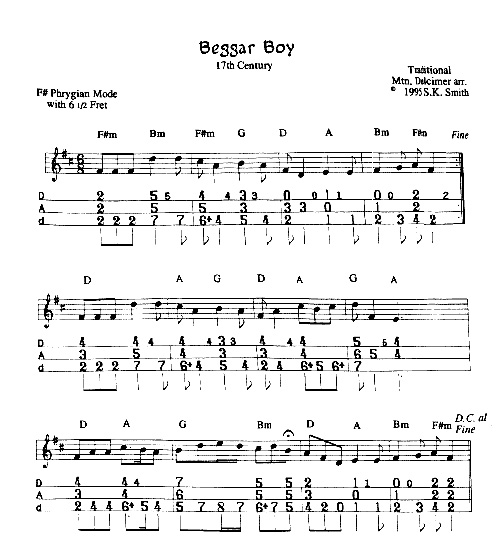
If anyone can, after playing this, convince me that it's not in a Phrygian mode, but 'really' just D Major, there's a special prize waiting for you.
By the way, I do NOT subscribe to the jazzbo teaching method of assigning a different mode to every chord in a tune.
Hey guys,
Modes each have there own personality to really get into this dont practice them like this C Ionian for a little while, D Dorian for a few minutes, E Phrygian for a few more etc etc. Practice them over a drone, for example use your E string as a drone, first play E Ionian, then E Dorian, next E Phrygian etc etc. That way you start to learn the sound of the mode.
As for what are modes??? In simple terms think of it like this
Any major scale has 7 notes Easy!
Each note of the major scale has a chord built from it
Each chord has a corresponding scale... these are the modes.
So theres a little more to it than that but once you get your head round what the modes are then you can start to learn them and there individual sounds.
Piece a cake!!!
Scott.
Free Online Bass Lessons - Scott's Bass Lessons
Link Removed
Modes are really easy.
Its just another way to play a scale.
Take a scale any scale. Start on the first note and play all the notes in that scale up to the next octave.
Congratulations you just played The IONIAN mode of that scale.
Now Start on the second note of that same scale. Play all the notes of that scale up to the octave of your starting note.
Congratulations you just played the DORIAN mode of that scale.
See it's easy.
Keep going.
Start on the 3rd note of the scale and run up an octvae, only playing the notes in the original scale. HAHA PHRYGIAN mode of that scale.
Mambo4 has listed the order of the modes, so now you know what it all is.
WHY do we talk about modes?
Thats another thread.

Also, didn't the modes come way before tempered tuning?
To really know the harmonic function of a chord it needs at least 4 notes(1-3-5-7 or 6).
NOT Dorian followed by Mixolydian followed by Ionian. This is limiting, misleading and misinforming. And you WILL sound like you are running scales for each chord (i. e., college jazzbo solo).
I agree with the rest of your post. But is this really how jazz is taught in colleges? I've only ever taken private lessons, from jazzers, and not one has mentioned modes for soloing. Always chord tones, approaches and substitutions etc.
I think a good amount is. Good to hear you weren't subjected to it. Look at some of the previous posts and you'll see what I mean.
You are correct (private lessons, from jazzers, and not one has mentioned modes for soloing. Always chord tones, approaches and substitutions etc.) that good soloists don't think this way of assigning a scale to each successive chord. It's cumbersome and you are not using your ear, rather your eyes or a page from your theory assignment.
I also believe that a good soloist first starts with the melody then to variations, and "chord tones, approaches and substitutions", as you stated.
Oh I guess John Coltrane didn't know what he was doing afterall...thanks for setting us straight.

Want to clarify? I felt Coltrane knew what he was doing. Perhaps you have some insight you'd like to share?
By the way, I CAN set you straight on this: it's after all - two words.
I hope you don't spell chords the way you spell English words.
Thanks for the grammar lesson, it comes much appreciated. I'm sure you well know how Coltrane approached and utilized modes in his playing.
In case you don't or anyone else is curious, his modal approach changed his style, take a look at Kind of Blue. That's probably a good place to start and it's referenced almost everywhere you care to look regarding this.

You are welcome for the spelling lesson - no charge.
Did I say that Coltrane did NOT use modes? Or that the so-called modal tunes on Kinda Blue did not utilze modes?
I don't have Coltrane's solo from So What in front of me, so I'll refrain from comment, but I can tell you that both Miles and Chambers did NOT only use D Dorian/Eb Dorian to draw their selection of notes on So What. But YOU probably already knew this.
What mode are they using in Freddie Freeloader?


