• TalkBass has been independent since 1998. Add your voice.
    Create a free account to reply to discussions, view embedded media, and browse with fewer display ads.
    Join freeLog in
    Want zero display ads or expanded classifieds tools? Compare plans.

How does pickup pole diameter affect tone?

I did a search and can't seem to find a definitive answer. Only lots of talk about narrow vs wide magnetic field yada yada. Any general concepts and/or experience regarding tone, range, attack, sustain, etc?

If all things were equal such as number of windings, wire, magnet type, what would be the difference?

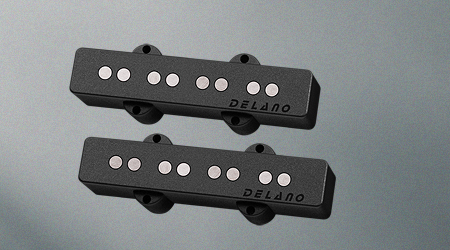
jc4al_02.jpg

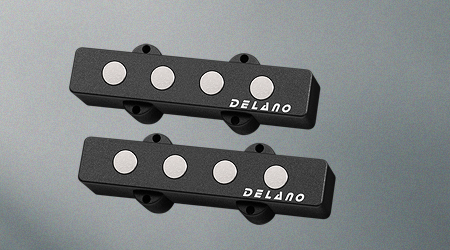
jmvc4fe.jpg
 
If all things were equal such as number of windings, wire, magnet type, what would be the difference?

They can't be equal if the poles are different diameters. The pole piece usually is the magnet, so by definition the magnet would have to be different.

So there's no such thing as "identical with different polepieces."
 
I did a search and can't seem to find a definitive answer. Only lots of talk about narrow vs wide magnetic field yada yada.

A single wide polepiece = wide magnetic field.

A single narrow polepiece = narrow magnetic field.

Multiple poles = wider magnetic field (usually, but it depends on the spacing).

The width of the magnetic field can effect the attack transient characteristics of the signal.
 
Sorry, I worded that poorly.

If all things were equal (except for the magnet diameter) such as number of windings, wire, magnet type (i.e. alnico vs. ceramic), what would be the difference?

You're not supposed to answer what I ask, you're supposed to answer what I'm thinking, LOL! :)
 
They can't be equal if the poles are different diameters. The pole piece usually is the magnet, so by definition the magnet would have to be different.

So there's no such thing as "identical with different polepieces."

Well sometimes the pole pieces are just steel with the magnets attached underneath. So there can be "identical magnets but different pole pieces"]

A wider polepiece = wider magnetic field.

A single narrow polepiece = narrow magnetic field.

Multiple poles = wider magnetic field (usually, but it depends on the spacing).

The width of the magnetic field can effect the attack transient characteristics of the signal.

+1. Wider magnetic fields (wide in the direction of nut to bridge) are also supposed to sound less bright. But the effect would be minimal compared to the effects of all the other factors at play.
 
The width of the magnetic field can effect the attack transient characteristics of the signal.

Yeah, Mongo, but I'm really dense. So what does that mean in terms of sound or tone? Does it mean it will have a sharper attack, a "quicker" response? I have subsequently read some posts that say more mids would be emphasized, but I don't understand the physics or rationale behind that statement.
 
A wider magnetic field can have higher overall volume than small poles. (And we're not considering the maker compensating with windings.)

So the only difference would be a higher output?

And what about the fact that traditional jazz pickups have two poles per string. I would imagine that is also a wide magnetic field, but the magnetic force lines would be different. I have no idea if that would affect tone.
 
Yeah, Mongo, but I'm really dense. So what does that mean in terms of sound or tone? Does it mean it will have a sharper attack, a "quicker" response? I have subsequently read some posts that say more mids would be emphasized, but I don't understand the physics or rationale behind that statement.

My theory is that with a single narrow polepiece/mag-field a vibrating string can approach or maybe exit the magnetic field during it's excursion causing the induced electric field in the pickup windings to collapse some and then be re-established when the string re-enters the mag field.

To me the resultant dynamics of the tone are more compressed/limited sounding in that situation.

Wider mag fields can prevent that.

BTW, in the two examples you picture, it may be that the larger poles could have a higher flux density (depending on their magnetic characteristics) and produce a higher output for a given number of windings. Also, they may pull on the strings more and cause them to exhibit unwanted overtones and phase issues or "chorusing" aka "Stratitis" if too close to the strings.
 
So from what I gather, a wider magnet will give higher output and a less compressed sound - mostly dealing with amplitude response. No effect on frequency response.

It's interesting to me that the later basses of Leo Fender use much wider pole pieces in the Musicman and the G&L MFD pickups. I suppose that could be a hint at what he supposed was "bass evolution."
 
I expect this has an even bigger impact when there's only one pole per string.

I've been mulling this issue for an upcoming single-coil Precision bass build. Numerous pickups are available for that, both in traditional 3/16" pole width and the wider 1/4".

I asked Larry at Aero about the difference between the models he offers. Here's the "meat" from his response:

The Type 4A pickup has a larger 1/4" diameter pole piece, and resolves the motion of the larger string (mostly the E), better than the the standard 3/16" diameter Type 1. The magnetic field of the Type 4A is also a little stronger and there is also some ever small effect on the string, retarding it's motion.

Having tried both width poles in the same bass, I found the larger poles to be easier to work with, having more sonic "thickness". IME the narrower poles were more "brittle" and temperamental, though I could get some good deep tones if I worked at it.

Here's a clip of my '51 reissue with traditional narrow poles (Antiquity II pickup)

Link Removed

And here's the same bass with wider 1/4" poles (Rio Grande "Muy Grande" pickup)

Link Removed

Obviously not the ideal comparison, since the 2 sampled pickups come from different manufacturers & have different DC resistance, among other potential variances.

I'm still torn over which way to go on my build. I did settle on the wider pickup for my '51 RI but I have a narrow-pole pickup in another bass that totally kicks butt. :hmm:
 
Hey Jefenator,

Thanks for chiming in. We are sort of in the same situation. I'm having Larry make some custom pickups for a Landing bass and Jimmy and Larry have agreed they want the 1/4 inch poles, but I am unfamiliar with this type of magnet in a Jazz bass setting (which is what is being built). Thanks for the clips. It is tough to compare considering they are different brands, etc. But it gives a good idea.

The wider pickup you settled on is from Aero?
 
Hey Jefenator,

Thanks for chiming in. We are sort of in the same situation. I'm having Larry make some custom pickups for a Landing bass and Jimmy and Larry have agreed they want the 1/4 inch poles, but I am unfamiliar with this type of magnet in a Jazz bass setting (which is what is being built). Thanks for the clips. It is tough to compare considering they are different brands, etc. But it gives a good idea.

The wider pickup you settled on is from Aero?

The wider pickup I settled on for the '51 Reissue was by Rio Grande.

But for the upcoming build, I'm pretty sure I'll do Aero and I'm still not 100% sure whether I'll go wide or narrow. Wide would probably be a safer choice and make more sense. But there's something about the narrower-pole Aero pickup in my Musicmaster that just rocks my freaking world.

I'll probably get on the phone with Larry and let him sway me, once I'm ready to order.
 
Fender did the dual magnets under the string to prevent having a pole directly under the string. This was to soften the attack because the speakers at the time would break up.

Having a large single pole under the string should give a stronger initial attack, such as on a Music Man pickup.

But there are many variables such as the strength of the magnets, and whether the pole is a magnet or a steel pole charged by a magnet.

If the pole is a magnet, it might have more surface area than the two magnets, so it would be stronger, which would have a slightly louder and brighter tone.
 
  • Like
Reactions: Jaco Taco