Hi everyone, I’m a multi-instrumentalist who just got my first upright bass: a fully carved Christopher 603. It’s seems really nice and is easy to play. I’ve since read a lot about how carved basses are more fragile and laminate basses are tougher. At least once a year I camp out at a bluegrass festival for a week, where the temperature can vary from 50 degrees to close to 100, and the humidity is usually in the 80-95% range. Would it be a problem to have my bass out for a week in an environment like that? Do I need to look for a laminate bass instead? My passion is gypsy jazz, but I’ll probably end up playing more bluegrass than anything.

Enjoy the benefits of a premium membership!
Upgrade Account
-
TalkBass has been independent since 1998. Add your voice.
Create a free account to reply to discussions, view embedded media, and browse with fewer display ads.
Join free Log in
Want zero display ads or expanded classifieds tools? Compare plans.
You are using an out of date browser. It may not display this or other websites correctly.
You should upgrade or use an alternative browser.
You should upgrade or use an alternative browser.
Double Bass How fragile is a carved bass really?
- Thread starter Lonestar777
- Start date
More options
Who Replied?

Carved double basses are more sensitive to humidity than plys... And they're a little bit more fragile regarding bumps and falls. From your temperature and humidity ranges I can make these observations:
Just a simple rule of thumb, usually if you are comfortable with the weather environment, your double bass is also going to be comfortable. If you're too hot or too cold or too dry or too moist, it'd probably be best to put your double bass in it's bag or inside a temperature and humidity moderated building.
If you see guitarists or mandolin players putting their valuable instruments away or staying out of the weather, you might want to consider doing that too. Banjos are generally bolted (not glued) together so they aren't as much of a concern regarding temperature or humidity, although no one wants to play their valuable instruments in the rain.
Never -- NEVER -- store your double bass in a car. On a moderately warm day (80°F and up) in the sun the inside of your car can reach 130°F within an hour or two even with the windows cracked an inch or two. Glues that hold your double bass together start to release at that point.
Also, avoid playing your double bass in direct sunlight on a hot day. Dark finishes in particular get very hot, hot enough to release glued seams, joints and/or to do other damage to the finish. There are reasons that people use awnings and easy-ups for jams at bluegrass festivals. And avoid setting your double bass down in direct sunlight, even in the bag.
Along those lines, also be very careful how you store your double bass when you are not holding it in your hands. Instrument stands, especially for a double bass, are not reliable if there are any winds, or if the ground is not solid. Your double bass' neck is its Achilles heel, and severe falls and bumps can easily damage the neck or the area where it is attached to the body.
Also, double basses are always big and in the way, even when you are playing it, so watch out for other people around it, especially if various forms of alcohol or other mental relaxant methods are being used. It is very easy for someone who isn't fully in control to bump your double bass and damage it, especially if they also are carrying an instrument.
Double basses can also be difficult to schlep long distances between jams. You might want to get some sort of wheel device, but be aware that some of the most convenient wheel devices for double bass do not work well in high grass, loose dirt, sand or gravel. Some of them also can cause damage to your double bass if not sized, cushioned or used properly.
A nicely cushioned double bass bag can protect your double bass very well while also providing some insulation from weather, and also ease your mind about its safety.
Oh, also, if you are traveling in an RV or trailer or are going to be jamming in one, be aware that most cabin doors on RVs are barely wide enough to fit a double bass through them. Combined with the steps to get up to the door, they are a special danger for double basses. Be very careful about the whole instrument, but especially the bridge and neck, while carrying your double bass through these doors.
Bluegrass festivals are great places for double basses, but they can also have potential for damage. I never hesitate to bring mine, but I watch it and people around it, like a hawk.
Best of luck with all this!
Just a simple rule of thumb, usually if you are comfortable with the weather environment, your double bass is also going to be comfortable. If you're too hot or too cold or too dry or too moist, it'd probably be best to put your double bass in it's bag or inside a temperature and humidity moderated building.
If you see guitarists or mandolin players putting their valuable instruments away or staying out of the weather, you might want to consider doing that too. Banjos are generally bolted (not glued) together so they aren't as much of a concern regarding temperature or humidity, although no one wants to play their valuable instruments in the rain.
Never -- NEVER -- store your double bass in a car. On a moderately warm day (80°F and up) in the sun the inside of your car can reach 130°F within an hour or two even with the windows cracked an inch or two. Glues that hold your double bass together start to release at that point.
Also, avoid playing your double bass in direct sunlight on a hot day. Dark finishes in particular get very hot, hot enough to release glued seams, joints and/or to do other damage to the finish. There are reasons that people use awnings and easy-ups for jams at bluegrass festivals. And avoid setting your double bass down in direct sunlight, even in the bag.
Along those lines, also be very careful how you store your double bass when you are not holding it in your hands. Instrument stands, especially for a double bass, are not reliable if there are any winds, or if the ground is not solid. Your double bass' neck is its Achilles heel, and severe falls and bumps can easily damage the neck or the area where it is attached to the body.
Also, double basses are always big and in the way, even when you are playing it, so watch out for other people around it, especially if various forms of alcohol or other mental relaxant methods are being used. It is very easy for someone who isn't fully in control to bump your double bass and damage it, especially if they also are carrying an instrument.
Double basses can also be difficult to schlep long distances between jams. You might want to get some sort of wheel device, but be aware that some of the most convenient wheel devices for double bass do not work well in high grass, loose dirt, sand or gravel. Some of them also can cause damage to your double bass if not sized, cushioned or used properly.
A nicely cushioned double bass bag can protect your double bass very well while also providing some insulation from weather, and also ease your mind about its safety.
Oh, also, if you are traveling in an RV or trailer or are going to be jamming in one, be aware that most cabin doors on RVs are barely wide enough to fit a double bass through them. Combined with the steps to get up to the door, they are a special danger for double basses. Be very careful about the whole instrument, but especially the bridge and neck, while carrying your double bass through these doors.
Bluegrass festivals are great places for double basses, but they can also have potential for damage. I never hesitate to bring mine, but I watch it and people around it, like a hawk.
Best of luck with all this!

Don pretty much laid out everything you need to know. I would just add that high humidity generally isn’t a problem but high temperatures are. Keep your bass out of the sun at all times and never store it where it could get uncomfortably warm. Also avoid quick temperature changes in either direction. If it were me, I wouldn’t bring a carved instrument into the environment you described but I think it could be done safely if you are careful.

I have always used a ply for that type stuff.
But a bass player I know lugs his fully carved calin wultur to bluegrass festivals all summer, as far as I know he doesn't have any issues with it.
But a bass player I know lugs his fully carved calin wultur to bluegrass festivals all summer, as far as I know he doesn't have any issues with it.
I would encourage you to find a nice, sturdy, playable ply instrument. It wouldn't be worth the stress IMO to worry about a solid wood bass in those conditions. High heat with high humidity are the toughest for a solid wood instrument, aside from the other hazards of outdoor playing in general. Why take the risk? You're not going to be playing symphonies.
The main issue with humidity is not enough or large/sudden fluctuations. Your outdoor gigs at 80% humidity can become an issue when you return home and bring it into an air conditioned (dry) environment.
I live in Nee England and do my best to keep my Upton hybrid in 40 ish humidity. If I see it drop to 39%, I crank up the settings on my humidifier. In the summer, with a dehumidifier running in my basement studio, the environment remains in the 50 or 60 percent range.
I live in Nee England and do my best to keep my Upton hybrid in 40 ish humidity. If I see it drop to 39%, I crank up the settings on my humidifier. In the summer, with a dehumidifier running in my basement studio, the environment remains in the 50 or 60 percent range.

Did most of those guys in the 50s who strapped their basses to to the roofs of Oldsmobiles use plywood basses? They had to be exposed to ridiculous amounts of exposure to the elements. Did cheap uprights hold up better than carved examples?
Thank you so much for all the incredible responses! I think the thing that surprised me the most was the comment about the camper door not being wide enough. Considering how much trouble I've had getting this thing in and out of a household door, it hadn't even dawned on me that the camper might be a problem! In general it seems like it's pretty much the same guidance we follow for our guitars, mandolins, and fiddles - keep them out of the direct sun and rain, don't put them where someone can fall on them, don't play them while covered in insect repellent, etc.
Did most of those guys in the 50s who strapped their basses to to the roofs of Oldsmobiles use plywood basses? They had to be exposed to ridiculous amounts of exposure to the elements. Did cheap uprights hold up better than carved examples?
Pretty much, yes. And yes, they were much more robust strapped to the top of the Olds or tossed into the back of a pickup.
Most of the old roots recordings were with ply, which is why a lot of roots players today prefer the tone of ply. But most of the time back in the day, the choice was simply made based on price.
My DB probably clears our RV door with about 2 inches to spare, but I almost always catch my bow in its quiver on the screen door. We just replaced that door though, and I haven't tried the new one yet -- I'm hoping the clearance is at least the same or maybe a little better. The killer is really the steps up to the RV door...Thank you so much for all the incredible responses! I think the thing that surprised me the most was the comment about the camper door not being wide enough. Considering how much trouble I've had getting this thing in and out of a household door, it hadn't even dawned on me that the camper might be a problem! In general it seems like it's pretty much the same guidance we follow for our guitars, mandolins, and fiddles - keep them out of the direct sun and rain, don't put them where someone can fall on them, don't play them while covered in insect repellent, etc.
I've played in a few very high-frame trailers with lots of steep steps, and the steps are at least as challenging as the door -- and then the bass still has to clear the door. With a rig that high from the ground, it's really a 2-person project to get in and get out.
Regarding regular mobility, I use a Bass Buggy™. I'm somewhat personal-mobility challenged and without the bass buggy I'd never be able to schlep my DB all over a large festival. But, as much as I like the Bass Buggy, it is next to useless on high grass, loose dirt, sand or gravel because the wheels are too narrow and small diameter. I do also have a craftsman made plywood buggy-thingy with mini-dune buggy wheels and pneumatic tires and it's pretty much all terrain, but it is huge, it weighs a ton, and it doesn't protect the finish of my bass well enough. So I use the Bass Buggy and watch for detours to get around impossible terrain.
Btw, I do store my DB in our modest 25' Class C RV without weather related trouble, just leaving the windows open. I stow it up on the over-cab bed where it's out of the way for normal RV use. On the road, I use bungee cords to keep the DB wedged in place up there, and the DB keeps all our other instruments safely in place behind it. As you can imagine, it's a project to get everything loaded and road-safe.
Edit: for transparency, my double bass is aluminum, so humidity is never going to be an issue for it, that is unless there's a flash flood and it floats away. But like most big aluminum objects, it is very sensitive to temperature changes which affects tuning and can affect setup. So I do still avoid extreme temperatures and rain or snow.
Last edited:

Not really more fragile; more sensitive to fluctuations in humidity, definitely, but the issue is more that a carved bass is more expensive than one made of plywood. And you're 100% gonna run into stuff with it.
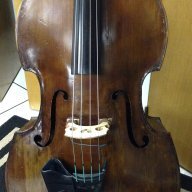
i did a bunch of outdoor gigs with my carved years ago that were daytime only, all well and good, then one time was a day/night schedule
when the hot day turned to cool night there was so much condensation collecting on the bass it was as if it rained…. only on the bass. i left the stage and toweled off the bass, into the car it went, as fast as possible. i was pretty freaked out over it but it wound up fine, no issues.
only ply on those gigs for me since!
when the hot day turned to cool night there was so much condensation collecting on the bass it was as if it rained…. only on the bass. i left the stage and toweled off the bass, into the car it went, as fast as possible. i was pretty freaked out over it but it wound up fine, no issues.
only ply on those gigs for me since!

I attend an annual “fiddle camp” in the north woods every summer, and I bring my carved upright. I gave away the ply several years ago because it was too hard to switch back and forth due to radically different geometry.
Granted, it doesn’t get so hot, but I’ll add a couple of things. A rule I’ve learned is to always have access to my bag, in case of rain. And you don’t want to be near the edge of a big tent during a rainstorm. It’s OK for the bassist to be smack dab in the middle.
Insect repellent. I always announce this to the whole group at the start of camp: Bug spray will dissolve varnish. Don’t apply it while sitting in the circle. Get far away with it, and wipe it back off your hands.
At least you won’t have cymbals falling over onto it.
Granted, it doesn’t get so hot, but I’ll add a couple of things. A rule I’ve learned is to always have access to my bag, in case of rain. And you don’t want to be near the edge of a big tent during a rainstorm. It’s OK for the bassist to be smack dab in the middle.
Insect repellent. I always announce this to the whole group at the start of camp: Bug spray will dissolve varnish. Don’t apply it while sitting in the circle. Get far away with it, and wipe it back off your hands.
At least you won’t have cymbals falling over onto it.

Many people have a false sense of security about cases and bags from a temp and humidity point of view.
The insulate value of a case is next to nill and humidity in a case is the same as outside of the case.... perhaps
a pile of those desiccant bags might be useful in the case but I would imagine they have a limited ability to absorb
airborne mosture...
The insulate value of a case is next to nill and humidity in a case is the same as outside of the case.... perhaps
a pile of those desiccant bags might be useful in the case but I would imagine they have a limited ability to absorb
airborne mosture...
My relatively inexpensive double bass bag has 1" of padding and an inside and outside covering of Cordura. I've been inside it and it's about like wearing a down jacket. Bags like this may not protect from weather for hours, but they will help soften a transition from cold to hot or from hot to cold, which is one of the primary concerns for double basses.... The insulate value of a case is next to nill and humidity in a case is the same as outside of the case....
The biggest issue with my double bass bag is that it's black, so it will absorb heat from the sun. I don't leave my double bass in it uncovered outside on sunny days. If I have to set it down outside at a festival or event, I like to put it under something that will divert the sun's rays, like under an awning, an easy-up, a table or even under an RV if it's high enough and not going to roll away.

When I lived in San Diego, I was renting a small cottage in Valley Center and left my bass when there was a heat wave and I was out of town for work, the AC stopped and was not reset, Infernal temps in the cottage and the top slid off the bass. Well it gave an opportunity for the Luthier to fix issues and frankly the bass sounded better. She also told me that she charged me less because the heat already did the ungluing for her. I think it was 2-3 hours of labor saced  It is a loud bass considering it is 1/2 or 5/8's . I also found out. It is an old bass, Over 100 years old. I still don't baby it. 1/2 and no name is not really appealing to most bass players.
. I forgot the place in Oyster Bay Long island NY, but I took my first DB there/ The luthier whose name I can't remember, was able to put back a bass for a customer that was in a car wreck. - it was in many pieces when it came to the shop
Don't worry about it. Common sense. All my carved upright always sound better with cracks. But don't intentionally do it. The wood will do it on it's own if really needed. Play it every day , play it for people . Otherwise it will be just like a dull sounding piece of furniture.
It is a loud bass considering it is 1/2 or 5/8's . I also found out. It is an old bass, Over 100 years old. I still don't baby it. 1/2 and no name is not really appealing to most bass players.. I forgot the place in Oyster Bay Long island NY, but I took my first DB there/ The luthier whose name I can't remember, was able to put back a bass for a customer that was in a car wreck. - it was in many pieces when it came to the shop
Don't worry about it. Common sense. All my carved upright always sound better with cracks. But don't intentionally do it. The wood will do it on it's own if really needed. Play it every day , play it for people . Otherwise it will be just like a dull sounding piece of furniture.

But other than thatCarved double basses are more sensitive to humidity than plys... And they're a little bit more fragile regarding bumps and falls. From your temperature and humidity ranges I can make these observations:
Just a simple rule of thumb, usually if you are comfortable with the weather environment, your double bass is also going to be comfortable. If you're too hot or too cold or too dry or too moist, it'd probably be best to put your double bass in it's bag or inside a temperature and humidity moderated building.
If you see guitarists or mandolin players putting their valuable instruments away or staying out of the weather, you might want to consider doing that too. Banjos are generally bolted (not glued) together so they aren't as much of a concern regarding temperature or humidity, although no one wants to play their valuable instruments in the rain.
Never -- NEVER -- store your double bass in a car. On a moderately warm day (80°F and up) in the sun the inside of your car can reach 130°F within an hour or two even with the windows cracked an inch or two. Glues that hold your double bass together start to release at that point.
Also, avoid playing your double bass in direct sunlight on a hot day. Dark finishes in particular get very hot, hot enough to release glued seams, joints and/or to do other damage to the finish. There are reasons that people use awnings and easy-ups for jams at bluegrass festivals. And avoid setting your double bass down in direct sunlight, even in the bag.
Along those lines, also be very careful how you store your double bass when you are not holding it in your hands. Instrument stands, especially for a double bass, are not reliable if there are any winds, or if the ground is not solid. Your double bass' neck is its Achilles heel, and severe falls and bumps can easily damage the neck or the area where it is attached to the body.
Also, double basses are always big and in the way, even when you are playing it, so watch out for other people around it, especially if various forms of alcohol or other mental relaxant methods are being used. It is very easy for someone who isn't fully in control to bump your double bass and damage it, especially if they also are carrying an instrument.
Double basses can also be difficult to schlep long distances between jams. You might want to get some sort of wheel device, but be aware that some of the most convenient wheel devices for double bass do not work well in high grass, loose dirt, sand or gravel. Some of them also can cause damage to your double bass if not sized, cushioned or used properly.
A nicely cushioned double bass bag can protect your double bass very well while also providing some insulation from weather, and also ease your mind about its safety.
Oh, also, if you are traveling in an RV or trailer or are going to be jamming in one, be aware that most cabin doors on RVs are barely wide enough to fit a double bass through them. Combined with the steps to get up to the door, they are a special danger for double basses. Be very careful about the whole instrument, but especially the bridge and neck, while carrying your double bass through these doors.
Bluegrass festivals are great places for double basses, but they can also have potential for damage. I never hesitate to bring mine, but I watch it and people around it, like a hawk.
Best of luck with all this!


My dad was an old Jazz piano player that lived and worked during those times. He suggested I get a plywood bass because of their durability.Did most of those guys in the 50s who strapped their basses to to the roofs of Oldsmobiles use plywood basses? They had to be exposed to ridiculous amounts of exposure to the elements. Did cheap uprights hold up better than carved examples?
When I went looking I found three basses that would fit in that category of durability. An Alcoa aluminum, a fiberglass one, and a Kay M-1. Even though the Alcoa was rare and the fiberglass one was trippy I went with the Kay


Act of dog. She bumped into it at high speed, it rotated and hit a dresser. It has been repaired and I keep it in dog free spaces. The longest crack was 17".


