
Enjoy the benefits of a premium membership!
Upgrade Account
-
TalkBass has been independent since 1998. Add your voice.
Create a free account to reply to discussions, view embedded media, and browse with fewer display ads.
Join free Log in
Want zero display ads or expanded classifieds tools? Compare plans.
You are using an out of date browser. It may not display this or other websites correctly.
You should upgrade or use an alternative browser.
You should upgrade or use an alternative browser.
How important is expensive gear? (from SMG)
- Thread starter M.R. Ogle
- Start date
More options
Who Replied?

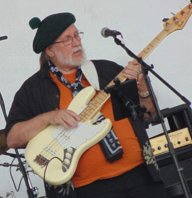
If you've been doing this for 20 years or more, odds are you started off cheap and worked up from there. I started in 1964 and joined my first group in 1965. Perhaps young kids now days aren't that way, but I had to take it step by step as I could afford, or almost afford, the upgrades.
I started with a crap "made in Japan" bass in 1964 (well before Japan made good basses) and then got a GREAT bass (Fender '65 Jazz) in '66. Started with what was considered a "real" amp (Fender Bassman) and not an imitation, which is what the Sears Silvertone amps were called back then. Worked well for me until I started touring with a nightclub group in 1971. After about a year the rest of the group upgraded to louder amps than my '66 blackface Fender Bassman could keep up with. That's another real good reason for buying better gear - so you don't get lost in the mix with more powerful guitar and keyboard amps. We typically used our own PA system and that was just for the vocals. Not a lot of complete FOH systems in clubs in the early 70's. Then bought a Standel bass amp that blew the guitar and keyboard amps away and I had to run it an 9 o'clock (#3 on the dial) to keep from drowning out the rest of the group or bouncing customers off the back wall. I would probably still be using that set up if it hadn't all been stolen in 1976.
Looked for years for a replacement for my '65 Jazz but wasn't until 1985 I found the Jazz bass I now use, which has the same slender fast feel to the neck that my '65 had. Then inherited a Yamaha 115 combo from my son after he left home and would use that from time to time. Still needed more and then I found a great deal on a Sunn 212 cab which I could run as an extension off the Yamaha. That finally got me back to a set up that worked for gigs. Still looking for better and grabbed a GK BX250 with a BX115 cabinet. I had high hopes for that. First disappointment was finding out that it was only made to use one 8 ohm speaker. then found that no matter what I did, if I got it to gig levels it was just a muddy roar. It was a terrible stand-a-lone combination. Good news was my Sunn cabinet had both parallel and serial outs. So I hooked it up in series for a total of 12 ohms and with fewer watts than running the 115 alone, it was both much better sounding and louder. I was really frustrated with the GK set up though because I played one before that was quite good - this one sure wasn't it.
Next upgrade for an amp was an Eden Nemesis RS400 - 400 watts at 4 ohms that I bought online with an "extra 30% off"coupon. Came to about $350. All of a sudden I had a quality amp. I was very impressed and pleased with that purchase as it sounded better than I expected by a large margin. It sounded so clear and distinct that if forced me to play better because I could easily hear any mistakes or fret flubs. So better sounding gear for sure. HOWEVER, the Sunn B202 (2x12 cabinet), was rated at 100 watts and my amp was putting 200 watts into each cab. Pretty soon I found my self turning down because the speakers started to fart. Knew I had to find another speaker cab. Guitar Center put the acoustic B410 on sale and I bought it. Now I could take advantage of the higher watts using more speakers. That worked great and I gigged with it for years. I was pretty content.
Somewhere around 2010, David Nordschow left Eden and started DNA (David Nordschow Amplification). Among other things he sold off his bench test amp. That was a WT500 that he upgraded to 800 watts. I bought it directly from him and that's what I use now. It is a little warmer sounding because it uses a 12AX7 tube in the preamp (in impedance section not gain section) but has two 400 watt at 4 ohm power sections and can be bridged to 800 watts. I plugged my GK115 into one side and my acoustic B410 in the other and then used this magic knob called "balance" to adjust the mix of sound from the two channels. Have used that set up for a number of years now. Speaker cabs aren't super high quality, but amp is and cabs sound good with it.
Then, right before I moved to Seattle, I made one more purchase that I'd been GAS'ing over for about 5 years. I bought a DNA DNS410-8. That's an 8-ohm cab with greater sensitivity (106db) and power handling (1400 watts) and it replaced my other two cabs. I run my WT500/800 at 800 watts bridged through it and it sings. Somewhere down the road I might opt for a DNA class D amp, but for now I'm good.
So I'm at a point now where I really enjoy the sound of my gear and I certainly have some "pride of ownership" in it - not going to apologise to anybody about that. It also makes me sound better on stage even if the audience doesn't recognize that's what's going on. If they see me do a run on my bass, they hear every single note and inflection my hands will put into it instead of seeing fingers go and just hearing an indistinct rumble because it gets lost in the mix. Yeah, I've used less expensive gear and sounded good with it, but by God, I've paid my dues and I'm not about to apologize to anyone for appearing on stage with great gear that sounds great to me. And when I want to do some recording, it's the perfect set that can generate a myriad of sounds if the engineer wants them. You want thump!, I got it. You need growl...here it is. You need bite? - right here. You need smooth warm bass with lots of sustain - coming right up.
I can always use more practice, but damn it, I worked long and hard to get the gear I have and I can use it well.
I started with a crap "made in Japan" bass in 1964 (well before Japan made good basses) and then got a GREAT bass (Fender '65 Jazz) in '66. Started with what was considered a "real" amp (Fender Bassman) and not an imitation, which is what the Sears Silvertone amps were called back then. Worked well for me until I started touring with a nightclub group in 1971. After about a year the rest of the group upgraded to louder amps than my '66 blackface Fender Bassman could keep up with. That's another real good reason for buying better gear - so you don't get lost in the mix with more powerful guitar and keyboard amps. We typically used our own PA system and that was just for the vocals. Not a lot of complete FOH systems in clubs in the early 70's. Then bought a Standel bass amp that blew the guitar and keyboard amps away and I had to run it an 9 o'clock (#3 on the dial) to keep from drowning out the rest of the group or bouncing customers off the back wall. I would probably still be using that set up if it hadn't all been stolen in 1976.
Looked for years for a replacement for my '65 Jazz but wasn't until 1985 I found the Jazz bass I now use, which has the same slender fast feel to the neck that my '65 had. Then inherited a Yamaha 115 combo from my son after he left home and would use that from time to time. Still needed more and then I found a great deal on a Sunn 212 cab which I could run as an extension off the Yamaha. That finally got me back to a set up that worked for gigs. Still looking for better and grabbed a GK BX250 with a BX115 cabinet. I had high hopes for that. First disappointment was finding out that it was only made to use one 8 ohm speaker. then found that no matter what I did, if I got it to gig levels it was just a muddy roar. It was a terrible stand-a-lone combination. Good news was my Sunn cabinet had both parallel and serial outs. So I hooked it up in series for a total of 12 ohms and with fewer watts than running the 115 alone, it was both much better sounding and louder. I was really frustrated with the GK set up though because I played one before that was quite good - this one sure wasn't it.
Next upgrade for an amp was an Eden Nemesis RS400 - 400 watts at 4 ohms that I bought online with an "extra 30% off"coupon. Came to about $350. All of a sudden I had a quality amp. I was very impressed and pleased with that purchase as it sounded better than I expected by a large margin. It sounded so clear and distinct that if forced me to play better because I could easily hear any mistakes or fret flubs. So better sounding gear for sure. HOWEVER, the Sunn B202 (2x12 cabinet), was rated at 100 watts and my amp was putting 200 watts into each cab. Pretty soon I found my self turning down because the speakers started to fart. Knew I had to find another speaker cab. Guitar Center put the acoustic B410 on sale and I bought it. Now I could take advantage of the higher watts using more speakers. That worked great and I gigged with it for years. I was pretty content.
Somewhere around 2010, David Nordschow left Eden and started DNA (David Nordschow Amplification). Among other things he sold off his bench test amp. That was a WT500 that he upgraded to 800 watts. I bought it directly from him and that's what I use now. It is a little warmer sounding because it uses a 12AX7 tube in the preamp (in impedance section not gain section) but has two 400 watt at 4 ohm power sections and can be bridged to 800 watts. I plugged my GK115 into one side and my acoustic B410 in the other and then used this magic knob called "balance" to adjust the mix of sound from the two channels. Have used that set up for a number of years now. Speaker cabs aren't super high quality, but amp is and cabs sound good with it.
Then, right before I moved to Seattle, I made one more purchase that I'd been GAS'ing over for about 5 years. I bought a DNA DNS410-8. That's an 8-ohm cab with greater sensitivity (106db) and power handling (1400 watts) and it replaced my other two cabs. I run my WT500/800 at 800 watts bridged through it and it sings. Somewhere down the road I might opt for a DNA class D amp, but for now I'm good.
So I'm at a point now where I really enjoy the sound of my gear and I certainly have some "pride of ownership" in it - not going to apologise to anybody about that. It also makes me sound better on stage even if the audience doesn't recognize that's what's going on. If they see me do a run on my bass, they hear every single note and inflection my hands will put into it instead of seeing fingers go and just hearing an indistinct rumble because it gets lost in the mix. Yeah, I've used less expensive gear and sounded good with it, but by God, I've paid my dues and I'm not about to apologize to anyone for appearing on stage with great gear that sounds great to me. And when I want to do some recording, it's the perfect set that can generate a myriad of sounds if the engineer wants them. You want thump!, I got it. You need growl...here it is. You need bite? - right here. You need smooth warm bass with lots of sustain - coming right up.
I can always use more practice, but damn it, I worked long and hard to get the gear I have and I can use it well.
I've been playing since 1998, make darned good money, own seven basses, and every bass I own except for the first two I bought cost me less than $160. The first bass I ever bought was a Yamaha BBN5 from a pawn shop in which I had Mike Lull installl 18 vold Bartollini pickups. Total outlay around $800. The second was a Christmas present from my wife, a Dean accoustic/electric from BassNorthwest. The rest are from RondoMusic and I love 'em all.
Everything I own is a "tool". And my basses are purchased to make music that sounds good, be relatively reliable, and have a look that makes a particular statement. The crowd does notice stuff like cool paint jobs, etc...
Everything I own is a "tool". And my basses are purchased to make music that sounds good, be relatively reliable, and have a look that makes a particular statement. The crowd does notice stuff like cool paint jobs, etc...

I think once you reach a certain level of proficiency with any instrument that allows you to express yourself, the price range doesn't matter.
No one can take that away from you. So who is to say that a $3000 tube amp won't make you happier?
I have no comment about the video, Don't need to give him any more attention...
No one can take that away from you. So who is to say that a $3000 tube amp won't make you happier?
I have no comment about the video, Don't need to give him any more attention...
Watching those vids I can't spot the behringer interfaces plugged to an amd athlon system, recording with audacity.
Why would he need cubase, an Apple, expensive peripheral tools, when noone would notice the difference anyway?
Double standard much?
He's a troll and a very bad one at that. Because he seriously got affected by the posts here; trolls are usually above the drama they stir, he's obviously not.
Why would he need cubase, an Apple, expensive peripheral tools, when noone would notice the difference anyway?
Double standard much?
He's a troll and a very bad one at that. Because he seriously got affected by the posts here; trolls are usually above the drama they stir, he's obviously not.
Exactly!Watching those vids I can't spot the behringer interfaces plugged to an amd athlon system, recording with audacity.
Why would he need cubase, an Apple, expensive peripheral tools, when noone would notice the difference anyway?
Double standard much?
He's a troll and a very bad one at that. Because he seriously got affected by the posts here; trolls are usually above the drama they stir, he's obviously not.
I only have one Youtube subscription and it is this SMG guy. He's music's Penn Jillette. His comments videos are usually hilarious, and his "hatred" of bass players never gets old for me.I think once you reach a certain level of proficiency with any instrument that allows you to express yourself, the price range doesn't matter.
No one can take that away from you. So who is to say that a $3000 tube amp won't make you happier?
I have no comment about the video, Don't need to give him any more attention...
But he exposes himself with the video mocking TalkBass members. The material does not really work for him. Most of the posts he quotes are, in fact, spot on. He mostly doesn't like people complaining about his use of language. He doesn't get that it really DOES affect how you are perceived in a CIVILIZED culture. And it's not good.
He will give a strongly negative review of a piece of equipment and even a/b it with the "correct" sound and I can't tell the difference. But I understand that it is because I don't have the experience with it. I learned that when MP3 was first introduced. I thought 96k sounded AMAZING. Eventually it became impossible to listen to.Watching those vids I can't spot the behringer interfaces plugged to an amd athlon system, recording with audacity.
Why would he need cubase, an Apple, expensive peripheral tools, when noone would notice the difference anyway?
Double standard much?
He's a troll and a very bad one at that. Because he seriously got affected by the posts here; trolls are usually above the drama they stir, he's obviously not.
But he's also careful to point out that different things are important in the recording studio vs live. Things that are very important in the studio don't matter nearly as much (or at all) in the live setting, and vice versa. e.g. the color of your bass is irrelevant in a recording.
the number of TBers fervently defending their choices when they are actually agreeing with him is staggering....
I can sum up the entire video in one sentence:
Quit chasing the tone dragon when your proficiency doesn't yet lend you to playing out of the bedroom.
no double standard, he actually points out that higher end equipment is more important in the studio than in a live setting and no where does he say don't buy/own/use expensive equipment. you either didn't listen to the video or remain willfully ignorant of its point.Watching those vids I can't spot the behringer interfaces plugged to an amd athlon system, recording with audacity.
Why would he need cubase, an Apple, expensive peripheral tools, when noone would notice the difference anyway?
Double standard much?
He's a troll and a very bad one at that. Because he seriously got affected by the posts here; trolls are usually above the drama they stir, he's obviously not.
I can sum up the entire video in one sentence:
Quit chasing the tone dragon when your proficiency doesn't yet lend you to playing out of the bedroom.

Glenn probably isn't watching this thread anymore, but here are my two cents:
1.) Bass players are in a unique situation where costs tends to be higher because of the need to produce lower frequencies. Because mids are easily audible, a guitarist can cheaply produce the frequencies they need with a fairly low amount of wattage. Compare the live sound of a 100w guitar amp to a 100w bass amp. The bass amp will be drowned out instantly by the guitar, if not the drums. Up until the recent advances in 1x12 enclosures, bass players would need a 4x10 or 1x15 to keep up with a 2x12 guitar combo. More watts, more speakers, bigger driver magnets mean bass players spend more money by default, making their gear more expensive from the start. We, like drummers, are used to having to spend more, so our tolerances for what is "expensive" is higher.
2.) People like to blow off the "a better instrument inspires me" argument. The right instrument makes ALL the difference in how you feel about your music, your performance, even how your body feels after you play. A good, solid instrument makes you want to pick it up and practice. My first bass was a cheap Kramer knock off with a warped neck, uneven threats, noisy pickups, and a bridge that would cut your hand if you banged your hand into it. I had to get around the obstacles of a poor sounding, poor playing instrument and bought another bass after only a year. The more you like the feel your instrument, the more you like the sound, the more it fits your body, the more you want to play, which in turn makes you a better player. Cheap instruments are cheap because the finish is poor, the quality is poor and ergonomics don't exist.
3.) It is an economic fact that, within certain perimeters, price = quality. There is a level at which there are diminishing returns, but a quality instrument simply costs money. If there wasn't an inherent value to "more expensive" gear, then why don't you see club musicians, back up bands, or the stars we all know playing sub-$300 instruments. Geddy Lee, Geezer Butler, Steve Harris, Chris Squire, Flea, Victor Wooten, Stanley Clarke, Marcus Miller, Jaco Pastorius, Les Claypool, Ryan Martinie, and Nick Schendzielos could all play pawn shop Squiers and it would probably still sound pretty good. However, they don't. Some play instruments far more expensive that others, but they all play instruments that compliment their styles and push them to that next level. By having an intimate connection with a quality instrument that allows them to play how they want to play and sound like they want to sound, they are able to go to that next level.
This also plays out in road worthiness of the equipment. A bass that won't stay in tune during a set because of cheap tuners or neck is worthless. An amp that fries because of second rate components is worthless. A speaker that blows out because of bad design is worthless. A pedal with a plastic housing that cracks or a switch that dies is worthless. These things can't be eliminated, but paying for quality mitigates it.
4.) Let's put this in terms Glenn understands. Why not use an SM57 to record everything? Why bother using a high quality ribbon mic for vocals and a special mic for the kick drum? The listener won't be able to tell the difference. Why use properly shielded cable that doesn't pick up 60 cycle hum? Why buy Protools or Cubase? Why use all tube preamps and compressors when you can just run everything right into a Presonus Firebox?
The recording matters just as much as the live performance. The audience will not pick up every nuance of either, but when they get that "wow" feeling after listening to the recording or the watching the show, its worth it. When a person in a little bar I just played says "Dude, you guys sound HUGE!" it may just be the beer talking, but he just had an experience that he will remember. He is going to buy my merch and buy my CD because I took the time and effort to get my sound right, which often times take better than firesale equipment.
5.) Expensive gear matters to the people that use it. Novice beginners playing in their bedrooms need to understand that they shouldn't worry about it. There is a leveling process. First you buy cheap gear to learn how to play. Then, if you stick to it, you upgrade to stuff good enough to play in your garage. THEN you buy stuff good enough and reliable enough to play clubs, record, and do rented-van tours with. They totally don't need a $1000 bass, a $1000 rig and hundreds of dollars in pedals to start. If they want to be serious about it, someday they will have to.
6.) Finally, and this is ALWAYS the case, "expensive" is relative. I am willing to spend $1000 to $1400 on a bass because it isn't expensive to me; I'm buying a quality tool for my job. $2000 or $3000 is expensive because I don't make that kind of money now, but I would in a heartbeat because I've played those basses and know what they are about. For a 13 year old kid saving up his chore money $100 is a lot. For a adult male living in the squalor of Mumbai spending $100 on an instrument would be insane. If you can't afford something, shrug it off and move on to something you can. If you can afford something, buy it and like it. Someone else's definition of expensive doesn't matter to me.
1.) Bass players are in a unique situation where costs tends to be higher because of the need to produce lower frequencies. Because mids are easily audible, a guitarist can cheaply produce the frequencies they need with a fairly low amount of wattage. Compare the live sound of a 100w guitar amp to a 100w bass amp. The bass amp will be drowned out instantly by the guitar, if not the drums. Up until the recent advances in 1x12 enclosures, bass players would need a 4x10 or 1x15 to keep up with a 2x12 guitar combo. More watts, more speakers, bigger driver magnets mean bass players spend more money by default, making their gear more expensive from the start. We, like drummers, are used to having to spend more, so our tolerances for what is "expensive" is higher.
2.) People like to blow off the "a better instrument inspires me" argument. The right instrument makes ALL the difference in how you feel about your music, your performance, even how your body feels after you play. A good, solid instrument makes you want to pick it up and practice. My first bass was a cheap Kramer knock off with a warped neck, uneven threats, noisy pickups, and a bridge that would cut your hand if you banged your hand into it. I had to get around the obstacles of a poor sounding, poor playing instrument and bought another bass after only a year. The more you like the feel your instrument, the more you like the sound, the more it fits your body, the more you want to play, which in turn makes you a better player. Cheap instruments are cheap because the finish is poor, the quality is poor and ergonomics don't exist.
3.) It is an economic fact that, within certain perimeters, price = quality. There is a level at which there are diminishing returns, but a quality instrument simply costs money. If there wasn't an inherent value to "more expensive" gear, then why don't you see club musicians, back up bands, or the stars we all know playing sub-$300 instruments. Geddy Lee, Geezer Butler, Steve Harris, Chris Squire, Flea, Victor Wooten, Stanley Clarke, Marcus Miller, Jaco Pastorius, Les Claypool, Ryan Martinie, and Nick Schendzielos could all play pawn shop Squiers and it would probably still sound pretty good. However, they don't. Some play instruments far more expensive that others, but they all play instruments that compliment their styles and push them to that next level. By having an intimate connection with a quality instrument that allows them to play how they want to play and sound like they want to sound, they are able to go to that next level.
This also plays out in road worthiness of the equipment. A bass that won't stay in tune during a set because of cheap tuners or neck is worthless. An amp that fries because of second rate components is worthless. A speaker that blows out because of bad design is worthless. A pedal with a plastic housing that cracks or a switch that dies is worthless. These things can't be eliminated, but paying for quality mitigates it.
4.) Let's put this in terms Glenn understands. Why not use an SM57 to record everything? Why bother using a high quality ribbon mic for vocals and a special mic for the kick drum? The listener won't be able to tell the difference. Why use properly shielded cable that doesn't pick up 60 cycle hum? Why buy Protools or Cubase? Why use all tube preamps and compressors when you can just run everything right into a Presonus Firebox?
The recording matters just as much as the live performance. The audience will not pick up every nuance of either, but when they get that "wow" feeling after listening to the recording or the watching the show, its worth it. When a person in a little bar I just played says "Dude, you guys sound HUGE!" it may just be the beer talking, but he just had an experience that he will remember. He is going to buy my merch and buy my CD because I took the time and effort to get my sound right, which often times take better than firesale equipment.
5.) Expensive gear matters to the people that use it. Novice beginners playing in their bedrooms need to understand that they shouldn't worry about it. There is a leveling process. First you buy cheap gear to learn how to play. Then, if you stick to it, you upgrade to stuff good enough to play in your garage. THEN you buy stuff good enough and reliable enough to play clubs, record, and do rented-van tours with. They totally don't need a $1000 bass, a $1000 rig and hundreds of dollars in pedals to start. If they want to be serious about it, someday they will have to.
6.) Finally, and this is ALWAYS the case, "expensive" is relative. I am willing to spend $1000 to $1400 on a bass because it isn't expensive to me; I'm buying a quality tool for my job. $2000 or $3000 is expensive because I don't make that kind of money now, but I would in a heartbeat because I've played those basses and know what they are about. For a 13 year old kid saving up his chore money $100 is a lot. For a adult male living in the squalor of Mumbai spending $100 on an instrument would be insane. If you can't afford something, shrug it off and move on to something you can. If you can afford something, buy it and like it. Someone else's definition of expensive doesn't matter to me.


The voices in my head have told me not to pay any attention to that guy... a couple of them think he's funny; the rest? Not so much. They have assured me that expensive gear is vital for my playing, so I'm going with what THEY say....


I had a good laugh because of the amount of arrogance he had in the video. Whatever.
I'm content with my gear. Do I want more? Yes. Do I NEED more? Nah.
I'm content with my gear. Do I want more? Yes. Do I NEED more? Nah.
Glenn probably isn't watching this thread anymore, but here are my two cents:
1.) Bass players are in a unique situation where costs tends to be higher because of the need to produce lower frequencies. Because mids are easily audible, a guitarist can cheaply produce the frequencies they need with a fairly low amount of wattage. Compare the live sound of a 100w guitar amp to a 100w bass amp. The bass amp will be drowned out instantly by the guitar, if not the drums. Up until the recent advances in 1x12 enclosures, bass players would need a 4x10 or 1x15 to keep up with a 2x12 guitar combo. More watts, more speakers, bigger driver magnets mean bass players spend more money by default, making their gear more expensive from the start. We, like drummers, are used to having to spend more, so our tolerances for what is "expensive" is higher.
2.) People like to blow off the "a better instrument inspires me" argument. The right instrument makes ALL the difference in how you feel about your music, your performance, even how your body feels after you play. A good, solid instrument makes you want to pick it up and practice. My first bass was a cheap Kramer knock off with a warped neck, uneven threats, noisy pickups, and a bridge that would cut your hand if you banged your hand into it. I had to get around the obstacles of a poor sounding, poor playing instrument and bought another bass after only a year. The more you like the feel your instrument, the more you like the sound, the more it fits your body, the more you want to play, which in turn makes you a better player. Cheap instruments are cheap because the finish is poor, the quality is poor and ergonomics don't exist.
3.) It is an economic fact that, within certain perimeters, price = quality. There is a level at which there are diminishing returns, but a quality instrument simply costs money. If there wasn't an inherent value to "more expensive" gear, then why don't you see club musicians, back up bands, or the stars we all know playing sub-$300 instruments. Geddy Lee, Geezer Butler, Steve Harris, Chris Squire, Flea, Victor Wooten, Stanley Clarke, Marcus Miller, Jaco Pastorius, Les Claypool, Ryan Martinie, and Nick Schendzielos could all play pawn shop Squiers and it would probably still sound pretty good. However, they don't. Some play instruments far more expensive that others, but they all play instruments that compliment their styles and push them to that next level. By having an intimate connection with a quality instrument that allows them to play how they want to play and sound like they want to sound, they are able to go to that next level.
This also plays out in road worthiness of the equipment. A bass that won't stay in tune during a set because of cheap tuners or neck is worthless. An amp that fries because of second rate components is worthless. A speaker that blows out because of bad design is worthless. A pedal with a plastic housing that cracks or a switch that dies is worthless. These things can't be eliminated, but paying for quality mitigates it.
4.) Let's put this in terms Glenn understands. Why not use an SM57 to record everything? Why bother using a high quality ribbon mic for vocals and a special mic for the kick drum? The listener won't be able to tell the difference. Why use properly shielded cable that doesn't pick up 60 cycle hum? Why buy Protools or Cubase? Why use all tube preamps and compressors when you can just run everything right into a Presonus Firebox?
The recording matters just as much as the live performance. The audience will not pick up every nuance of either, but when they get that "wow" feeling after listening to the recording or the watching the show, its worth it. When a person in a little bar I just played says "Dude, you guys sound HUGE!" it may just be the beer talking, but he just had an experience that he will remember. He is going to buy my merch and buy my CD because I took the time and effort to get my sound right, which often times take better than firesale equipment.
5.) Expensive gear matters to the people that use it. Novice beginners playing in their bedrooms need to understand that they shouldn't worry about it. There is a leveling process. First you buy cheap gear to learn how to play. Then, if you stick to it, you upgrade to stuff good enough to play in your garage. THEN you buy stuff good enough and reliable enough to play clubs, record, and do rented-van tours with. They totally don't need a $1000 bass, a $1000 rig and hundreds of dollars in pedals to start. If they want to be serious about it, someday they will have to.
6.) Finally, and this is ALWAYS the case, "expensive" is relative. I am willing to spend $1000 to $1400 on a bass because it isn't expensive to me; I'm buying a quality tool for my job. $2000 or $3000 is expensive because I don't make that kind of money now, but I would in a heartbeat because I've played those basses and know what they are about. For a 13 year old kid saving up his chore money $100 is a lot. For a adult male living in the squalor of Mumbai spending $100 on an instrument would be insane. If you can't afford something, shrug it off and move on to something you can. If you can afford something, buy it and like it. Someone else's definition of expensive doesn't matter to me.
Because they can afford it. Do they need all that junk? Probably not but they have the money to afford it and they have endorsements.


as long as I can remember, when you perform, the only thing much better than $. 10,000.00 worth gear backin' you up is this
10,000 fists in the air
Cheers,
Wallace
10,000 fists in the air
Cheers,
Wallace
Speaking of tone:Watched the video funny guy, a lot of truth in his comments and in my bla bla bla 40+ years playing, I came to realize long ago good tone comes from your hands mostly not so much your gear, so my gear is good reliable stuff, but nothing that costs as much as my carI think he is helping a lot of startup bands to understand as long as you are a good player the gear doesn't have to break the bank. I also will add the reality of the fact if you are going to be a cover band club owners are only interested in filling the chairs and selling the food and drink. You could be the Jimi Hendrix of bass and if the people don't show you will not get a call back. Play well, Play what the people want to hear, build a strong following, enjoy yourself and don't sweat the rest. His use of curses offended some, I think it is just a crude way of emphasizing his point. imo
I joined a local southern gospel band that plays at local Kentucky churches. Most of them have attendance of 20-60 people. All the gear is in the trailer so I use what they give me. I play a nice Made in USA fender jazz, natural wood, high gloss finish, flat wounds. I play it through a small crate 1x15. Problem was that everyone complained about the volume. I was always too loud, no matter what. Before me, their bass player(s) were not very good. You know the kind. Playing on the one and two, 1st and 5th, often just staying on the key of the song even though it doesn't work.
Anyway, about the tone. One day I had an epiphany. The cab has a five or six band eq and I scooped the HELL out of it. Cranked the bottom as well as the top one all the way up, and the rest were pretty much at zero. It actually made that cab sound kinda deep and all that pesky mid-bass stuff was left to other instruments. Even I liked the new sound.
I think "feel" is in the hands, and a lot of tone can come from the hands (e.g. playing close to the bridge), but I depend on the electronics for a lot of it.


