

Enjoy the benefits of a premium membership!
Upgrade Account
-
TalkBass has been independent since 1998. Add your voice.
Create a free account to reply to discussions, view embedded media, and browse with fewer display ads.
Join free Log in
Want zero display ads or expanded classifieds tools? Compare plans.
You are using an out of date browser. It may not display this or other websites correctly.
You should upgrade or use an alternative browser.
You should upgrade or use an alternative browser.
How Many Heed the Warning?
- Thread starter Backwards
- Start date
More options
Who Replied?

And just to be safe, you should NEVER actually play your bass. Doing so may expose it to dings, scratches, smudges, dust, beer, and/or cigarette smoke. In fact, you should probably put your base in a vault, set the lock, curl up in the fetal position on the floor, and never leave your room. 

Bigger nonsense than inventing a nonsense term like sales engineer.


i never have, and have never had a problem.
I taught at this little music school/guitar shop years ago and between lessons was chatting with the guy at the counter, a great guitar player and the setup guy that worked there.
this topic came up, and he told me about the time they opened the case of a 1950s (?) gibson archtop guitar and watched as the finish checking spread from nothing to the entire top of the guitar.
I know it can happen, and perhaps if i bought an old L-5 i'd give it a day to rest in my humidity controlled studio. but, if i'm buying another used carvin or a modern EBMM or whatever... nah. open it up!
I taught at this little music school/guitar shop years ago and between lessons was chatting with the guy at the counter, a great guitar player and the setup guy that worked there.
this topic came up, and he told me about the time they opened the case of a 1950s (?) gibson archtop guitar and watched as the finish checking spread from nothing to the entire top of the guitar.
I know it can happen, and perhaps if i bought an old L-5 i'd give it a day to rest in my humidity controlled studio. but, if i'm buying another used carvin or a modern EBMM or whatever... nah. open it up!


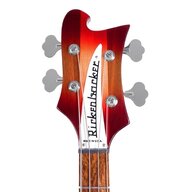
My friend received a PRS guitar with that warning. He followed the instructions exactly even though it was not cold, winter weather yet. I admit that I wouldn't have waited overnight like he did. He switched that guitar out for the next model up their production line. It was only 2 weeks later; still not cold outside, and he didn't wait at all to open it up.

I start eating heavily in the Winter to increase my body fat.I wait an hour after eating before entering the pool / ocean / bathtub. Scared I'll cramp-up and sink like the Titanic.
Riis
No problem with me sinking.

Humidity, more than temp, is the issueI follow this when there are some big temperature extremes. Here in WI if it's 20 below zero I'll def wait after bringing it inside. But if it's 60 outside and 70 in the house? Then I open it.

If you're in central Europe you may enjoy the Czech-ing from opening immediately.

There are a lot of factors involved in those deaths, temperature is not one of the bigger concerns. There are certain snub nosed breeds that the airlines simply won't transport due to the fact that they suffocate under reduced air pressure conditions. This can happen to sturdier breeds as well. Animals are also lost due to improper packing of the storage bin. CO2 is prohibited to ship in the same bin as a live animal but if the error isn't caught by the lower wing employee responsible for checking the manifest, any animal in there with the CO2 could potentially die. Certain puppy mills will air ship before running a competent health check on the animal before shipping them etc.etc. Most smaller planes use recirculated cabin air in the cargo hold & it will be the same temperature as the cabin so temperature isn't that much of a deal but so much else can happen to an animal in flight.Glad that most airlines do a temperature control on cargo carrier areas keeping it at 40F or above. Assuming they dont miss the switches.
View attachment 4903568
As someone who moonlighted in that industry to get free airfare to Japan for a few years, I gotta say, if you have a pet - try any other way to get it to it's destination first that is safer than flying. It was heart breaking to pull a dead animal out of a cargo hold, or see one that had severely damaged itself trying to escape it's container out of pure panic or a struggle to breathe.
Last edited:
Do you wait 24 hours before you open your case at an out of state gig? Sorry, we drove four hours to get here. I can't open my case to play until tomorrow.

JeezyMcNuggles
Inactive
- Feb 23, 2018
- 14,723
- 20,970
- Disclosures
- I suck, but nobody really notices
Sudden and drastic changes in temperature. As in...from Alaska, to Egypt in an hour.My new Bass just completed the journey from Indiana to Arizona over the last several days, so I'll bide my time until tomorrow until I open my early Christmas present to myself.
I'm just curious if anyone has seen ill effects from ignoring the instructions.View attachment 4903405
Las Vegas, to the Amazon.
India to Russia.
A 4 day trip across a few states is anything but sudden.
Last edited:

Just committed this sin yesterday. I also turn truss rods more than a quarter turn regularly. I'm loco bit*hes...

If I bought an instrument that endured a trip to me in extraordinarily hot or cold temperatures, I would wait until its temperature stabilized a bit before opening the shipping carton. 24 hours seems way too excessive for that to happen.


And just to be safe, you should NEVER actually play your bass. Doing so may expose it to dings, scratches, smudges, dust, beer, and/or cigarette smoke. In fact, you should probably put your base in a vault, set the lock, curl up in the fetal position on the floor, and never leave your room.
And whatever you do, do not remove that mattress tag.

Heed. After all... look what happened to drummer Mick Shrimpton when he didn't acclimate before a gig on a cold winter night:

Seriously... temp and humidity changes are going to affect every part of any instrument. Finishes, necks, electronics, etc. It's the materials used, the quality of workmanship, the magnitude of temp/humidity changes, and the speed at which these changes are applied that determines how much effective damage is done. And all of the damages inflicted over time, large or small, are cumulative.
Kind of like taffy... bend it slow, it stretches. Bend it fast, it breaks. Warm it up, it's more likely to bend. Cool it down, more likely to break. Bend it a bunch of times, it's more likely to come apart. Stick it in a foam cup, outside temperature changes are going to affect it more slowly.
In most cases, basses being shipped aren't experiencing those changes rapidly enough to do any immediately noticeable damage if you open them up right away when they arrive. Except when the instrument is fragile and/or its been sitting out on a very cold/hot and/or dry/moist day and you bring it into a space that's exactly the opposite and open it right up. Then you are applying significant, rapid changes, and you are probably doing some damage to any instrument in doing so. Whether that damage is immediately noticeable depends on the situation. Even if it isn't immediately noticeable, it adds up over time, and may eventually become noticeable.
The sticker is placed to cover the vendor's butt. Even so, in the interest of not needlessly abusing my instruments, I heed.
Seriously... temp and humidity changes are going to affect every part of any instrument. Finishes, necks, electronics, etc. It's the materials used, the quality of workmanship, the magnitude of temp/humidity changes, and the speed at which these changes are applied that determines how much effective damage is done. And all of the damages inflicted over time, large or small, are cumulative.
Kind of like taffy... bend it slow, it stretches. Bend it fast, it breaks. Warm it up, it's more likely to bend. Cool it down, more likely to break. Bend it a bunch of times, it's more likely to come apart. Stick it in a foam cup, outside temperature changes are going to affect it more slowly.
In most cases, basses being shipped aren't experiencing those changes rapidly enough to do any immediately noticeable damage if you open them up right away when they arrive. Except when the instrument is fragile and/or its been sitting out on a very cold/hot and/or dry/moist day and you bring it into a space that's exactly the opposite and open it right up. Then you are applying significant, rapid changes, and you are probably doing some damage to any instrument in doing so. Whether that damage is immediately noticeable depends on the situation. Even if it isn't immediately noticeable, it adds up over time, and may eventually become noticeable.
The sticker is placed to cover the vendor's butt. Even so, in the interest of not needlessly abusing my instruments, I heed.

I saw exactly the same thing happen, but was a Gibson SG.In '69 or '70 my guitar buddy brought in his Gibson ES335 from the trunk of his dads car. It was -20F out. He almost started crying as we watched the finish crack.
Latest posts
-

-

-
 How can Fender release a "Vintage" series with an unplayable bridge?
- Latest: Fernando Costa
-
