
Half of what they're on retail for at guitar center 
the real price is under the used category Lol
the real price is under the used category Lol

TalkBass has been independent since 1998. Add your voice.
Create a free account to reply to discussions, view embedded media, and browse with fewer display ads.
Join free Log in
Want zero display ads or expanded classifieds tools? Compare plans.

People go crazy and pay double the price for a Lexus or BMW, mainly to get the "status" they think comes with it.
Meanwhile, smart people drive a car that is functional and costs WAY less. I thought my '05 Sonata was a little old, but my bosse's boss drives a car at least 5 years older than mine, and in worse shape. Smart guy.
The utility of my car is the same as any BMW/Lexus. Same goes for basses, you can get a perfectly good bass for $400-500 now. My Jackson Concert bass has everything I need for around $400, and I can play ANY gig I need to with it.
+1Playing the devil's advocate here...
I can envision a point where a mass produced instrument could exceed a custom in terms of tolerances, consistency, build quality, and so forth. Squier and Sire are already demonstrating that the gap is closing.




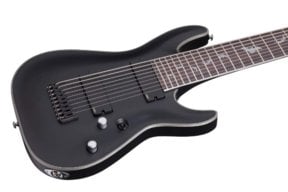
Half of what they're on retail for at guitar center
the real price is under the used category Lol

Funny thing is, all the basses on the wall at GC are heavily used, but being sold for the "new" price. Some are even damaged.
And the "used" basses are in better shape than the ones on the wall!
I remember walking into GC for the first time ever, it was such a foreign concept to me. I thought, "this bass is worth HOW MUCH? And I can just grab it and play it?
 At least they do returns
Some reasons and some numbers have been given in this thread but there's been nearly no attention paid to the difference between, for example, one neck blank and another. i.e. What species of wood have you chosen? Is the wood in that neck blank flat sawn, quarter sawn, even grained or variable grained, knot and void free or did it come out of the Home Depot bargain bin? Has it been cured for a year or two under something like controlled conditions before being delivered to the luthier or machine operator or is it as green as a 13-year-old at a school dance? What glue was used in the assembly of that 3- or 4- or 5-piece neck blank? All of these and more will affect the cost of materials in an instrument and all have a discernible influence on the playability and sound of the instrument. The greater your experience the more you will discern and vice versa. And note that I haven't even mentioned such nuance as neck profile and what it takes to make it comfortable for most players. That's not material, it's workmanship and workmanship costs more to get from luthiers with skills than from rookies or one-size-fits-all machines.I'm not talking about how much people believe they're worth, I mean if you take into account the wood, cutting the wood, the routing, paint job, electronics, and everything else that goes into making the bass, how much is it truly worth?
I just don't understand why some basses are listed as $1000 more than other basses that seem very similar


Sorry to be off topic, but I LOL when you mentioned the yen increased in value. I wish that were true. The dollar has been stronger for the last 3-4 years.Sure a few planks of wood can be worth 50 bucks and hardware 100, and turned into a $1000 guitar, but you need to consider that the costs of the guitar cover expenses of the manufacturer. Iphones arent worth 600 bucks but you pay for r&d and staff.
There is also many other factors, like the markets at play. Japanese guitars have skyrocketed in price because the yen has increased in value.
Then keep in mind some instruments are hard to find.
Then there is you... how bad do u want it?