
It's a bass! It goes Boom boom boom. Anything else is just fluff. Plenty of players are making great music with a $200 Ibanez or Squier. I love my Custom Shoppe Warwick and Mayones but it's not a necessity.

Enjoy the benefits of a premium membership!
Upgrade Account
-
TalkBass has been independent since 1998. Add your voice.
Create a free account to reply to discussions, view embedded media, and browse with fewer display ads.
Join free Log in
Want zero display ads or expanded classifieds tools? Compare plans.
You are using an out of date browser. It may not display this or other websites correctly.
You should upgrade or use an alternative browser.
You should upgrade or use an alternative browser.
How much would you put up with for the perfect sound?
- Thread starter AdmiralBumblebe
- Start date
More options
Who Replied?

It's a bass! It goes Boom boom boom. Anything else is just fluff. Plenty of players are making great music with a $200 Ibanez or Squier. I love my Custom Shoppe Warwick and Mayones but it's not a necessity.
Agreed, I don't think there is any mystery to what makes a great bass, get a decent amp, no matter which bass you get, get a setup, a decent set of strings and tbh that's it ...

Great Amp > Great Instrument anyway.
Biggest bigger fail in all stringed instruments. You get focussed on the instrument - not the amp.
Biggest bigger fail in all stringed instruments. You get focussed on the instrument - not the amp.
If I had the laundry list of faults in an instrument that cost that much, it's either return/refund time, or take a beating on reselling it in the market. Those sorts of problems don't exist on any of the three Squiers I own, and when I owned Alembics, that sort of thing certainly didn't happen, as the Wickershams would have NEVER let it go out to a customer, period. Unbelievable on a bass with that big of an admission price.
I'm sorry you're in this spot, but tone is relative, and even for the best ears, not dwelling in only one instrument on the entirety of Planet Earth.
I have to like the way it looks, the way it sounds, and it must take and hold a setup for a reasonable amount of time, get in tune and STAY in tune, and it must be quiet electronically. Those criteria still leave me with lots of choices in every price range. Those are the must-haves for me: Otherwise, it's a no-buy or they go over the side.
I'd move it, as I don't think you'd ever truly trust this axe to straighten up and fly right. That ship has sailed.
Very sorry for your troubles.
I'm sorry you're in this spot, but tone is relative, and even for the best ears, not dwelling in only one instrument on the entirety of Planet Earth.
I have to like the way it looks, the way it sounds, and it must take and hold a setup for a reasonable amount of time, get in tune and STAY in tune, and it must be quiet electronically. Those criteria still leave me with lots of choices in every price range. Those are the must-haves for me: Otherwise, it's a no-buy or they go over the side.
I'd move it, as I don't think you'd ever truly trust this axe to straighten up and fly right. That ship has sailed.
Very sorry for your troubles.

- Oct 7, 2000
- 18,619
- 38,943
- Disclosures
- Endorsing artist: Musicman basses
I don't care much at all any more as I realize that regardless of the sound I get in my home, studio, stage... my sound will ultimately be whatever the person running the front of house decides it will be.
Gig life has become much easier just going for whatever works and sounds decent.
Gig life has become much easier just going for whatever works and sounds decent.
At $9,000, with those kind of problems, The builder should be called out.

I agree totally. But the guy does really like it other than the flaws, so I'm not about to tell him not to like it.Great Amp > Great Instrument anyway.
Biggest bigger fail in all stringed instruments. You get focussed on the instrument - not the amp.

Zero!
& that's my final answer
Maybe I'm just very lucky that I already have my perfect sound.
& that's my final answer
Maybe I'm just very lucky that I already have my perfect sound.

I would not "put up" with the problems identified, but everyone addresses these kinds of things individually. Like Martin Keith, I'm a builder. Unlike Martin Keith, I'm a hack amateur.  That said, in the several dozen instruments I've made, I've become obsessive over the tiniest details. I would never let another person see an instrument of mine that had any of the concerns identified like the OP did, and I can't really understand at this point why the builder would have 1) not noticed them and removed them, and 2) let this out the door without addressing them.
The price-point is a whole other kettle of fish, as that puts this instrument in the upper echelons of customer expectation, and it's basically unheard of at those levels to see or feel anything problematic in fit or finish. Design "issues" can often be connected to personal preference or idiosyncratic ergonomic concerns connected to an individual person, but cosmetics/aesthetics/looks should be perfect (or at least without easily spotted flaws).
For 9000 bucks, we've moved out of the "Lamborghini and Ferrari" zone and into Bugatti, Pagani, Koenigsegg (to make an automotive comparison). Yes, a '57 Chevy (Fender) can be hot rodded to perform some aspects of the experience similarly, but when you see a Pagani, you expect it to be utter perfection, and they expect you to expect it to be that way too, and take the time and effort to ensure that's the customer's experience.
To the OP, sorry you had this experience, I don't think it should have happened to you at that price point.
That said, in the several dozen instruments I've made, I've become obsessive over the tiniest details. I would never let another person see an instrument of mine that had any of the concerns identified like the OP did, and I can't really understand at this point why the builder would have 1) not noticed them and removed them, and 2) let this out the door without addressing them. The price-point is a whole other kettle of fish, as that puts this instrument in the upper echelons of customer expectation, and it's basically unheard of at those levels to see or feel anything problematic in fit or finish. Design "issues" can often be connected to personal preference or idiosyncratic ergonomic concerns connected to an individual person, but cosmetics/aesthetics/looks should be perfect (or at least without easily spotted flaws).
For 9000 bucks, we've moved out of the "Lamborghini and Ferrari" zone and into Bugatti, Pagani, Koenigsegg (to make an automotive comparison). Yes, a '57 Chevy (Fender) can be hot rodded to perform some aspects of the experience similarly, but when you see a Pagani, you expect it to be utter perfection, and they expect you to expect it to be that way too, and take the time and effort to ensure that's the customer's experience.
To the OP, sorry you had this experience, I don't think it should have happened to you at that price point.

I don't care much at all any more as I realize that regardless of the sound I get in my home, studio, stage... my sound will ultimately be whatever the person running the front of house decides it will be.
Gig life has become much easier just going for whatever works and sounds decent.
I expected there to be a divide between primarily gigging and primarily studio musicians, but it's pretty interesting how set the opinions seem to be.
When I was primarily a gigging musician, I didn't care about anything except reliability. I played the same Squier P-Bass for about 15 years. A few mods (better pups, new electronics, new truss rod) and I was totally happy with the situation. I owned nicer instruments, but always played that squier because I knew it would get me there.
When I was working as a session musician, my goals were different. Getting the best sound for a recording, or more specifically the producer, was #1. Walk in with a good p-bass and have a few other basses in the car just in case. As time went on and general music tastes changed, the instruments that were "right" changed. I eventually spent 90%+ of my time using modern specced bases with more tonal flexibility.
Now that I work remotely from my own studio, sometimes using instruments of my own build, my desires have shifted again. I want to sit down, plug straight into a DI, and get the sound in my head. I don't want to fiddle with processors (ironically, I'm known pretty well for this in the audio world). I don't want to change electronics every few months. I don't want a sound that's almost there if you just(...) I can't play an instrument that needs strong input to sound good. Hopefully you get the idea.
So right now in my journey, I'm willing to put up with a lot to be able to sit down, plug in to a DI, and hear what I heard in my dreams last night.
It's great to see the responses so far. I've learned a lot about people's views on the topic relative to their personal goals, and I look forward to hearing more.
The price-point is a whole other kettle of fish, as that puts this instrument in the upper echelons of customer expectation, and it's basically unheard of at those levels to see or feel anything problematic in fit or finish. Design "issues" can often be connected to personal preference or idiosyncratic ergonomic concerns connected to an individual person, but cosmetics/aesthetics/looks should be perfect (or at least without easily spotted flaws).
Heh. When I was younger, I grew up spending my summers in an exotic automotive shop. The higher end the vehicle, the more likely that there was some ultra-shoddy work done below a well-buffed shine.
I would expect that times are different now, but my 2 recent experiences in an upper echelon vehicle don't seem to mesh with that expectation.
I almost feel like I'm personally in that situation now. I bought in for a luxury, and I received something with "world-class" specifications and the experience of a Vector W8


Wow. No offense, but I'd return a $300 dollar bass with those myriad problems before the UPS office closed on the day I received it, because it would be a piece of garbage. I can fix all that stuff, and I'd be willing to on something cool and used, but a new high-end boutique instrument (or any new instrument, really)? Not no, but HELL NO.I originally neglected this purposefully because I did not want to accidentally or implicitly reveal the manufacturer on TB. I had discussed these issues in a manner which might imply the manufacturer on a smaller forum. I've scrubbed that information best I could, so I'll post details of the issues here without naming the instrument, brand or any identifying traits.
I am comfortable with wood and finish work and have a good deal of electronic experience, so I was able to satisfactorily remedy the issues marked with a *.
A potential 9th issue is that the pickup heights were not at factory specs when it arrived.* Neck was ridiculously high (just barely out of range of being slapped to death) while bridge was at normal moderate factory level. Easily fixable.
- Bolt-on neck was set crooked - At the end of the fretboard, the neck was shifted about 0.050". This required a modification to the neck pocket, but the end result is dead-on now. *
- Very poor wire stripping - all wires in the electronics cavity had frayed ends and were not fully attached at solder points.*
- Wiring was not correct - Requested a company standard wiring. A switch was wired backwards and two switches were in the incorrect holes.*
- Mark in finish - Deep hairline gouge in the finish. Unfixable, but repaired to be noticeable only up close or by feel.
- Hair in finish - Unfixable.
- Jack shorted on shielding - Jack was shorting on grounded shielding, causing preamp batteries to run out in a week.*
- Unevenly set fret - 1st fret was not fully set, but neck edges were filled. Took me 3 full days to carefully excavate the material, reset the fret and then a few more days to clean up the finish.*
- Mark in on bridge - Mark on the bridge where a screwdriver clearly slipped during install.
I did NOT contact the builder regarding the issues, and it would be unfair of me to call them out without having given them a chance to remedy the issue. I was/am confident in my ability to fix the important issues, and I do not see a resolution for finish issues that wouldn't potentially harm the tonality of the instrument.
Unfortunately, for me, the instrument sounds exactly like what I wanted and with the feel I specified. I have another instrument that's very close (MTD HD34-24, not the brand in question), but I'm in the situation where I am/was willing to pay the price to get exactly what's in my head. I got exactly that, but on what I hope was simply an extremely bad day for the builder, or perhaps training a new associate.
I make the assumption that if I were to contact the builder (who probably will see this anyway and know), they would take care of me without an issue.
I want to be clear my intention with starting the thread wasn't to air this out in any manner, but it seems reasonable to respond to your inquiry. I truly am curious what people consider 'no-go' issues for their playing situations and preferences.
Satisfaction for some people doesn't come easy too, and to totally play devil's advocate, sometimes people find things that aren't really widely recognized as "being there". I don't know you @AdmiralBumblebe so that's not a slag at all. You could certainly be very realistic and widely tolerant and accepting, and these things you noticed were glaring and totally unacceptable.
I'll share an anecdote though. I built a five string bass for myself that had 17mm string spacing at the bridge. I actually prefer it a little tighter at 16.5mm, and as time went on, I found I didn't play it as much as I had expected. My friend really wanted it, so I traded it to him for some tools some time later. Another friend of his really wanted it, my friend referred the guy to me for a custom build, which I don't really do. (I have a regular busy career and builds are just a fun hobby for me.) After a brief back and forth with my friend, I gave him my blessing to sell the bass to this guy since he wanted it so bad. After a few months, I started getting notes from my friends and people I knew that he was publicly criticizing my bass and me as a builder on social media. I don't care about such things but I did read some of his comments and criticisms. They centred around the ergonomics of the instrument and in particular the string spacing which he stated was "unacceptably narrow" and the zero fret (I use them on all my guitars).
He blamed these things on my skills and stated that I didn't know what I was doing in builds and that these were all unacceptable flaws. Lots of people agreed! Personally, I found this direct evidence of his own lack of understanding as to how instruments are built, what specs mean and what certain approaches do to drive the final product. Not that I can't take criticism, but these were all personal preferences, not hard evidence of problems with the design or builder. All of those specs could be easily changed in a scratch build, and he chose to overlook them and buy it anyway (or worse, didn't notice them at first). He also put on a wider 18mm bridge, which of course put the strings too close to the edges of the fretboard, and blamed that on me too (apparently the fretboard should have been made wide enough to accommodate different bridges ).
).
I guess my point in this is that without letting the builder know about and address the items, you might not know if there was some measure of method to the madness somewhere. Hair embedded in the finish notwithstanding.
I don't know you @AdmiralBumblebe so that's not a slag at all. You could certainly be very realistic and widely tolerant and accepting, and these things you noticed were glaring and totally unacceptable. I'll share an anecdote though. I built a five string bass for myself that had 17mm string spacing at the bridge. I actually prefer it a little tighter at 16.5mm, and as time went on, I found I didn't play it as much as I had expected. My friend really wanted it, so I traded it to him for some tools some time later. Another friend of his really wanted it, my friend referred the guy to me for a custom build, which I don't really do. (I have a regular busy career and builds are just a fun hobby for me.) After a brief back and forth with my friend, I gave him my blessing to sell the bass to this guy since he wanted it so bad. After a few months, I started getting notes from my friends and people I knew that he was publicly criticizing my bass and me as a builder on social media. I don't care about such things but I did read some of his comments and criticisms. They centred around the ergonomics of the instrument and in particular the string spacing which he stated was "unacceptably narrow" and the zero fret (I use them on all my guitars).
He blamed these things on my skills and stated that I didn't know what I was doing in builds and that these were all unacceptable flaws. Lots of people agreed! Personally, I found this direct evidence of his own lack of understanding as to how instruments are built, what specs mean and what certain approaches do to drive the final product. Not that I can't take criticism, but these were all personal preferences, not hard evidence of problems with the design or builder. All of those specs could be easily changed in a scratch build, and he chose to overlook them and buy it anyway (or worse, didn't notice them at first). He also put on a wider 18mm bridge, which of course put the strings too close to the edges of the fretboard, and blamed that on me too (apparently the fretboard should have been made wide enough to accommodate different bridges
). I guess my point in this is that without letting the builder know about and address the items, you might not know if there was some measure of method to the madness somewhere. Hair embedded in the finish notwithstanding.

I recommend a smudging or exorcism.I originally neglected this purposefully because I did not want to accidentally or implicitly reveal the manufacturer on TB. I had discussed these issues in a manner which might imply the manufacturer on a smaller forum. I've scrubbed that information best I could, so I'll post details of the issues here without naming the instrument, brand or any identifying traits.
I am comfortable with wood and finish work and have a good deal of electronic experience, so I was able to satisfactorily remedy the issues marked with a *.
A potential 9th issue is that the pickup heights were not at factory specs when it arrived.* Neck was ridiculously high (just barely out of range of being slapped to death) while bridge was at normal moderate factory level. Easily fixable.
- Bolt-on neck was set crooked - At the end of the fretboard, the neck was shifted about 0.050". This required a modification to the neck pocket, but the end result is dead-on now. *
- Very poor wire stripping - all wires in the electronics cavity had frayed ends and were not fully attached at solder points.*
- Wiring was not correct - Requested a company standard wiring. A switch was wired backwards and two switches were in the incorrect holes.*
- Mark in finish - Deep hairline gouge in the finish. Unfixable, but repaired to be noticeable only up close or by feel.
- Hair in finish - Unfixable.
- Jack shorted on shielding - Jack was shorting on grounded shielding, causing preamp batteries to run out in a week.*
- Unevenly set fret - 1st fret was not fully set, but neck edges were filled. Took me 3 full days to carefully excavate the material, reset the fret and then a few more days to clean up the finish.*
- Mark in on bridge - Mark on the bridge where a screwdriver clearly slipped during install.
I did NOT contact the builder regarding the issues, and it would be unfair of me to call them out without having given them a chance to remedy the issue. I was/am confident in my ability to fix the important issues, and I do not see a resolution for finish issues that wouldn't potentially harm the tonality of the instrument.
Unfortunately, for me, the instrument sounds exactly like what I wanted and with the feel I specified. I have another instrument that's very close (MTD HD34-24, not the brand in question), but I'm in the situation where I am/was willing to pay the price to get exactly what's in my head. I got exactly that, but on what I hope was simply an extremely bad day for the builder, or perhaps training a new associate.
I make the assumption that if I were to contact the builder (who probably will see this anyway and know), they would take care of me without an issue.
I want to be clear my intention with starting the thread wasn't to air this out in any manner, but it seems reasonable to respond to your inquiry. I truly am curious what people consider 'no-go' issues for their playing situations and preferences.
None of my basses are above $800 and I'd not tolerate any of those things on arrival. That being said, if you love that bass, it is the right fit.

I own the best sounding bass I have ever heard. It was $1300, used. I have ZERO gas.

- Aug 25, 2004
- 940
- 1,342
- Disclosures
- Builder: Martin Keith Guitars
Somewhat topically, there's a point where I lose trust in a builder to provide an adequate solution. If these relatively simple tasks were unable to be carried out, even if it was on the worst day of their career, I've lost significant confidence in their ability to rectify the situation without further time and money invested.
I think maybe you can understand that around the 5th issue I spotted, combined with being very pleased with the sound (after I fixed the electronics), I was willing to accept the state of things rather than potentially pile frustration on frustration.
The value of the bass is relative to very rare aged wood used, labour intensive design features and some level of the typical 'things cost more in smaller quantities'. That value surely has taken a hit due to the finish blemishes.
On your urging I'll let the builder know, but I'm well past the point where I would rather suck it up and move on with my life.
It's greatly reduced my threshold for what I would be willing to deal with in the future except in the case of a vintage instrument of my own shop buffoonery
Again, a commendable outlook, and a realistic one. If the builder let the problems out the first time, then it's fair to question if they would be able to fix them satisfactorily.
I agree that letting him know is still necessary - his future customers will thank you, and he will hopefully learn something.
Honestly, at the price point in question, he should be pretty embarrassed. Whether or not he offers compensation for the defects is between you, but from my perspective,
your point about becoming his temporary employee is well-taken, and I don't think it's an unfair outlook...so you can probably guess where I would land on that question.
I hope you can get some joy from the instrument now that it's functioning reliably. I suppose that may depend on what kind of reply you get from the maker.
Cheers!
Martin
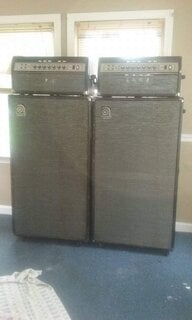
I would not put up with fret sprout, uneven frets, truss rods which cannot totally flatten a neck (even though i like a little bit of relief) a bridge which cannot lower the strings down below the action i like, neck must be exactly straight in neck pocket, bridge set on bass so strings lie exactly in the middle of the neck, the electronics need to work well, the bass has to be put together well and the bass has to play and sound good to me. OTOH, small cosmetic flaws don't bother me but yes it must be constructed well and be put together well. I am also handy with basses and usually mod every bass I own in some way or other and can fix problems but if I had paid the kind of money you paid it had better have arrived perfect or it would have gone back. But honestly with all those problems you have experienced I don't think I would have even trusted the builder to fix them, some of those things are simply inexcusable even on a 1000 dollar bass.
Last edited:
And you really really really must learn to set up your own instrument.
1. It is not that hard
2. Basically requires a screw diver and maybe a hex wrench or two
3. This is key...no tech will do it perfectly for money the way you can. It takes time tot week, try retweet, try etc. Techs won't spend their time, and you won't spend that much money to get this done for you personally.
1. It is not that hard
2. Basically requires a screw diver and maybe a hex wrench or two
3. This is key...no tech will do it perfectly for money the way you can. It takes time tot week, try retweet, try etc. Techs won't spend their time, and you won't spend that much money to get this done for you personally.
Latest posts
-

-
 How can Fender release a "Vintage" series with an unplayable bridge?
- Latest: PBandJazzBass
-
-
