• TalkBass has been independent since 1998. Add your voice.
    Create a free account to reply to discussions, view embedded media, and browse with fewer display ads.
    Join freeLog in
    Want zero display ads or expanded classifieds tools? Compare plans.

How should I know if I should only use short scale basses?

ow a bass feels often has to to with neck profile.

I'm a researcher when it comes to buying something that costs a few bucks. Basses and bass equip certainly qualify. My first "real" bass was a 34" passive P/J Warmoth build. I was good with that because I had been borrowing a Fender American Jazz from a buddy (a generous one!) and the neck profile was the same. Anyway, I digress...

1. I got the Warmoth and played it for an embarrassingly long time before I know what a "setup" was. Strings got lower and it played 1000% better.

2. At some point i was intrigued by the idea of a 5 string bass, so I tried a bunch at music stores. Some were better than others for me so I looked up specs and started figuring out why. Scale length is one component, but so is neck thickness (or thinness) and neck radius.

What I figured out, and this is just me: I like a thinner neck with a pretty flat radius. My hands are not gigantic, and I play a 35" 5-string. It has a 16" radius, so it's pretty flat. It's not a fender, but using their terminology it's in the ballpark of a "Slim C" profile.

So, I would play a bunch of different bass guitars, and check out the specs on the ones you like. Whatever you decide on, get a good setup and some new strings and you will be in business!
 
It boils down to this: Play what's most comfortable.

If you're comfortable, you'll play better, which means making better music (the whole point, right?).

For me, the winner is a Hofner Contemporary--the ergonomics are a great fit for me, and I love the tone. I also have a standard long-scale bass, and the scale length is actually not the primary sticking point for me--it's also the neck taper (how wide it gets closer to the body) and the string spacing (19 mm) that slow me down and feel somewhat uncomfortable; I lose the wonderful economy of motion I have on the Hofner, so the music I make isn't quite as good. Discomfort (or even unfamiliarity) also puts more focus on the instrument, which takes away focus from the music.

Also, there's a side benefit to preferring a non-standard instrument: it reduces GAS*, because most basses don't meet my ideal preferences (short scale and narrower string spacing).


*Disclaimer: Researchers have not yet found a total cure for GAS. Preferring a non-standard instrument may only diminish symptoms. In some cases, preference for non-standard instruments may increase GAS for custom-made or hard-to-find vintage instruments. Side-effects may include frequent examination of one's finances, excessive web-surfing, and general distraction.
 
Last edited:
  • Like
Reactions: Rocker949
As I played more and more and had more shoulder pain I convinced myself I needed to switch over to short scales exclusively. Than I started playing double bass with a 42" scale length. My 34" basses don't bother me anymore.

I have long arms for my body. I like how comfortable smaller basses are, but I can play a 34" just fine. I stopped the shoulder pain with a better and wider strap.
 
I have both 30" and 34" scale basses - I learned on a short scale and when switching to the 34" I found I had to change my fingering somewhat and move my left hand more - but the 34" is no harder than the 30", it just takes some getting used to - I love playing both
 
Switching scale lengths is easy, in my experience, because it uses a skill we already have. Whenever we move shapes, patterns, or scales up the fretboard, we need to mentally adjust as the frets get closer together. For example: Play a Gb Major scale at the 2nd fret. Now, shift the pattern up 2 frets, to play AB Major at the 4th fret. Congratulations, you just made a very similar mental adjustment to what's required to switch between 34" and 30" scale length.

Personally I switch back and forth all the time, no problem, between 34", 32", 30" and 40" upright.
 
Hello there,

I own a Fender FSR Reissue Mustang Bass. I absolutely the comfortable feel in my hands, and I'm looking to get rid of my Thunderbird bass, which I find unwieldy and uncomfortable. However, I'm looking at Lightwave VL Sabre bass in the future, which is full scale. I have quite weird proportions, so I feel comfortable with a short scale. However, I don't have much experience with basses in general, and I have quite weird proportions (long arms, short body, etc :D), so I was wondering whether it's good to stick with short scales, or is it okay to have a mix, with it possibly being that the long scales may be uncomfy?
Small people play long scales and large people play short scales. There aren't any rules or heuristics to figure it out other than trying basses and deciding on what you like. It's really about what's most comfortable for you, which depends on a large number of factors.

I'm 6'4" and I have long fingers and I like short scales, though that's pretty recent. My dimensions are long body and shorter arms/legs compared to most other tall people, but I have long hands and fingers.

I picked up a Mustang PJ and it became my #1 for the time being. All my other basses are long scale but this Mustang makes me want to buy another shorty with a different pickup set because I dig the way it feels.

For what it's worth if you're used to short scales I'd stick with short scales for any new purchases you may need soon. This is mostly due to a pattern I've noticed where players tend to prefer bass dimensions they were used to previously (which is also common sense).

However that doesn't mean you can't try out some long scales and see what you think.
 
Switching scale lengths is easy, in my experience, because it uses a skill we already have. Whenever we move shapes, patterns, or scales up the fretboard, we need to mentally adjust as the frets get closer together. For example: Play a Gb Major scale at the 2nd fret. Now, shift the pattern up 2 frets, to play AB Major at the 4th fret. Congratulations, you just made a very similar mental adjustment to what's required to switch between 34" and 30" scale length.

Personally I switch back and forth all the time, no problem, between 34", 32", 30" and 40" upright.

I overshot some frets on a short scale for awhile but after practicing for a couple days you get used to it. Your mind does what you say, you just see or feel the length of the neck in relation to the body and kinda predict where the frets should be.

It's a minor adjustment in my opinion. If someone has trouble it might be because they are approaching it with a bad attitude (i.e. impatience) or genuinely have some ergonomic problem due to body dimensions, which is less common but not rare I'd say.
 
How should I know if I should only use short scale basses?

Try one out in your local music store, or buy one with a week return policy. Simple as that. Really. It's not made like a "cute" comment or snide remark but it is so.
 
You don't even need to buy a short scale bass to experiment if short scale is right for you. Simply put a capo at the 1st fret of your 34" bass to make a 32" bass, or at the 2nd fret to make a 30" bass. If you play this way for a while, and discover that you really like it, then you are a prime candidate for a shorter scale instrument.
 
You don't even need to buy a short scale bass to experiment if short scale is right for you. Simply put a capo at the 1st fret of your 34" bass to make a 32" bass, or at the 2nd fret to make a 30" bass. If you play this way for a while, and discover that you really like it, then you are a prime candidate for a shorter scale instrument.

Or if you play a short scale and want to know what a long scale feels like, you can capo the headstock. I used to do this for downtuning.
 
  • Like
Reactions: Mushroo
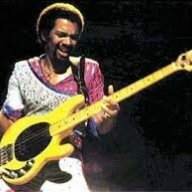
Q = How should I know if I should only use short scale basses?

A = If you have arms like this guy;

upload_2017-5-11_13-46-50.png