
I'm wanting to clean up my bass and make it look squeaky clean, brand new, getting rid of all the smudges and sweat and grease that has collected. My main concern is any type of cleaning agent damaging the electronics or creating rust. Are there products made specifically for this purpose? Any suggestions?

Enjoy the benefits of a premium membership!
Upgrade Account
-
TalkBass has been independent since 1998. Add your voice.
Create a free account to reply to discussions, view embedded media, and browse with fewer display ads.
Join free Log in
Want zero display ads or expanded classifieds tools? Compare plans.
You are using an out of date browser. It may not display this or other websites correctly.
You should upgrade or use an alternative browser.
You should upgrade or use an alternative browser.
How to clean a bass?
- Thread starter kintrap
- Start date
More options
Who Replied?
Buy the polish, fretboard cleaner and hardware (metal) cleaner they sell at any music shop.
I like Gibson, but Virtuoso, Martin, GHS, Ernie Ball, etc. make similar stuff. Pretty cheap.
Unless you know what you are doing, don't use Mr. Clean, Pledge, Windex, etc.
I like Gibson, but Virtuoso, Martin, GHS, Ernie Ball, etc. make similar stuff. Pretty cheap.
Unless you know what you are doing, don't use Mr. Clean, Pledge, Windex, etc.


I got one of those Fender Custom Shop Mojo Oil cans a long time ago and whatever cleaner came in there works great

Burwabit
Likes guitars that tune good and firm feelin women

2 important questions:
- Does your bass have a maple neck?
- What type finish is on the body?

I use household cleaner (usually lemon pump spray) ...... Only on poly bits and metals, its mild enough not to damage chrome or other plates... But strong enough to get rid of grime.
I did like the fender maguires set i had though but you dont get enough cleaner to polish i swear i used 3 bottles of cleaner before poilsh and swirl remover were noticably used
I do need a good oil that is not mineral based though for my RW boards, i was advised on here by Mr Sadowsky to NEVER use lemon oil guitar products.
I did like the fender maguires set i had though but you dont get enough cleaner to polish
i swear i used 3 bottles of cleaner before poilsh and swirl remover were noticably used I do need a good oil that is not mineral based though for my RW boards, i was advised on here by Mr Sadowsky to NEVER use lemon oil guitar products.

I'm wanting to clean up my bass and make it look squeaky clean, brand new, getting rid of all the smudges and sweat and grease that has collected. My main concern is any type of cleaning agent damaging the electronics or creating rust. Are there products made specifically for this purpose? Any suggestions?
For a standard D&C (dustin' and cleanin') I just use Ernie Ball guitar polish on the body and hardware and Fret Doctor on fingerboards and fretboards. Works reasonably well. Other brands probably as good.
If you want it to look squeaky clean and brand new, that is a bigger job! In this case the secret is to take the bass completely apart. Take all hardware as far apart as you can. If the chrome is rusted you need auto chrome polish. If not, I like Dow Scrubbing bubbles bathroom cleaner. Scrub with a brush if needed and apply more than once if needed. Rinse all parts in tap water, then distilled water, then blow out any water with air poof can, and dry in warm air if possible. Reassemble all hardware the next day after drying (be VERY careful not to lose tiny screws etc.). Then clean and polish neck and body. You don't want to get water near wood or electronics as that is bad. I do not recommend household lemon cleaner as it has petroleum distillates in it (mineral oil). Pure lemon oil works pretty well as a cleaner if the finish can take it. The thing about commercial guitar cleaner is that it's usually quite safe for most finishes.
Lemon oil is a decent cleaner for fingerboards, but not so hot as a treatment because it's quite volatile and will dry out in a month or so. That's why I went with Fret Doctor which works as well and lasts much longer. Again using mineral oil on fingerboards will last longer but tend to clog wood. Using varnishes like linseed oil or tung oil are a no-no unless you really WANT a sealed fingerboard. Usually you don't.
The deal with taking a bass all apart (tuners off, bridge out, pickups loose etc.) is that dirt collects in a ring around the hardware and you simply can't properly remove it without taking it all apart. On really worn basses a little flat black poof can on the pickup covers can tweak it all right in!
Anyway, that's what I do. On a couple of cheap basses I use a silicone rod and reel polishing cloth to keep them looking great! HOWEVER! BE INFORMED THAT IF YOU CHOOSE TO USE A SILICONE RAG OR POLISH ON YOUR BASS, EVEN ONCE, YOU WILL NEVER BE ABLE TO REFINISH IT EVER! Trust me on this. No matter how much you sand the old finish off, the silicone will remain in the wood and the new finish will ball up on the bass like water on the hood of a waxed car and it will be impossible to refinish without a HUGE hassle. (dire solvents in a vain attempt to wash silicone out of the wood...)
For polishing/cleaning, if you have a gloss finish on your bass, Zymol cleaner/wax is fantastic. I use that on my 4003 -- the body, the neck, and the fretboard (since it's sealed). Zymol cleans and shines perfectly and a little goes a long way. I then use Dr. Duck's Ax Wax to lubricate the open gear tuners. Don't let the product name mislead you. It's NOT wax. It's probably some form of bore oil. Dr. Duck's is not only great for lubricating gears, but also for moisturizing/conditioning fretboards. I use it on all the "exposed" wood on my D-28 (ebony fretboard, ebony bridge) and on my Strat's rosewood fretboard.
+1 on never using lem oil. It will clean, but can dry out unsealed fretboards. If you were to use lem oil, I would assume you'd have to follow up with some type of moisturizer/conditioner like Dr. Duck's.
I also buy auto detailing cloths which are 100% cotton and cut them into little squares so I can work little sections of my guitars/basses at a time.
+1 on never using lem oil. It will clean, but can dry out unsealed fretboards. If you were to use lem oil, I would assume you'd have to follow up with some type of moisturizer/conditioner like Dr. Duck's.
I also buy auto detailing cloths which are 100% cotton and cut them into little squares so I can work little sections of my guitars/basses at a time.

I use bunch of stuff to clean different parts of different basses. Depends on what it's made out of. And how extreme the cleaning will be. Here's an example of my once a year cleaning for my conklin.
I start by hitting every part of the bass with compressed air to get rid of any dust (this is particularly helpful for the bridge, output jack, and tuners if the bass has exposed gear tuners.)
The conklin has a raw wenge/purpleheart neck. So i use warwick beeswax and a polishing cloth. (I do this about 3 times a year) if the bass is a raw finish i use beeswax on the entire bass. Warwick has a tutorial video on YouTube.
for the once a year fret cleaning i use a very lite steel wool and a special little tool which is basically just a piece of metal with a slot for the fret to stick through. So it protects the fingerboard from the steel wool. The one i have is wide enough that all the frets of a 5 string can stick through, on the 7 string i just clean one side of the fret at a time. You can also use tape to protect the fingerboard but its much more of a headache.
For the body since the conklins body is a gloss finish i use guitar polish. I've used a ton of different cleaners in the past. If the bass is absolutely filthy you might want to clean it with something else then finish it with guitar polish. The Polish is nice because it fills in those little tiny scratches in the clear coat so the bass looks like new.
I start by hitting every part of the bass with compressed air to get rid of any dust (this is particularly helpful for the bridge, output jack, and tuners if the bass has exposed gear tuners.)
The conklin has a raw wenge/purpleheart neck. So i use warwick beeswax and a polishing cloth. (I do this about 3 times a year) if the bass is a raw finish i use beeswax on the entire bass. Warwick has a tutorial video on YouTube.
for the once a year fret cleaning i use a very lite steel wool and a special little tool which is basically just a piece of metal with a slot for the fret to stick through. So it protects the fingerboard from the steel wool. The one i have is wide enough that all the frets of a 5 string can stick through, on the 7 string i just clean one side of the fret at a time. You can also use tape to protect the fingerboard but its much more of a headache.
For the body since the conklins body is a gloss finish i use guitar polish. I've used a ton of different cleaners in the past. If the bass is absolutely filthy you might want to clean it with something else then finish it with guitar polish. The Polish is nice because it fills in those little tiny scratches in the clear coat so the bass looks like new.


Gaolee
Official leathers tester and crash dummy
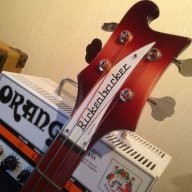
If it is a P-Bass, you rub it down with fried chicken. That gets it about right. If it is a Ric, you wipe it down with a microfiber cloth every time you play it. If it is a Gibson, you wipe it down every so often. If it is a boutique bass, then I suppose all those cleaning products would work, but I wouldn't know.

To actually clean overall I'll use a damp rag, or a small rag and some schpit for very localized grunge. After which I'll use a bit of polish/wax to rejuvenate the finish.
Any reputable guitar polish will do. Apply with a rag. Wax on. Rub a little. Wax off.
They're meant for finished surfaces, so they'll be safe to use on a finished maple neck and fretboard as well as the body.
Most will indicate whether or not they're safe on all the hardware.
I like Gibson guitar polish.
I use that $#!t on everything!
I wipe everything with a microfibre cloth after all playing sessions. Makes it easier to clean up the instruments when I get around to my periodic polishing/maintenance routines.
Any reputable guitar polish will do. Apply with a rag. Wax on. Rub a little. Wax off.
They're meant for finished surfaces, so they'll be safe to use on a finished maple neck and fretboard as well as the body.
Most will indicate whether or not they're safe on all the hardware.
I like Gibson guitar polish.
I use that $#!t on everything!
I wipe everything with a microfibre cloth after all playing sessions. Makes it easier to clean up the instruments when I get around to my periodic polishing/maintenance routines.
Last edited:
I use household cleaner (usually lemon pump spray) ...... Only on poly bits and metals, its mild enough not to damage chrome or other plates... But strong enough to get rid of grime.
I did like the fender maguires set i had though but you dont get enough cleaner to polish
I do need a good oil that is not mineral based though for my RW boards, i was advised on here by Mr Sadowsky to NEVER use lemon oil guitar products.
That's weird because both Fbass and Alembic recommend using pure lemon oil on the fretboard. Pure being the most important part, not a spray like Pledge, which contains silicone and will dry out the board. But I also know this seems to be a hot button topic on TB


I only use water. It works great if you do it about every 3 months. I use a very damp cloth. I worry too much about chemicals harming the wood.

Based off of some of the places that I've played, you might want to invest in an autoclave.

Big Hoss
Up note, down note, blue note, brown note...
- Sep 5, 2014
- 5,455
- 4,234
- Disclosures
- None
Based off of some of the places that I've played, you might want to invest in an autoclave.
ROTFLOL!


I get good results cleaning chromed parts and finished wood (not a rosewood board!) with Gerlitz Smudge Off.

I'm pretty sure it's the same as salmon where you spray it down with one of those hose type things and then remove the guts and scrape the scales....
The actual oil of the lemon is used for it's scent, not for it's "oil". What is sold as lemon oil for wood is actually mineral oil with added color, scent and drying agents. Initially, the wood looks great but after a few weeks it ends up looking dryer than before you started.
Oils like linseed oil are not inherently flammable but the rags used to apply them can cause spontaneous compustion. Put them in a ziplok bag and add some water and dispose of them quickly.
I do not find that linseed oil darkens the wood more than any other oil.
So again, my recommendations would be boiled linseed oil or mineral oil.
I found some additional information here:
[Invalid or Expired Link Removed]
Roger
From a thread a few years back.
I think we scared off the OP. He never posted back what his bass is finished with.


