
I have a number of Warmoth basses. The necks are very stable. I live in Michigan so the weather is psychotic here. I have to adjust my factory built basses way more than my Warmoths. FWIW they're all new enough to have reinforcing rods in them. Buy one and bolt it to your favorite Fender!

Enjoy the benefits of a premium membership!
Upgrade Account
-
TalkBass has been independent since 1998. Add your voice.
Create a free account to reply to discussions, view embedded media, and browse with fewer display ads.
Join free Log in
Want zero display ads or expanded classifieds tools? Compare plans.
You are using an out of date browser. It may not display this or other websites correctly.
You should upgrade or use an alternative browser.
You should upgrade or use an alternative browser.
How to get a neck that won't easily bow ?
- Thread starter skullbass
- Start date
More options
Who Replied?

Lots of great aluminum options out there. Most of the reason I went the full metal route was for the unmistakably good tone but not having to adjust it ever makes me feel hashtag blessed.
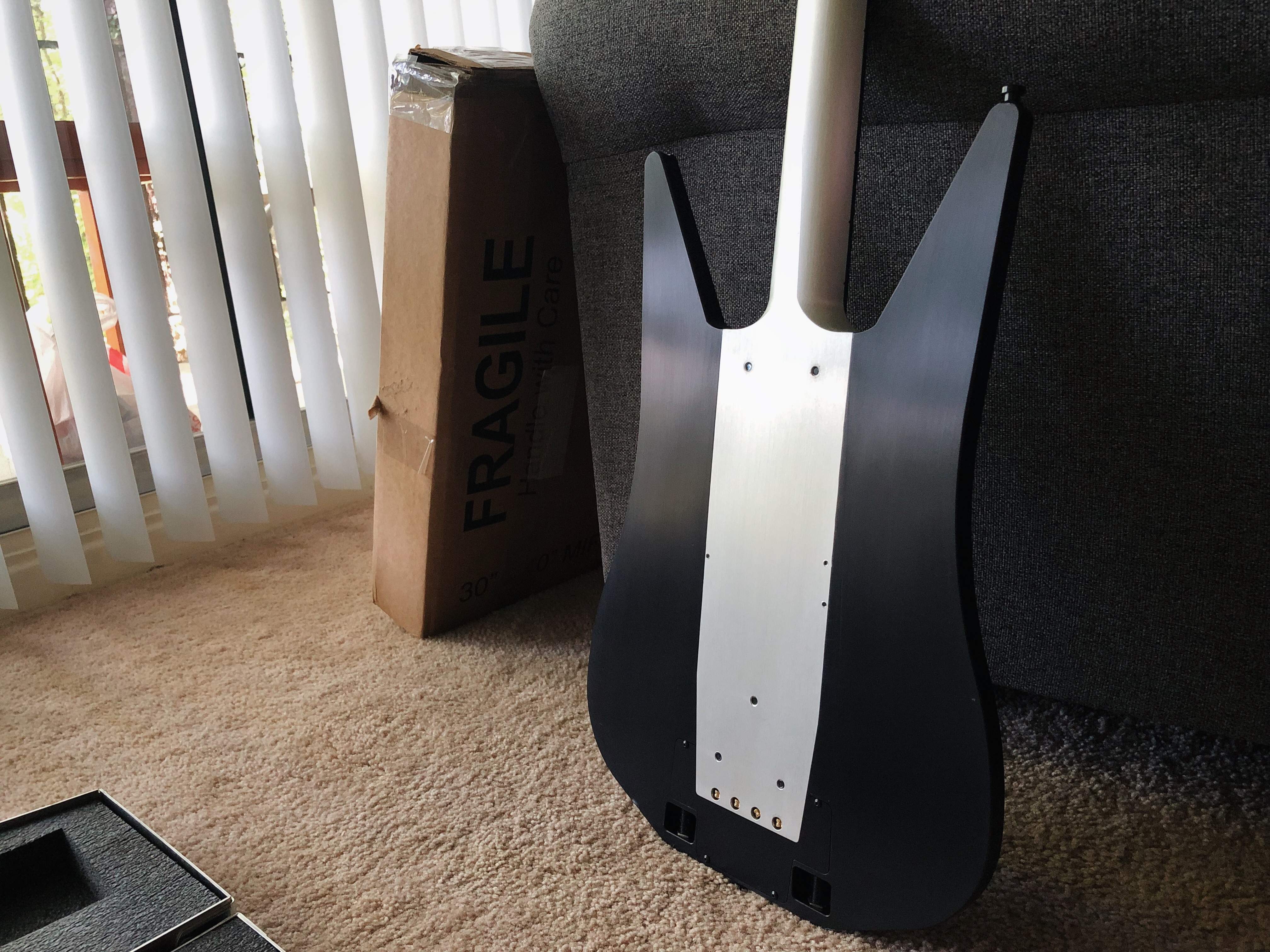
Some notable builders of Fender style bolt on necks include:
Electrical Guitar Company
Robot Graves Industries
Alef Guitars
Bastin Guitars
They’re not cheap but fully worth the coin IMO.
Some notable builders of Fender style bolt on necks include:
Electrical Guitar Company
Robot Graves Industries
Alef Guitars
Bastin Guitars
They’re not cheap but fully worth the coin IMO.

Is that a Moses replacement neck? I think they just went out of business. I was tempted to get one for a replacement, then found out they were not taking new orders.Shouldn't you be considering a graphite neck?
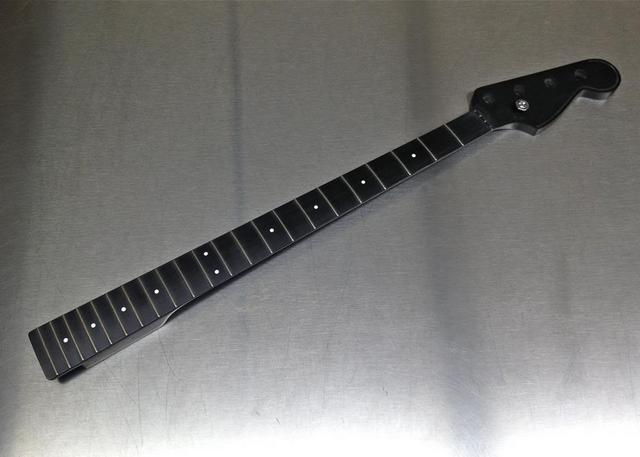

Yes, I heard the same thing.Is that a Moses replacement neck? I think they just went out of business. I was tempted to get one for a replacement, then found out they were not taking new orders.
Good goodness, those aluminum necks look amazing. How does the weight compare to a maple neck?Lots of great aluminum options out there. Most of the reason I went the full metal route was for the unmistakably good tone but not having to adjust it ever makes me feel hashtag blessed.
View attachment 3368158
Some notable builders of Fender style bolt on necks include:
Electrical Guitar Company
Robot Graves Industries
Alef Guitars
Bastin Guitars
They’re not cheap but fully worth the coin IMO.
Why not get a traditional Canadian bass that’s designed for the climate?
A quick internet search brought me to this calculation:Good goodness, those aluminum necks look amazing. How does the weight compare to a maple neck?
“Aluminum is 2.7 times the weight of maple. So tag about an extra 2 pounds onto your guitar if you're moving from a maple neck.”
Most bolt-ons are milled from a solid billet of aluminum, but are worth the weight in my opinion. Having no truss rod means that you could put the heaviest gauge strings imaginable on your instrument and would only have to file the nut & adjust the saddles accordingly.

I live in Montreal, Canada, so many drastic climate change. Very rough on the bass neck. Under those circumstances, which criterias will give me a nice piece of lutherie:
1. Multi-ply or one-piece neck ?
2. Buy one with canadian hard maple ? (In this case, avoid made in Indonesia bass ?)
3. Priorize necks with reinforced truss rod with carbon ?
I'm in Montreal as well. I have been bringing my MIM precision out to practice in the dead of winter and dog days of July. I play it every day, and have not had any trouble with the neck other than normal maintenance or change of preferences (like string gauge/build).
It didn't like Jamerson gauge Labellas though, but I've got a carbon reinforced project bass for those and..not a problem.

Mine wanted to know where I was living. While I didn't press him overly much, I did discover, over time, that this little detail can be critical.Even luthiers can be full of crap sometimes.
If I was living away from the coast, the drier, warmer/colder air would help determine the characteristics and preparation of the wood to be used. The point has been repeatedly made here, that humidity is a big determinant, regarding how stable things can get, or otherwise. Climate needs to be a focus. So, if your instrument was made for conditions unlike those you are keeping it in — hard to know sometimes but you can always make an educated guess — or if no thought has been given to the climate, in situ, at all, you're more likely to run into trouble. Other stumbling blocks will come into being too, like fret bloom — another telltale sign that not enough thought has gone into the equation.
All this is plainly most critical in a one-piece neck: less so, but still relevant, with three and five-piece necks, etc. Move away from wood altogether and all that would change. As aluminum's a great conductor, temperature differentiation's going to come into play, big time — just a guess. Not so with carbon fiber, graphite, etc. which readily insulates and so would be a wiser choice for a rapidly shifting climate/atmosphere. All my necks, all but two, are one-piece. All are very stable, in my neck of the woods. Lucky, huh. So, for me wood's good enough
 I wouldn't knock back some carbon fiber or graphite but I'm not gonna go out of my way. One day, maybe
Cool. I wonder if it could be made by welding 2 halves together. That way you could make it hollow in the middle like a graphite neck and save some weight, but not affect the stiffness of the neck. It would be more expensive I would think.A quick internet search brought me to this calculation:
“Aluminum is 2.7 times the weight of maple. So tag about an extra 2 pounds onto your guitar if you're moving from a maple neck.”
Most bolt-ons are milled from a solid billet of aluminum, but are worth the weight in my opinion. Having no truss rod means that you could put the heaviest gauge strings imaginable on your instrument and would only have to file the nut & adjust the saddles accordingly.

Montreal here also. Never experienced drastic changes in necks in my house. During winter, I burn wood and in summer I have a small window ac unit. Aside from a little adjustment here and there, that's about it. No fancy basses here: Fender FSR P/J (MIM), Peavey Fury II and a Lakland Skyline DJ5. My basses are hanging on the wall, they've been like that for years. Nothing out of the ordinary for me.
The Obstructures bass that I have has a thru body clear anodized neck that’s partially hollowed out. The fretboard is aluminum as well but I went with a black anodized finish for aesthetics. The hex bolts holding the two separate pieces together are also the fret markers.Cool. I wonder if it could be made by welding 2 halves together. That way you could make it hollow in the middle like a graphite neck and save some weight, but not affect the stiffness of the neck. It would be more expensive I would think.
Cool. Nice use of bolt heads as markers.The Obstructures bass that I have has a thru body clear anodized neck that’s partially hollowed out. The fretboard is aluminum as well but I went with a black anodized finish for aesthetics. The hex bolts holding the two separate pieces together are also the fret markers.
View attachment 3368245
View attachment 3368246

I live near Toronto and our weather and humidity is all over the place. My only 2 basses that I have had that I never had to adjust the truss rod was my Ibanez Sr1205 (5 piece Wenge) neck and my Warwick Corvette (3 piece ovenkol and wenge neck). All my other Fenders (Maple) and Ibanez (various woods mostly maple) basses needed constant adjustments.

I've had good luck with Warmoth necks ... both graphite and steel reinforced. I understand that the quartersawn and roasted options at Warmoth add to stability but I'll defer to TalkBassers with hands on experience with them. Even the most stable necks can move around intermittently. Buy, customize or build a bass with easy truss rod adjustment which means having a truss rod access slot routed into the body. The more recent Warmoth bass necks have truss rods that are adjustable with an allen wrench which makes for accurate fine adjustments. Avoid getting the 21st "overhang" fret versions and with a proper truss rod access slot and allen wrench tool, it'll be easy to make fine adjustments when required. In addition, I've had particularly good luck with post '95 Fender American Standard Precision necks (particularly the maple/maple versions). They are graphite reinforced and their truss rods are adjusted with a "T-Bar" allen wrench tool that makes for very easy adjustment when necessary (although mine have been pretty darn stable for me). YMMV.
I live in Montreal, Canada, so many drastic climate change. Very rough on the bass neck. Under those circumstances, which criterias will give me a nice piece of lutherie:
1. Multi-ply or one-piece neck ?
2. Buy one with canadian hard maple ? (In this case, avoid made in Indonesia bass ?)
3. Priorize necks with reinforced truss rod with carbon ?
Multi play laminates will ALWAYS be stronger than a single piece of wood. And reinforced laminates is even better.
And neck trough design will be more stable than a bolt on.
That being said, the climate where I live in NE Ohio is about as sucky as it gets.
Ive already had a zero degree blizzard and thunderstorm in the same day. Twice. This month.
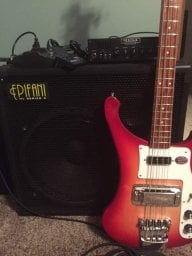
I have yet to touch the truss rod on my 2016 RIC 4003s. My Fender Jazz needs tweaked at least 3 times a year.

I heard the Ricks have two truss rods ?Multi play laminates will ALWAYS be stronger than a single piece of wood. And reinforced laminates is even better.
And neck trough design will be more stable than a bolt on.
That being said, the climate where I live in NE Ohio is about as sucky as it gets.
Ive already had a zero degree blizzard and thunderstorm in the same day. Twice. This month.
I have yet to touch the truss rod on my 2016 RIC 4003s. My Fender Jazz needs tweaked at least 3 times a year.
Quarter sawn single piece necks have always been stable IME, which is why I like Fender custom shop basses. Not a great fan of graphite reinforcing rods, I think I can tell a difference although no doubt in a blind test I would probably make a liar of myself. Alternatively get a really old bass - again IME the necks on forty plus years Fenders I have owned tend to be remarkably stable. I had a 62 precision (sadly stolen) which never ever needed adjusting. Wooden necks can take time to settle, some more than others - it can be a bit of a crap shoot.


