
Enjoy the benefits of a premium membership!
Upgrade Account
-
TalkBass has been independent since 1998. Add your voice.
Create a free account to reply to discussions, view embedded media, and browse with fewer display ads.
Join free Log in
Want zero display ads or expanded classifieds tools? Compare plans.
You are using an out of date browser. It may not display this or other websites correctly.
You should upgrade or use an alternative browser.
You should upgrade or use an alternative browser.
I know I said it before, but study kills GAS!
- Thread starter Dr. Cheese
- Start date
More options
Who Replied?


not sure why you would need a teacher after all those years, but some constructive criticism is always good for the soul. on the other hand, I went to guitar center for a set of strings and came out with a six string bass, now I need another amp... such is life. still need a set of strings. lol.
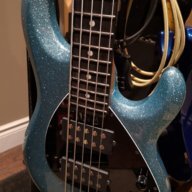
Ha! That happened to me too! New Stingray Secial5! Is there a thread on how many of us that has happened to?not sure why you would need a teacher after all those years, but some constructive criticism is always good for the soul. on the other hand, I went to guitar center for a set of strings and came out with a six string bass, now I need another amp... such is life. still need a set of strings. lol.

I've been a teacher for 23 years, it seems your teacher doesn't know how to teach. Did he say anything constructive or present any solutions? If not, that should have been your last lesson with that poor excuse for a teacher.
I suggest finding another teacher. IMO, by criticizing you he displays what a poor excuse for a teacher he is.

After listening to me, he tore me a new one; pointing out how my raking persists, he criticized my intonation, thumb position on the back of the neck, my poor time, etc.
Thumb position on the neck? That raises a red flag because if you ask various teachers about the "correct" thumb position, you will get different answers.
.... perhaps, but generally speaking, thumb on the back of the neck is the time-tested technique. Any decent teacher will try to drive your technique in that direction.
Yeah, but coupled with everything else he mentioned, something smells fishy. Going out on a limb, sounds like the teacher is taking an experienced bass player and trying to Berkleefy him so to speak. That is, you go through the machine, every minor imperfection is ironed out, and the output is someone technically correct and...boring as Hell.
Yeah, but coupled with everything else he mentioned, something smells fishy. Going out on a limb, sounds like the teacher is taking an experienced bass player and trying to Berkleefy him so to speak. That is, you go through the machine, every minor imperfection is ironed out, and the output is someone technically correct and...boring as Hell.
I dont know how to respond to that because I am a Berklee grad, and "all" they did to me was teach me good technique (like thumb on the back of the neck), play in a lot of different styles authentically by transcribing and learning literally dozens and dozens of bass lines (ie latin, country, jazz, rock, R&B....), read music really well, understand harmony, theory, composition, arranging, some basic recording stuff, have a deep understanding and appreciation for the history of music going back to the middle ages, how to function as a professional/basic music marketing, how to function as a studio musician by playing dozens and dozens of recording sessions, forced me to learn a few hundred tunes by memory. While I was at Berklee I met hundreds of amazing musicians, many of whom went on to bore us with their amazingly correct technique... like Janek Gwizdala, and Mitch Cohn (music director at one time for Lady Gaga), Hiromi Uehara (plays with Anthony Jackson... among others). The most important thing I learned at Berklee was how to practice, and what to focus on in order to continue to improve and grow after I graduated.
Now I bore people using my correct technique in all sorts of interesting gigs around my small city, from jazz to rock to big band to pit orchestra gigs... not to mention the bands I am actually a member of on a regular basis..... all with my thumb correctly planted on the back of the neck of my bass.
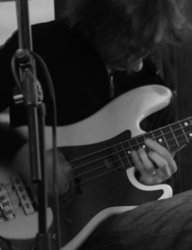
I can say I have made progress since my last meeting. This is at 60 bpm, instead of 104 bpm like the original, but I feel that I am beginning to make the first five bars sound musical.
Yeeaaahhh come on!!! This is an incredibly difficult music to play
Gauntlet thrown down, gauntlet picked up; it's on folks!!I dont know how to respond to that because I am a Berklee grad, and "all" they did to me was teach me good technique (like thumb on the back of the neck), play in a lot of different styles authentically by transcribing and learning literally dozens and dozens of bass lines (ie latin, country, jazz, rock, R&B....), read music really well, understand harmony, theory, composition, arranging, some basic recording stuff, have a deep understanding and appreciation for the history of music going back to the middle ages, how to function as a professional/basic music marketing, how to function as a studio musician by playing dozens and dozens of recording sessions, forced me to learn a few hundred tunes by memory. While I was at Berklee I met hundreds of amazing musicians, many of whom went on to bore us with their amazingly correct technique... like Janek Gwizdala, and Mitch Cohn (music director at one time for Lady Gaga), Hiromi Uehara (plays with Anthony Jackson... among others). The most important thing I learned at Berklee was how to practice, and what to focus on in order to continue to improve and grow after I graduated.
Now I bore people using my correct technique in all sorts of interesting gigs around my small city, from jazz to rock to big band to pit orchestra gigs... not to mention the bands I am actually a member of on a regular basis..... all with my thumb correctly planted on the back of the neck of my bass.
all with my thumb correctly planted on the back of the neck of my bass.
Ok, but which way is the thumb pointed? Towards the headstock as Adam Neely recommends (I think he attended Berklee but not sure. It was certainly one of the New York schools):
Or is the thumb more reminiscent of double-bass style behind index or middle finger and more pointed perpendicular to the fretboard? Which one is correct? Says who? And is it right to browbeat an experienced bass player who chooses one over the other?
Edit: sorry for accidently posting a Vicks commercial.


Yeah, but coupled with everything else he mentioned, something smells fishy. Going out on a limb, sounds like the teacher is taking an experienced bass player and trying to Berkleefy him so to speak. That is, you go through the machine, every minor imperfection is ironed out, and the output is someone technically correct and...boring as Hell.
Sure, being rigorously schooled in any discipline can make certain people more mechanical in their approach. On the flip side, not having good technique and strong foundational knowledge can limit our ability to express what we want with an instrument. There’s a balance, but I would never argue that more education is a detriment. How you use your knowledge is the difference between sounding mechanical and sounding inspired.
I look at it like studying language and expanding your vocabulary. The broader your selection of words, the more options and nuance you have available while communicating. If you are always using complex vocabulary just to prove you have it, that can be a turn off. But that’s not the fault of education - it’s poor application of knowledge.
I think some of the best musicians are those who are extremely knowledgeable and technically sound with a great sense of context. They understand what is needed in a musical situation, and they have the skills to play whatever it is. It’s not universal that all great musicians are (well) trained - but it can’t hurt.
For the record, I’ve taken some lessons over the years, but I do not have music school education. Often times I wish I did...
Last edited:

Ok, but which way is the thumb pointed? Towards the headstock as Adam Neely recommends (I think he attended Berklee but not sure. It was certainly one of the New York schools)
That would rule out Berklee, since it's in Boston!
But, you've still got it right in a way: he went to Berklee for his BA *and* a New York school for his masters: [This invalid link has been removed]

Yeeaaahhh come on!!! This is an incredibly difficult music to play
I posted a clip on another thread where I in time with the metronome. Progress is sow but steady.
Ok, but which way is the thumb pointed? Towards the headstock as Adam Neely recommends (I think he attended Berklee but not sure. It was certainly one of the New York schools):
Or is the thumb more reminiscent of double-bass style behind index or middle finger and more pointed up? Which one is correct? Says who? And is it right to browbeat an experienced bass player who chooses one over the other?
Honestly, what they would say at Berklee is "try it this way, it's probably better/preferred, but at the end of the day we really dont care as along as you feel comfortable and it's not impairing your ability to execute stuff", because they dont focus on technique at Berklee. I think the impression is that schooled musicians get a lot of instruction in technique because they come out of X years of music school (2-4 years of INTENSE immersion in their craft... practicing and playing up to 12 hours per day) playing their asses off with incredible technique. The technique didnt come because it's something Berklee (or any music school) is focused on, it comes because if your a serious student you are constantly trying to figure out sometimes complicated stuff. The first question you start asking is "what can I change that would make this more tenable.....". The technique really comes out of necessity.

Thank you for your recent excellent posts.Honestly, what they would say at Berklee is "try it this way, it's probably better/preferred, but at the end of the day we really dont care as along as you feel comfortable and it's not impairing your ability to execute stuff", because they dont focus on technique at Berklee. I think the impression is that schooled musicians get a lot of instruction in technique because they come out of X years of music school (2-4 years of INTENSE immersion in their craft... practicing and playing up to 12 hours per day) playing their asses off with incredible technique. The technique didnt come because it's something Berklee (or any music school) is focused on, it comes because if your a serious student you are constantly trying to figure out sometimes complicated stuff. The first question you start asking is "what can I change that would make this more tenable.....". The technique really comes out of necessity.
Thanks for the comment. Sorry for the poor grammar... I am trying to do my day job while I participate in Talkbass discussion... not a great idea!Thank you for your recent excellent posts.
I can say I have made progress since my last meeting. This is at 60 bpm, instead of 104 bpm like the original, but I feel that I am beginning to make the first five bars sound musical.
Making progress ! Congrats.
Getting a little better at River People with the metronome.
You can see this thread, that I am getting better at syncing with the metronome at 60 bpm.
You can see this thread, that I am getting better at syncing with the metronome at 60 bpm.
[QUOTE="dpbass66, post: 22212402, member: 169823"
The most important thing I learned at Berklee was how to practice, and what to focus on in order to continue to improve and grow after I graduated.
.[/QUOTE]
Quote of the day. Bravo. I hope you will not be ground down. My word of wisdom ( Tommorrow will be my 1 year anniversary on TB) would be that time spent arguing with TB experts is better spent practicing.
The most important thing I learned at Berklee was how to practice, and what to focus on in order to continue to improve and grow after I graduated.
.[/QUOTE]
Quote of the day. Bravo. I hope you will not be ground down. My word of wisdom ( Tommorrow will be my 1 year anniversary on TB) would be that time spent arguing with TB experts is better spent practicing.
Last edited:


