My band played a wedding. many years ago. A friend of the bride, was a club singer in Vegas, she was fabulous, and we got a real time lesson in putting on a show. I'd never worked with a "real" singer before. So when she called Johnny B Goode, in F#, I was real happy, I'd focused on not being key dependent. The guitar player on the hand was earning his money (no capo, no time for a capo).

Enjoy the benefits of a premium membership!
Upgrade Account
-
TalkBass has been independent since 1998. Add your voice.
Create a free account to reply to discussions, view embedded media, and browse with fewer display ads.
Join free Log in
Want zero display ads or expanded classifieds tools? Compare plans.
You are using an out of date browser. It may not display this or other websites correctly.
You should upgrade or use an alternative browser.
You should upgrade or use an alternative browser.
In all keys?
- Thread starter stratovani
- Start date
More options
Who Replied?

Bryan R. Tyler
TalkBass: Usurping My Practice Time Since 2002
Staff member
Administrator
Gold Supporting Member
Supporting Member
- May 3, 2002
- 28,948
- 20,936
- Disclosures
- Reviewer: Bass Player Magazine
It's not nearly as hard on a guitar-style instrument: It will REALLY grow you a pair on keyboards, where there is a huge difference because of the black keys. Believe me, the same song in C Major is W-A-Y different and harder to handle transposed just a half-step to C-Sharp Major. Doing that on a necked instrument is a breeze alongside of that.
It’s something we often take for granted as bass players, but the fact that our instruments are tuned in fourths all the way up the neck makes switching keys almost a non-issue, particularly if you’re Using a 5 or 6-string bass and not relying on open strings. For the sake of practicing and hearing what a song sounds like in different keys it’s good to practice in them, but as far as being able to physically play a song, key changes for us are usually inconsequential.
As for what keys you should be able to play in based on a given genre though, you should be able to play in all of them for the simple fact that singers usually are the biggest determining factor in what key you play a song in, and they often won’t be in the original key of the song was written in.

What's your goal in playing? If you're always going to play pre rehearsed tunes with a band and don't expect to get in any situations where things are "thrown at you," don't bother. If you want to be "quick on your feet" then you need to be comfortable with all keys. It's really that simple.Some thing I don't get. Whenever someone says to practice something they always say "in all keys". Why? I can see it for jazzers, why always seem to play in flat keys, but as a strict rock player everything I play is in the key of E, D, G, A, or C, with the occasional F or B. Why would I want to learn something in a key I'll never play? I'm pretty proficient with major and minor pentatonic scales in the keys I mentioned, and it seems to work well in the songs I play.
I recently got a guitar gig and the singer plays Jailhouse Rock in Eb, Rondstat's Heatwave in C#, Rolling on a River in B, an original tune in F# and a handful of other songs in non-standard keys. After I got the gig we were talking and she said most guitar players looked at her songlist and the keys and declined to audition. I never even thought about it as an issue, it was just like, "Ok, an extra few minutes to transpose."

I do church gigs. - different singers, different keys. I have played in every key. Once you get good at it, it’s not that hard. But I couldn’t do what I do if I couldn’t play in any key on demand.

You'll also never be able to play with a killer horn section if you are not comfortable in F, Bflat, Eflat, A flat, and D flat. Get ready to smile when you see them getting all nervous when you call out a tune in E minor or A minor!
As a guitar player, I generally hate playing in the key of C major. It took me years to understand why the keyboard player loved it- 'just the white keys....
As a guitar player, I generally hate playing in the key of C major. It took me years to understand why the keyboard player loved it- 'just the white keys....
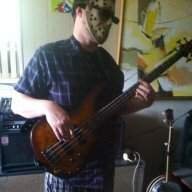
I think it's also about fret board familiarization. Like when someone teaches you an arpeggio shape and then say to play it all the way up to the 12th fret and back down, it's because space between frets vary and with your arm in different positions muscle usage is different.
Same notion of certain warm up exercises I've learned in the past. You do those exercises enough and eventually your fingers do things automatically as you change positions on the fretboard. Like my fingers spread when I move lower on the fretboard, and they get closer together as I move further up the fretboard.. that's not something I think to do at this point..it's just something that happens.
It's definitely not a bad thing to be able to play any scale/arpeggio out of any key without having to think about it.. it's a good habit, and allows you to be more versatile.
Taking shortcuts when trying to develop a skill is ultimately limiting.
Same notion of certain warm up exercises I've learned in the past. You do those exercises enough and eventually your fingers do things automatically as you change positions on the fretboard. Like my fingers spread when I move lower on the fretboard, and they get closer together as I move further up the fretboard.. that's not something I think to do at this point..it's just something that happens.
It's definitely not a bad thing to be able to play any scale/arpeggio out of any key without having to think about it.. it's a good habit, and allows you to be more versatile.
Taking shortcuts when trying to develop a skill is ultimately limiting.

Some thing I don't get. Whenever someone says to practice something they always say "in all keys". Why? I can see it for jazzers, why always seem to play in flat keys, but as a strict rock player everything I play is in the key of E, D, G, A, or C, with the occasional F or B. Why would I want to learn something in a key I'll never play?
so you can improve. if you don't want to get any better, then don't.

Ab is really tiring though.
 love me some Ab!
stratovani , seriously: so do what you do! --- most of us are coming from a 'jack-of-all-trades' POV. also: the more skills you have = the better player you become. as always: YMMV! good luck with the things you know, and even better luck with the things you don't!
 Bb's cool!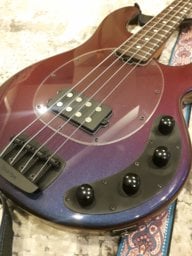
For me, I like to practice doing arpeggios to different chord progressions each time I pick up my bass. Changing the key for the progression can change up the fingering and shapes and is a good way to practice the fretboard. For example, I could practice the arpeggios for a progression in C; starting on the 3rd fret on the A string. Then I can change to a different key and start on a different string and the patterns usually change quite a bit.

Some thing I don't get. Whenever someone says to practice something they always say "in all keys". Why? I can see it for jazzers, why always seem to play in flat keys, but as a strict rock player everything I play is in the key of E, D, G, A, or C, with the occasional F or B. Why would I want to learn something in a key I'll never play? I'm pretty proficient with major and minor pentatonic scales in the keys I mentioned, and it seems to work well in the songs I play.
You walk into a good paying gig, you need that check to pay your bills. The singer says "My allergies are really acting up today, can we play these three songs in B flat instead of C? And this one in F sharp instead of G? The rest should be fine."
I may be wrong, but to the best of my knowledge the only song Tom Petty ever wrote in an enharmonic key is Runaway Trains. Luckily for me the bass line was simple, so I was able to play it. Our guitarists had to use capos!
Tom Petty was an extremely humble, hard-working, and well-respected musician. You might be interested in this clip from the documentary "Runnin' Down a Dream." Petty talks about how he and the Heartbreakers got the gig with Bob Dylan. Apparently Dylan likes to spontaneously change the arrangement of songs from night to night. He might play the song in a different time signature, or a different key. Or maybe pull an obscure song from his back catalog that he'd never rehearsed with the band. If Tom Petty didn't have a good ear and the ability to play in all key signatures, he never would have gotten his dream gig with Bob Dylan!
Because I'm not lazy? Because I actually want to learn something that might open a door to something I won't know I need until I need it?

It’s something we often take for granted as bass players, but the fact that our instruments are tuned in fourths all the way up the neck makes switching keys almost a non-issue, particularly if you’re Using a 5 or 6-string bass and not relying on open strings.
If your playing by ear you can rely on patterns so the actual notes are not really important. IMHO, it's a little more complicated if your reading music
.Oh I should probably mention one more reason why it's important to learn all keys: Many famous songs "modulate" to different keys. For example "Living on a Prayer" by Bon Jovi modulates from G to Bb for the last chorus. If you know how to play in G, but not in Bb, then you'll choke on the modulation.
Last edited:

I played with a jazz singer who would announce the song, pick a random key and then immediately count it off.
I guess he didn't like musicians with their noses stuck in a real book.
I guess he didn't like musicians with their noses stuck in a real book.
I'll say that I have never practiced songs in all keys. My attention span is way to short for that, and it's not really a skill that I would have benefited much from in my job since I usually played with the same people and had plenty of prep time. To be fair there were a few times when I needed to tranpose pop tunes on the spot, and usually that was not a problem. On one gig our keyboardist was using the transpose button to put one of our songs in an easier key. Unfortunately, he forgot to set the transpose button when the tune came up. I have pretty good relative pitch and picked up right away, but some of the horn players kept trying to play their entrances in the wrong key until I turned around and told them to be silent.
Totally different with jazz, as I have not really mastered the ability to memorize most of the jazz repertoire I played. There are definitely times when I would have benefitted from having this skill, but sadly it's beyond me.
The real advantage of knowing tunes in all keys IMHO, is if you going to be gigging with a lot of different people. Then you need to know a lot of tunes in different keys.
I do try to maintain proficiency in all keys by practicing scales, modes, and etudes. So if a song comes up in Gb Major it's not a problem. Actually there was a time when one of my music directors was choosing challenging repertoire in almost exclusively flat keys. At that time I was more comfortable in Gb Major than B Major.
Totally different with jazz, as I have not really mastered the ability to memorize most of the jazz repertoire I played. There are definitely times when I would have benefitted from having this skill, but sadly it's beyond me.
The real advantage of knowing tunes in all keys IMHO, is if you going to be gigging with a lot of different people. Then you need to know a lot of tunes in different keys.
I do try to maintain proficiency in all keys by practicing scales, modes, and etudes. So if a song comes up in Gb Major it's not a problem. Actually there was a time when one of my music directors was choosing challenging repertoire in almost exclusively flat keys. At that time I was more comfortable in Gb Major than B Major.
I guess he didn't like musicians with their noses stuck in a real book.
I have a less kind way of describing
. There was definitely a segment of old school musicians who rolled that way, and it wasn't just the vocalists.
So you use the key of E a lot? Lets say you are playing in E major and you are playing rock music. The relative minor is C#. So why not learn that scale as well? It has the same notes.
I don't know if I use all twelve keys all the time but I feel like it helps me tremendously when improvising, learning new material or song writing. My knowledge of scales and chords gets me work.
(I'm not a music theory guru).
I don't know if I use all twelve keys all the time but I feel like it helps me tremendously when improvising, learning new material or song writing. My knowledge of scales and chords gets me work.
(I'm not a music theory guru).
OK, OK, I get it now! I'll go practice American Girl in C#, You Got Lucky in Db, The Waiting in A#, and Don't Come Around Here No More in Bb. Then I'll become a great musician. Don't know what I'll do with it, but hey, I'll figure it out, amirite?


