TL;DR at the bottom:
i made my first post in this thread over four years ago and i was tickled (scoffed?) at the idea of "hating" PJs. (they've been my choice for decades, and you must like them, too. )
)
Why do people hate PJ basses
since then, i've considered some of the 'whys and wherefores'. i think the two major variables involved are 1. pickup locations, and 2. expectations.
my current thinking , more or less:*
- if the P-pickup location is in leo's 'sweet spot' = P-bass tone + the advantage of a bridge pickup, to dial in, or not.
- most PJs (IME) locate the P-pup elsewhere: not in the sweet spot. some are close, but some aren't.
- when the P-pup is located elsewhere = no P-bass sound. neither good nor bad, objectively, just different than a P-bass.
- same is true of the J/bridge pickup: the location of the pup has meaning, but folks who expect "a J" might be disappointed.
- "close" can be good enough for some, but it's never the "cigar."
- some hear "PJ" and without thinking: they expect a P-bass (using the neck pup only), and a J (using the bridge pup only).
- so, two groups: those who can get a P-bass and/or a J-bass sound from a PJ, and those who cannot.
- in the "cannot" group = those who are disappointed by expectations, and those who are not.
i've never expected a P-bass/J-bass sound from my PJs --- i've only ever expected a neck pickup sound, and a bridge pickup sound, and a sound(s) from blending the two. i love 'em for what they are, whether or not they sound like a P or a J.
others aren't as 'flexible' in their thinking and they can be disappointed: they expect something that isn't possible with their PJ. their pickups aren't located correctly to meet their 'rigid' expectations. they're disappointed because they didn't know/care about pup locations --- they picked up a shiny new object that just can't deliver what they expected and they poo poo the experience without knowing the real reason why they can't get what they want: "i thought i'd get the best of both, and it was neither!" their expectations were challenged and they lost!


and others are never disappointed with their PJs because they're getting even more than they expected: an entirely new/different sound (pickup locations are not in "sweet spots"), or, they get the joy/satisfaction of finding that their PJ delivers on the "P or J promise" --- the pickups are likely located in "sweet spots" and they can dial-in what they want --- with or without having to know about the location issue. whether or not they had any expectations = they won!


i'm in the latter group: i don't have P-bass/J-bass expectations** for my PJs = i don't care what a P-bass/J-bass sounds like when i'm playing any PJ --- Ps and Js are not a 'model' for me, just a vague reference. i want two pickups on my axes so i can dial-in something that will work on that gig at that moment. my PJs always deliver! do they sound like Ps or Js? maybe close (but no cigars). and FWIW: when i was having custom PJs built for myself i never once told the luthiers that i needed to get a P-bass sound and/or a J-bass sound. yet all of my PJs have been (are) the bomb...so there's that, lucky me!


and last: i'm really an advocate of two-pickup axes, no matter what the two pickups are. the PJ vs. P vs. J thing is just a way to engage 7ender fan boys/girls. those who deliberately choose anything else but fender = already know......something!
TL;DR: if you've been disappointed by a PJ = you didn't know enough and you expected too much without knowing. ***
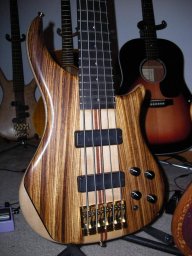
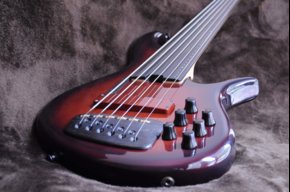
thoughts? (also: feel free to post pics, from your stable, of your favorite PJ, or otherwise, your favorite two-pickup axes.)
* i call it "thinking" because that's what it feels like when i do it!
** disclosure: i have P-basses and a J-bass and they sound exactly like you'd expect: the Ps sound like a P, and the J sounds like a J!
*** or maybe you got a lemon!
i made my first post in this thread over four years ago and i was tickled (scoffed?) at the idea of "hating" PJs. (they've been my choice for decades, and you must like them, too.
)Why do people hate PJ basses
since then, i've considered some of the 'whys and wherefores'. i think the two major variables involved are 1. pickup locations, and 2. expectations.
my current thinking
, more or less:*- if the P-pickup location is in leo's 'sweet spot' = P-bass tone + the advantage of a bridge pickup, to dial in, or not.
- most PJs (IME) locate the P-pup elsewhere: not in the sweet spot. some are close, but some aren't.
- when the P-pup is located elsewhere = no P-bass sound. neither good nor bad, objectively, just different than a P-bass.
- same is true of the J/bridge pickup: the location of the pup has meaning, but folks who expect "a J" might be disappointed.
- "close" can be good enough for some, but it's never the "cigar."
- some hear "PJ" and without thinking: they expect a P-bass (using the neck pup only), and a J (using the bridge pup only).
- so, two groups: those who can get a P-bass and/or a J-bass sound from a PJ, and those who cannot.
- in the "cannot" group = those who are disappointed by expectations, and those who are not.
i've never expected a P-bass/J-bass sound from my PJs --- i've only ever expected a neck pickup sound, and a bridge pickup sound, and a sound(s) from blending the two. i love 'em for what they are, whether or not they sound like a P or a J.
others aren't as 'flexible' in their thinking and they can be disappointed: they expect something that isn't possible with their PJ. their pickups aren't located correctly to meet their 'rigid' expectations. they're disappointed because they didn't know/care about pup locations --- they picked up a shiny new object that just can't deliver what they expected and they poo poo the experience without knowing the real reason why they can't get what they want: "i thought i'd get the best of both, and it was neither!" their expectations were challenged and they lost!
and others are never disappointed with their PJs because they're getting even more than they expected: an entirely new/different sound (pickup locations are not in "sweet spots"), or, they get the joy/satisfaction of finding that their PJ delivers on the "P or J promise" --- the pickups are likely located in "sweet spots" and they can dial-in what they want --- with or without having to know about the location issue. whether or not they had any expectations = they won!
i'm in the latter group: i don't have P-bass/J-bass expectations** for my PJs = i don't care what a P-bass/J-bass sounds like when i'm playing any PJ --- Ps and Js are not a 'model' for me, just a vague reference. i want two pickups on my axes so i can dial-in something that will work on that gig at that moment. my PJs always deliver! do they sound like Ps or Js? maybe close (but no cigars). and FWIW: when i was having custom PJs built for myself i never once told the luthiers that i needed to get a P-bass sound and/or a J-bass sound. yet all of my PJs have been (are) the bomb...so there's that, lucky me!
and last: i'm really an advocate of two-pickup axes, no matter what the two pickups are. the PJ vs. P vs. J thing is just a way to engage 7ender fan boys/girls. those who deliberately choose anything else but fender = already know......something!
TL;DR: if you've been disappointed by a PJ = you didn't know enough and you expected too much without knowing. ***
thoughts?
(also: feel free to post pics, from your stable, of your favorite PJ, or otherwise, your favorite two-pickup axes.)* i call it "thinking" because that's what it feels like when i do it!
** disclosure: i have P-basses and a J-bass and they sound exactly like you'd expect: the Ps sound like a P, and the J sounds like a J!
*** or maybe you got a lemon!
Last edited: